
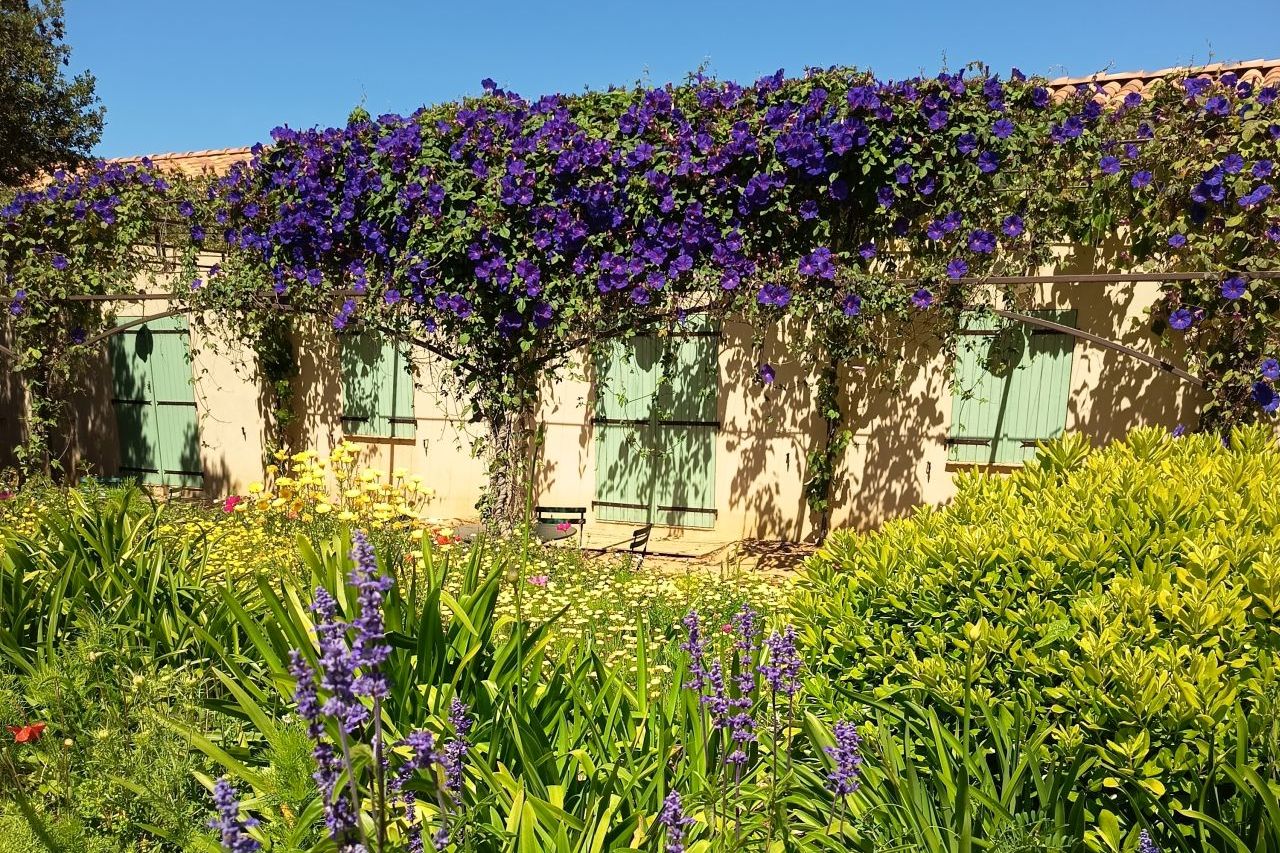
Discover the Parc de Saleccia, at the gates of Île-Rousse, where a visionary landscaper has transformed a land burned by fire into a botanical eden of rare beauty. A place where time slows down, the senses awaken and nature finds its oldest voice. But don't expect a park in the conventional sense of the term, the Parc de Saleccia is Corsica distilled, the quintessence of an island that smells of immortelle and Mediterranean maquis, offered to the visitor with generosity and discretion.
Index of Article
A story of fire, passion and rebirth
To understand the Parc de Saleccia, one must first listen to its history, which is a story of loss and resurrection, of patience and love stubborn for a land. The area of Saleccia is inhabited since the dawn of time. Prehistoric tracks scattered in dominion witness millennia of human presence. In more recent times, when the economy of Balagna flourishes on the great olive groves, Saleccia participates in that prosperity: cultivated terraces, fenced gardens, warehouses for the production of silk, more than a thousand centuries-old olive trees channel the landscape as silent sentinels.
Then, in August 1974, fire. A devastating fire burns one thousand five hundred hectares around Monticello, and the domain is transformed into a lunar landscape of blackened trunks and ash. It's a deep wound, almost irreparable. But it's from the wound that the miracle is born. Bruno Demoustier, landscape designer formed to the prestigious École Nationale Supérieure d’Horticulture of Versailles, who in 1967 married Irène Acquaviva, daughter of the owners of the domain, in front of so much devastation, decides not to surrender.
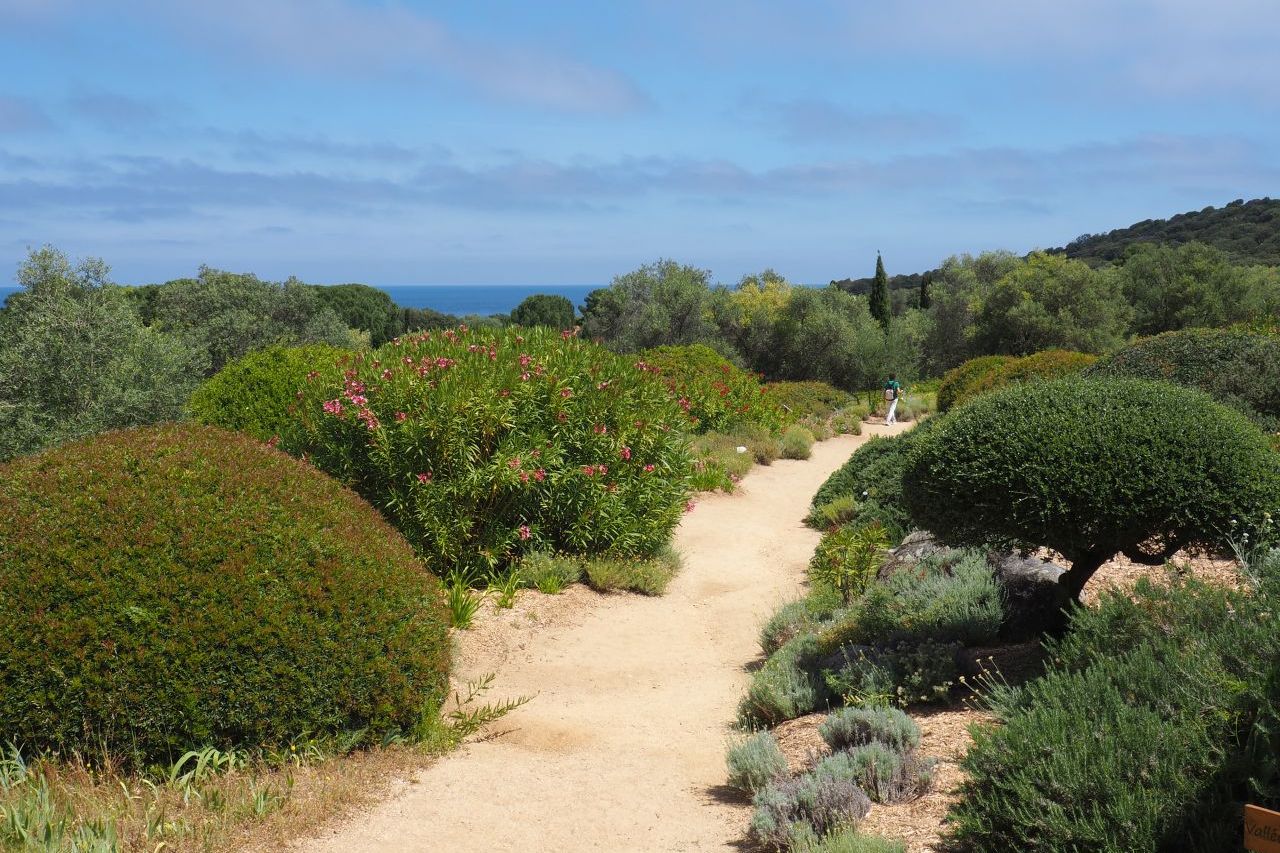
In the 1980s the slow began, stubborn recovery work: cleans the burnt trunks, re-infuses the wild olive trees, encourages the regrowth of the stain, reassembles the collapsed walls. For twenty years he works in silence, as a doctor who cares for a very serious patient, with the conviction of those who know that nature, if indulged with wisdom, has inexhaustible resources.
It is in 1996, during a family lunch, that the idea of opening the domain to the public. The daughter Isabelle, then engaged in a doctoral thesis on the heritage course, joins the project with enthusiasm. And after years of practice, feasibility studies, financing requests and field work: on June 8, 2005, the Parc de Saleccia finally opens its doors to visitors.
A landscaper "sculptor of nature"
In Saleccia Bruno Demoustier gave full measure of his talented "sculpteur de nature" shaping seven hectares without any overturn of the ground, no violence to the original landscape. He simply followed the relief of the places, adding layer after layer as a painter who composes a canvas. The result is a succession of landscape paintings in which the forms and infinite variations of the green value each other, from the deep shades of lentils to the dusty silver of the olive trees, from the dark cylinder of cypresses to the milky white of the Californian poppies.
The tour
Crossing the entrance of the Parc de Saleccia we immediately feel a change in the air, which becomes more dense, richer, loaded with resins and pollen, than the wild and sweet fragrance that the courses they simply call le parfum de l’île.
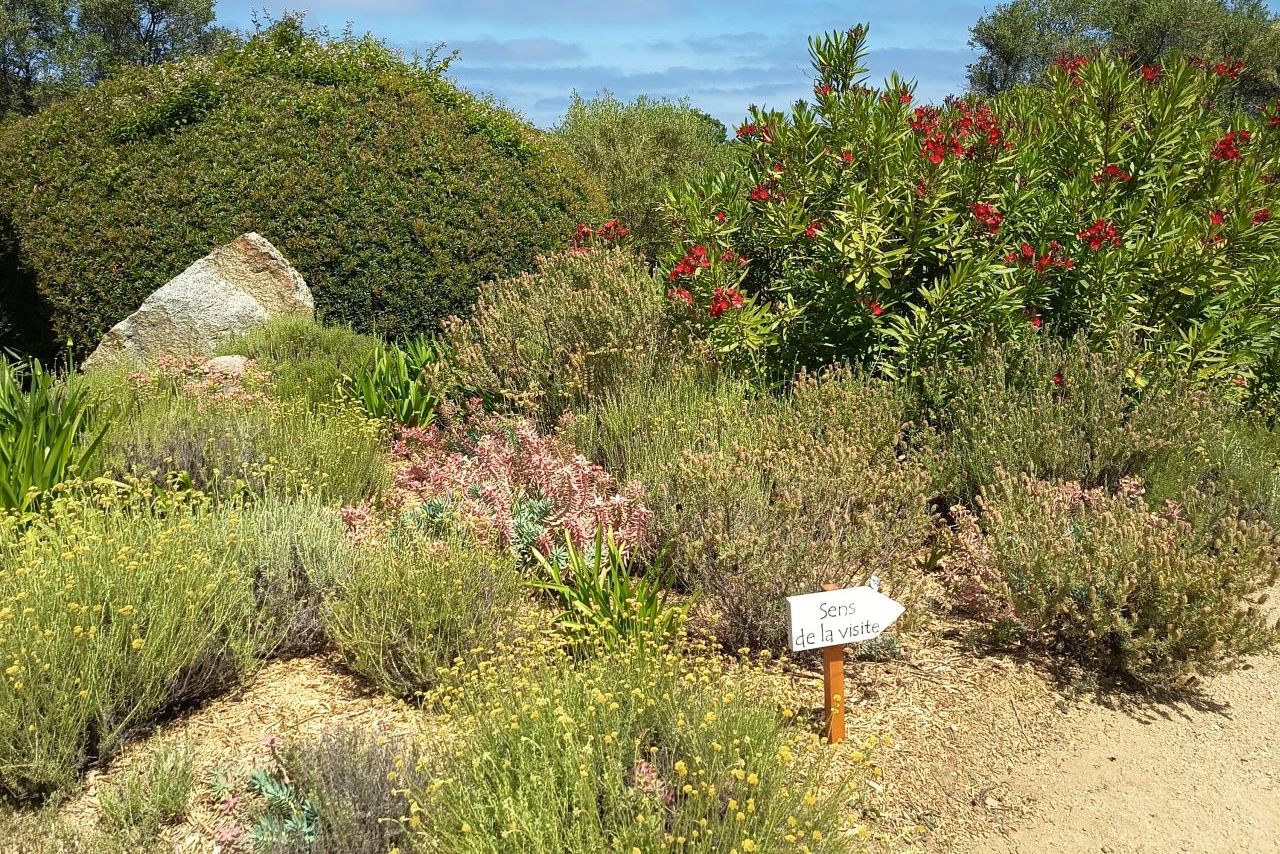
The botanical heart of the park is the Mediterranean, a large fortress that embraces a lawn of more than four thousand square meters. But not a lawn, but a carpet of Kikuyu, a rustic and resistant graminacea that requires very little water. Here. Biodiversity is spectacular: plants from all Mediterranean regions of the world live with local vegetation, in a silent dialogue between continents.
From Spain to Lebanon, from Australia to California, from Chile to the Canary Islands: each corner tells another latitude, another way to resist the sun and drought. In May, this space explodes in a color festival that culminates in blossoming of the Romneya Coulteri, the poppy arboreal California, with its silky white petals and its golden heart: a vision that alone is worth the journey.
Continuing, you dive into Valle dei Laurier-Roses (oleandri), the most romantic driveway in the park. At the beginning of the summer, the edges are filled with Italian immortelles with yellow flowers, which emanate that warm and spicy scent, a mixture of curry and hay, which is one of the iconic scents of Corsica. Then, in July, the fireworks of the oleanders explode: purpureo, white, yellow, salmon, fuchsia. Among the varieties present are those created by Bruno Demoustier himself, the Immaculata, pure white with double flowers; the Rubis de Corse, deep red; the Scandula, the Isle-Rossa, the Moon Chiar. Names that are already poetry, which evoke Corsica before you see them.
The Jardin des Quatre Couleurs, conceived in 2007, introduces a more intimate and collected note. Its stone architecture recalls the atmosphere of secret courtyards in the villages of the island. The plant is that of a flower with four petals, blue, yellow, pink and white, with a majestic oak in the middle that offers a precious shade in the hottest hours.
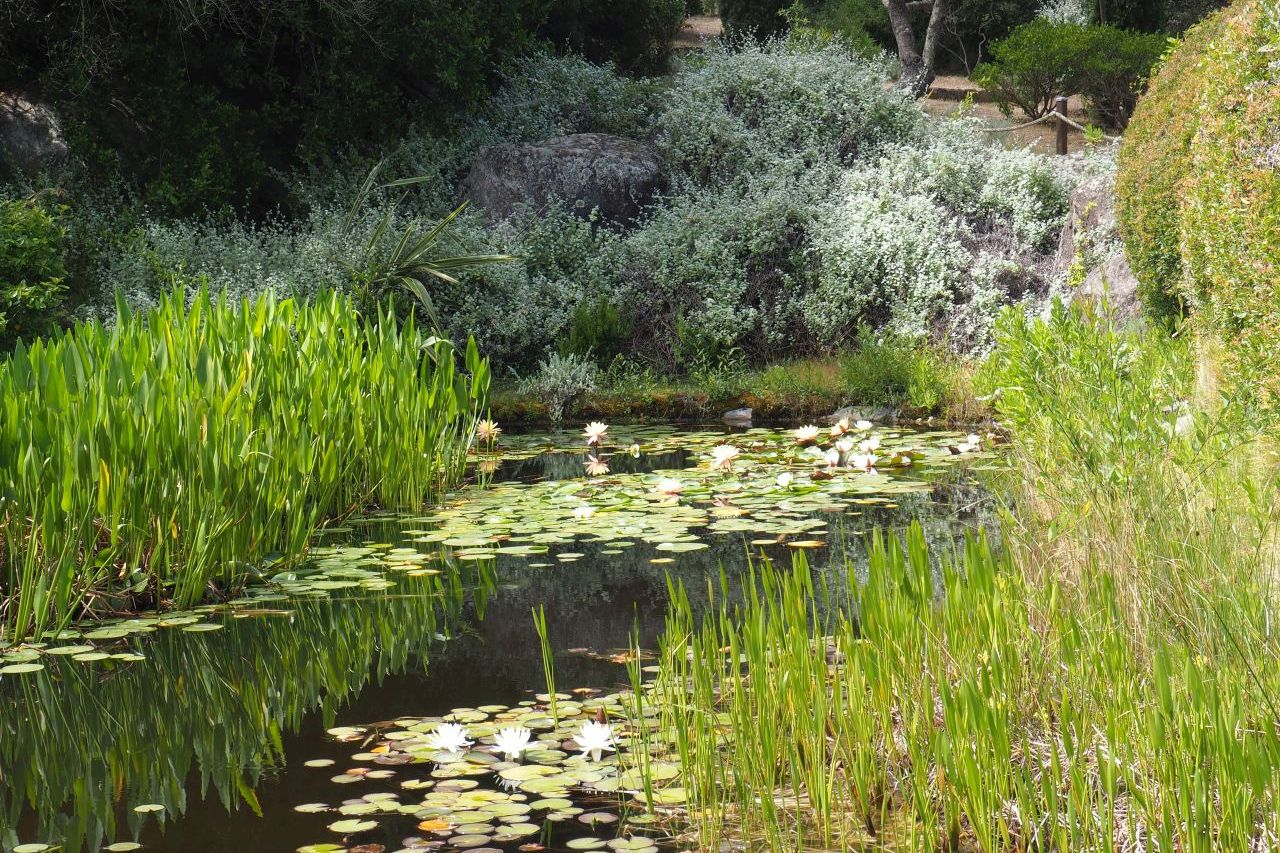
The two ponds, fed by the water of the Jardin des Quatre Couleurs, bring a touch of freshness to the path. Between nymphs with sumptuous flowers, water iris, purple scaffold, koi carps slip silent between the reflections of the sky, and it happens to stop a few minutes more than expected, kidnapped by so much beauty.
L’Oliveraie, distributed on three large terraces, is perhaps the most evocative corner of all. The best varieties of olive oil are placed on soles completely covered with immortelle, grown spontaneously after the small drought of 2009: an involuntary gesture of nature that the landscaper has simply recognized and welcomed. The terraces are underlined at the base by a rosemary couloir whose perfume, in the warm hours of the afternoon, is almost physical: it envelops you, accompanies you, reminds you why you came here.
Beyond the main route: the secrets of the park
Those who explore with curiosity will discover that the park hides surprises at every turn. Green oak forests where light filters obliquely and gilded, passages bordered by granite rocks placed millennia ago by remote ancestors, a small amphitheatre with sea view for concerts and readings under the stars. And then the Wild Path, which runs through the perimeter of the park at altitude: from up there, the gardens are unpublished, as a botanical puzzle seen from above, with the Mediterranean in the background.
A sustainable ethics
The Parc de Saleccia is not only beautiful: it is also good, in the deepest sense of the term. Everything is done in the name of a concrete ecoresponsible ethics and consistent: strict differentiated collection, organic waste composed and returned to the ground, terracotta brick constructions with lime plaster, farewell to plastic bottles since 2019. The restaurant serves dishes celebrating local products; the boutique offers plants and products of the stain.
Open to the public from April to October, the Parc de Saleccia is located on the Route de Bastia, a few kilometers from Île-Rousse. It brings with it, for those who visit it, something difficult to define but impossible to forget: the rare feeling of having touched the soul of a place.

