
If I say GarganoWhat do you think? The beaches of Peschici and Vieste, of course. San Giovanni Rotondo, of course, a spiritual destination among the most visited in South Italy. Maybe even the forests of the National Park, if you love nature in a pure state. However, the first thought is difficult Manfredonia, that of the Gargano is the main entrance door.
Perhaps this is the reason: you usually cross it quickly, without stopping, heading elsewhere, attracted by others. But for once I stopped in Manfredonia and discovered a city full of history, art treasures and even some...mystery, which I didn't know, but I didn't expect.
The pretext of my journey was Carnival of Manfredonia, among the most popular of all Apulia, which involves practically all citizenship and attracts thousands of people from the province and beyond, but of this you will find more detailed information here and here. Now instead follow me in 5 places where Manfredonia and surroundings are worth a stop and, I am sure, you will also remain intrigued by the stories kept by this seaside town at the foot of the Gargano.
Index of Article
The Svevo Castle
As you will easily understand, the city owes its name to Manfredi, son of Federico II of Svevia, a young blonde and beautiful, or at least thus represents it a mural in the square of the Market. 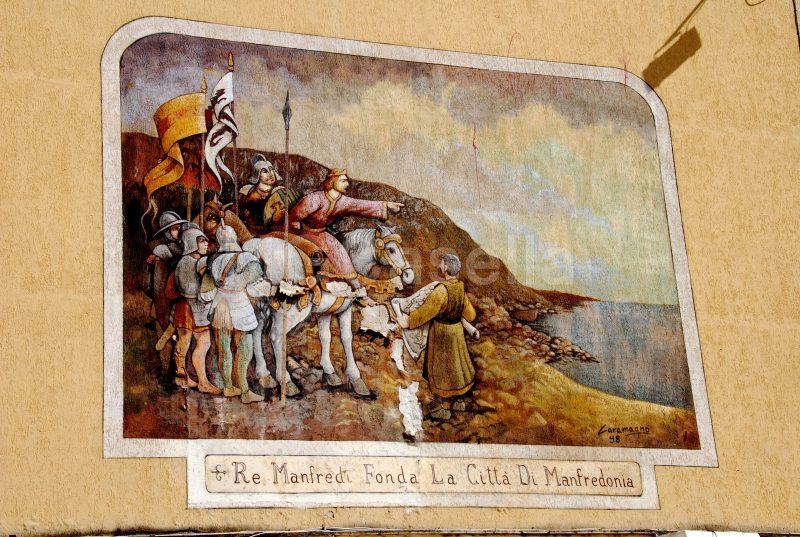
In order to protect the city from enemy raids, Manfredi built the mighty Castello Svevo Angioino Aragonese that lands on the waterfront, which is indispensable first stage of every visit of the city.
Originally it had a square shape, but later the structure was reinforced with the construction of circular towers (by the Angioini) and later by a second wall, added by the Aragons, but it was not enough to reject the terrible assault of the Turks who in 1620 put the city on fire and iron.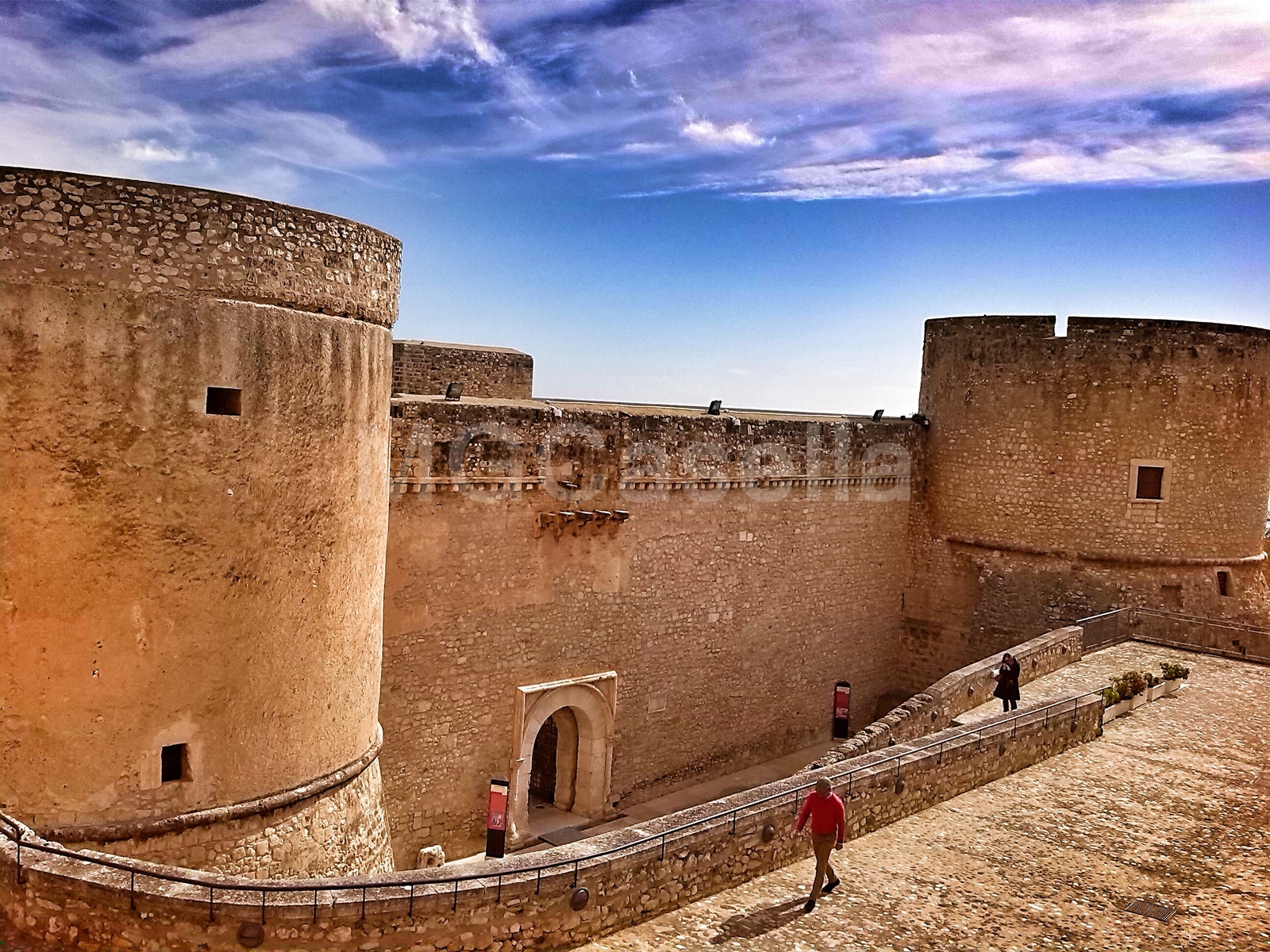
What fascinated me most in the visit of the Castle was the collection Stele Daunie of the National Archaeological Museum, housed in the halls on the ground floor. These are decorated stone slabs that were probably used as funeral stele by the ancient Dauni who populated the Siponto area in pre-Christian times. Different from each other, they are unique documents that show figurative scenes of events and daily life, revealing in the language of the myths and rites of the local populations. 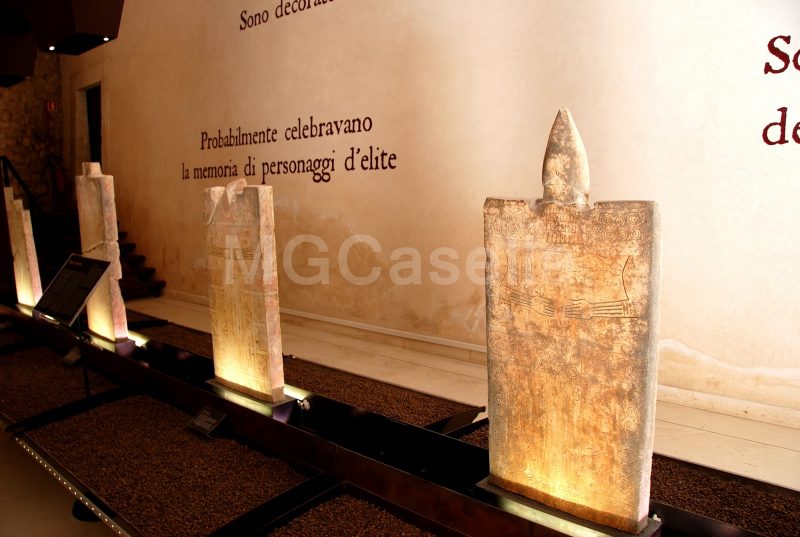
The Church of Santa Chiara
Staying long abandoned, perhaps not entirely randomly, is a place that conceals mysteries yet all to be revealed. In addition to the baroque marble altars and inlaid wood, the gilding and statues of saints, in fact, there would be other...
At least according to the story made of half sentences by Michele Telera, musician and "custode" of the building, as well depository of his secrets, that we had the chance to meet during our visit, although it was not even Thursday, the only day of opening the church to the public.
According to Telera, that in the last twenty years has recovered furniture and architecture with patience and passion, here nothing (or almost) is what it seems. Starting with the canvases of the lateral altars, which would actually conceal unspecified occult messages. While the whole building would cover...something else.
I mean the real mystery of the Church of Santa Chiara. What? You don't know. Of course, I don’t agree with Telera’s sybilline response and, on the Internet, I discover this video, which is part of the project "Percorsi Sonori" of the BELLBELL association in which he himself reveals the ark (or at least part of it).
The Basilica of Santa Maria Maggiore
A jewel of the Romanesque-Eastern Apulian style, is all that remains of the ancient Siponto, razed to the ground by an earthquake in the thirteenth century and later invaded by malsane swamps.
If you arrive in the late afternoon, as happened to me, you will be literally stalked by the view of the facade caressed by the last rays of the sun. But do not let yourself be enchanted by appearances, because in reality the churches are two, not one. Under the Upper Basilica there is a crypt with a more ancient temple, perfectly preserved, with columns and capitals different from each other. A marvel! 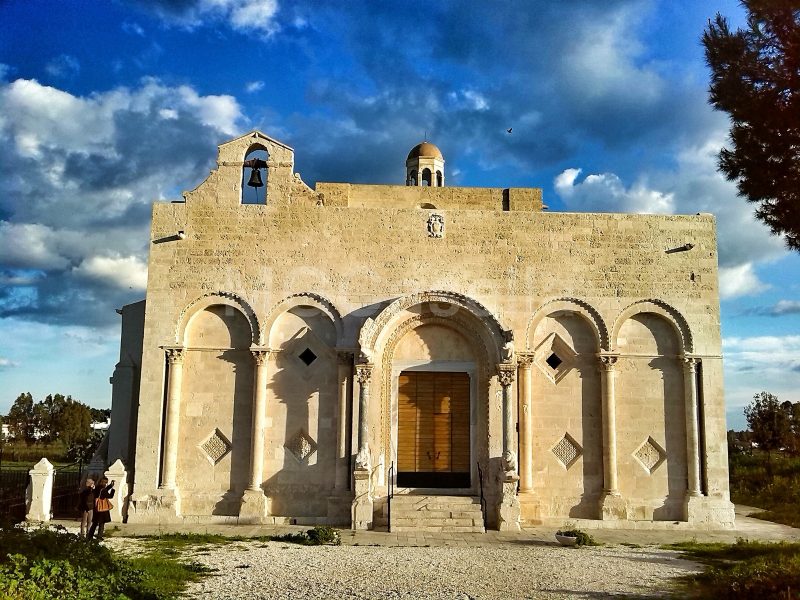
The Church of San Leonardo
What strikes of the church that rises along the SS 89, where today they rub the cars and that was once traveled by pilgrims to Monte Sant’Angelo, is the precious stone portal, finely decorated as a lace. But the surprises do not end here, because the interior is full of symbols.
Around the apse, for example, heavy chains are hung, rather unusual objects in a place of worship. But not here, because San Leonardo is the patron of prisoners and those chains are therefore a kind of ex-vote donated by devout prisoners once they have obtained freedom. But what makes this church truly unique is the gnomonic hole (practically a small open rosette) in the ceiling of the nave major. What's that for?
To find out you have to wait on June 21st. The day of the summer solstice, and only that day, in fact, the rays of the sun penetrate through the hole projecting a suggestive beam of light on the floor of the church. A phenomenon obtained with precise astronomical and architectural calculations, which every year attracts a crowd of curious and devout.
Monte Sant’Angelo
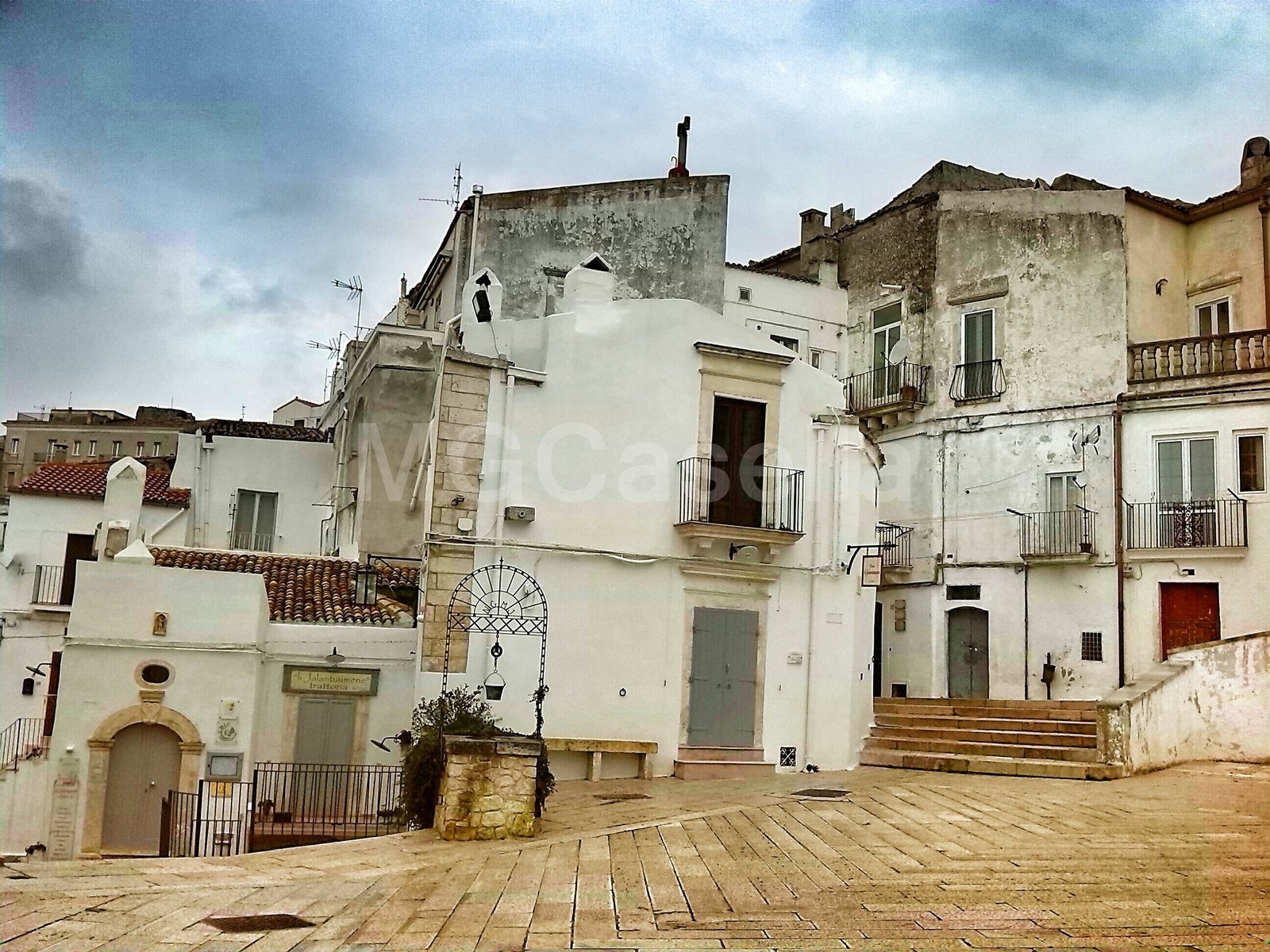
A halo of mystery and sacredness envelops Monte Sant’Angelo, it is already perceived along the hairpin bends that climb the mountain on which the sanctuary of San Michele Arcangelo rises, over 800 meters above Manfredonia, an impervious road, crossed for centuries by pilgrims to the site of the apparitions of the Archangel.
In fact, the Apulian is the oldest of the shrines dedicated to the warrior angel in the west who came up along the so-called Sacred Line of San Michele, which crosses Europe and ideally connects Mont Saint-Michel in France, the Sacred of San Michele in Piedmont and, precisely, the sanctuary of Monte Sant’Angelo.
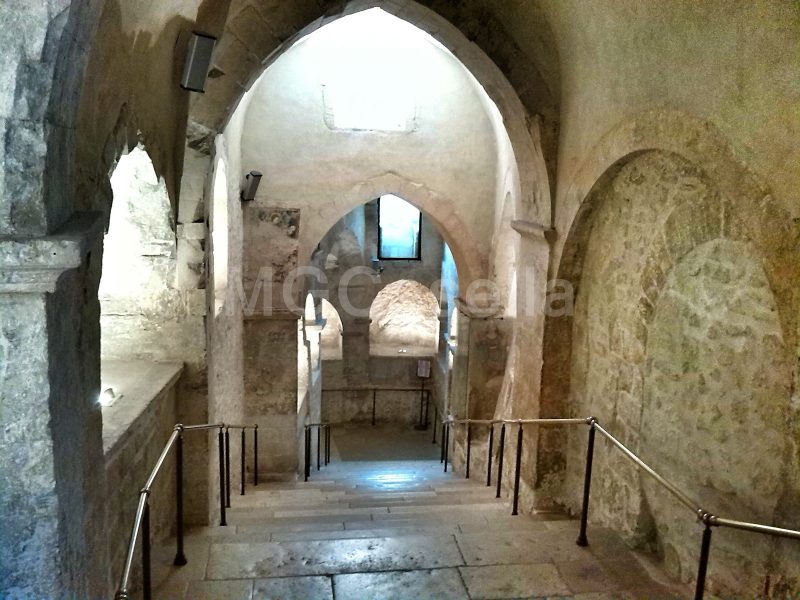
The site is a World Heritage Site, as it is one of the representative places of Lombard power in Italy. More importantly: it was a very important stage of the Via Sacra Langobardorum that brings together impressive medieval architectural works, and already this is a good reason to visit it. But what strikes is much more.
The sanctuary emanates a very strong mysticism, it is felt since the entrance, passing the refined portal on which a Latin engraving reads: "How terrible is this place! This is the house of God, this is the door of heaven!" From here, a staircase of 86 steps leads to the cave of the apparition where, in the shade, stands the marble statue of the Angel, placed on a rock on which the footprint of a foot is engraved, according to the tradition left by San Michele. 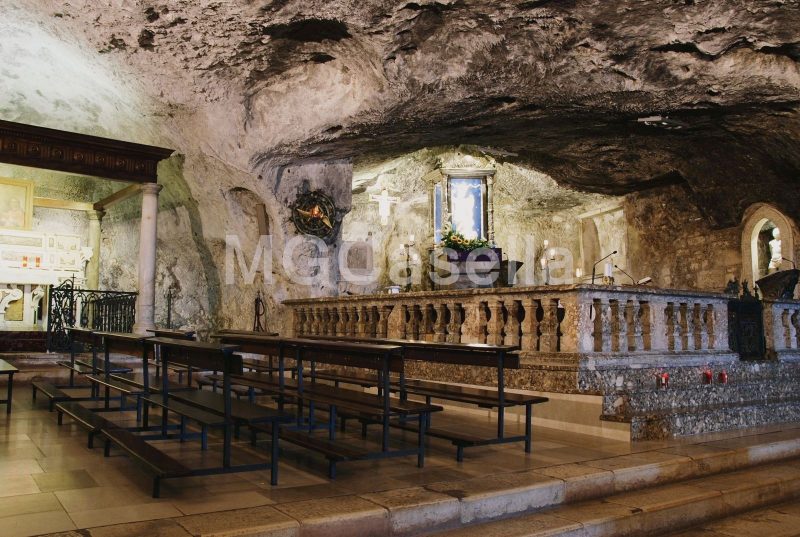 Outside, the old village of Monte Sant’Angelo looks like a white crib on a real scale, to be turned strictly on foot, losing between alleys, staircases, squares mignon and covered passages, up to the ancient medieval Junno, a balcony overlooking Manfredonia and the sea.

