
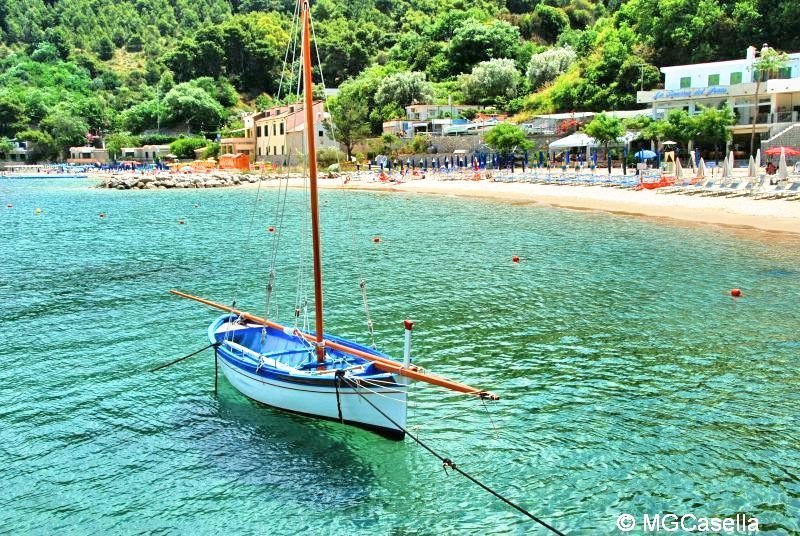
What to see and enjoy between sea, nature, archaeology, villages and flavors of the National Park of Cilento UNESCO World Heritage.
Good part of the territory Chile It is World Heritage. And as if not enough it is also considered the cradle of Mediterranean Diet, enrolled, always by UNESCO, in the list of intangible cultural heritage of Humanity. A double recognition, more unique than rare, for Chile.
And for me, two good excuses to visit this area of the Salento with the blogging ♪ organized in collaboration with ♪. A journey that led me to discover for the first time the territory of National Park of Cilento and Vallo di Diano, considered by UNESCO experts Mediterranean park par excellence, as it encloses all the elements, naturalistic, artistic, cultural and gastronomic, that distinguish it. Here are where to find them and, possibly, taste them.
Index of Article
What to see in the Park National Unesco heritage
The temples of Paestum
A real cloud raged on Paestum the day of our visit, but this has not prevented us from admiring what remains of one of the most beautiful cities of Magna Grecia, considered the door of National Park of Cilento. Protected from over 4 kilometers of walls, the Doric temples of the ancient city of Poseidonia founded by the Achaeans in the 7th century BC, They stand in all their magnificence.
Temple of Neptune
Vera star of the Paestum Archaeological Park is the temple of Neptune, the most classic and perfect example of Doric temple of Magna Greece. When he was raised, in 560 BC, something like this had never been seen in these plains and we can only imagine the astonishment he lay on the local population and on whom he saw it from afar.
An imposing building built in an early style of the classic one, but devoid of sculptural decoration. The building rises on a short steps of a few steps to separate the dwelling of the gods from the ground floor. The colonnade on the four sides still intact consists of 6 columns on the fronts and 14 on the long sides, each of which is about 9 meters high.
The whole complex is built in yellow travertine, the typical local stone, but covered by a layer of white calcium plaster in imitation of the precious marble with which the Greeks used to build the temples.
Inside the perimeter of the colonnade there was the rectangular cell that housed the statue of the deity, of which 2 rows of columns with two overlapping orders held, together with the walls, also the ceiling and the roof. Even today in front of the temple are the remains of the sacrificial altars that were always outdoors and constituted, from a religious point of view, the essential elements of ancient sanctuaries.
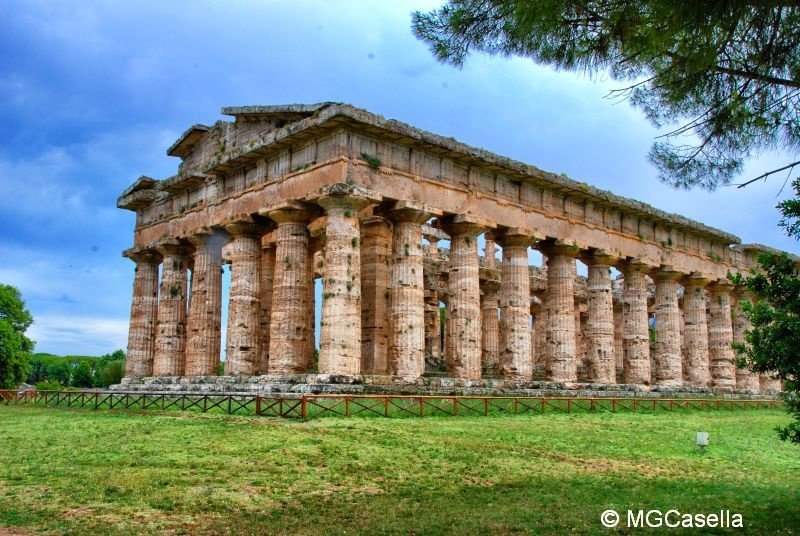
Basilica of Hera
The so-called temple of Neptune Basilica of Hera, the oldest temple of Paestum, 540-510 BC. This is also considered one of the most famous and best preserved Doric temples of Magna Greece, it rises solemnly in the countryside with the magnificence of its 18 columns of length and 9 of width, which – we notice our guide – the same proportions as the Athens Parthenon. Dedicated to Era, goddess of fertility and agriculture, it owes its name to the fact that at the time of the 18th century excavation campaigns archaeologists thought it was a basilica, instead of a temple.
The Temple of Ceres, more spaced, rises at the northern end of the sacred area. The excavations concern a vast area, which goes well beyond the three main temples. If you have time, you can visit other great ruins such as the thermal baths, the porch of the hole, the amphitheatre.
National Archaeological Museum of Paestum
Worth a visit is also the Museum located in the archaeological area, which exhibits finds found in the excavations of Paestum, in the necropolis and in the sanctuary of Hera, including objects of great historical and artistic importance as the fresco of "Tomb of the Diver", rare example of Hellenic painting.
Castellabate
Arranged on a hill dominating coastline, Castellabate is the ancient medieval village that was the set of the film "Welcome to the South". Its history is linked to the figure of San Costabile Gentilcore, who was fourth abbot of the Holy Trinity of Cava de Tirreni.
To protect the inhabitants of the area from Saracen incursion, the abbot began construction of the castle of Sant’Angelo, the castrum Abbatis from which the name of the village derives.
The fortress, which was long used as a noble residence, is equipped with perimeter walls with four corner towers placed at the head of the cardinal points and conceals inside houses, furnaces, cisterns and warehouses for supplies.
The medieval village is built around it with its interlacing of alleys, squares and palaces.
To visit Pontifical Basilica of Santa Maria de Gulia in Romanesque style, flanked by a mighty square-shaped tower modulated, which preserves precious treasures like the two busts depicting the saint, one made of copper of the fourteenth century, and the other in silver that guards the relics of the saint.
A fine painting of the 16th century depicts Saint Michael Archangel victorious on satan represented by a mermaid placed in the apse at the top of the altar is placed a valuable work of pavarino from palermo a triptych in which the virgin in throne with child is flanked by St. Peter the Apostle and St. John the Evangelist the divine hand seems to have reproduced in this land a corner of paradise that sees in castellabate the eccelse dwelling.
Pollica and Acciaroli
The village of Pollica in Cilento has ancient origins: the first settlements date back to the eighth century AD. In the 17th century it became a principality governed by the powerful Capano family, to which the splendid castle dominates the town with the mighty square-shaped tower that stands on three floors.
The interior of the sixteenth century church of Madonna delle Grazie, with a single nave, is characterized by four altars on each side walls and a fine wooden ceiling with drawers.
Acciaroli, the seaside village of Pollica, is a typical seaside village, harvested around the marina, which in summer is animated by tourists attracted by the beaches of the surrounding area, famous for its clear waters.
Certosa di San Lorenzo di Padula
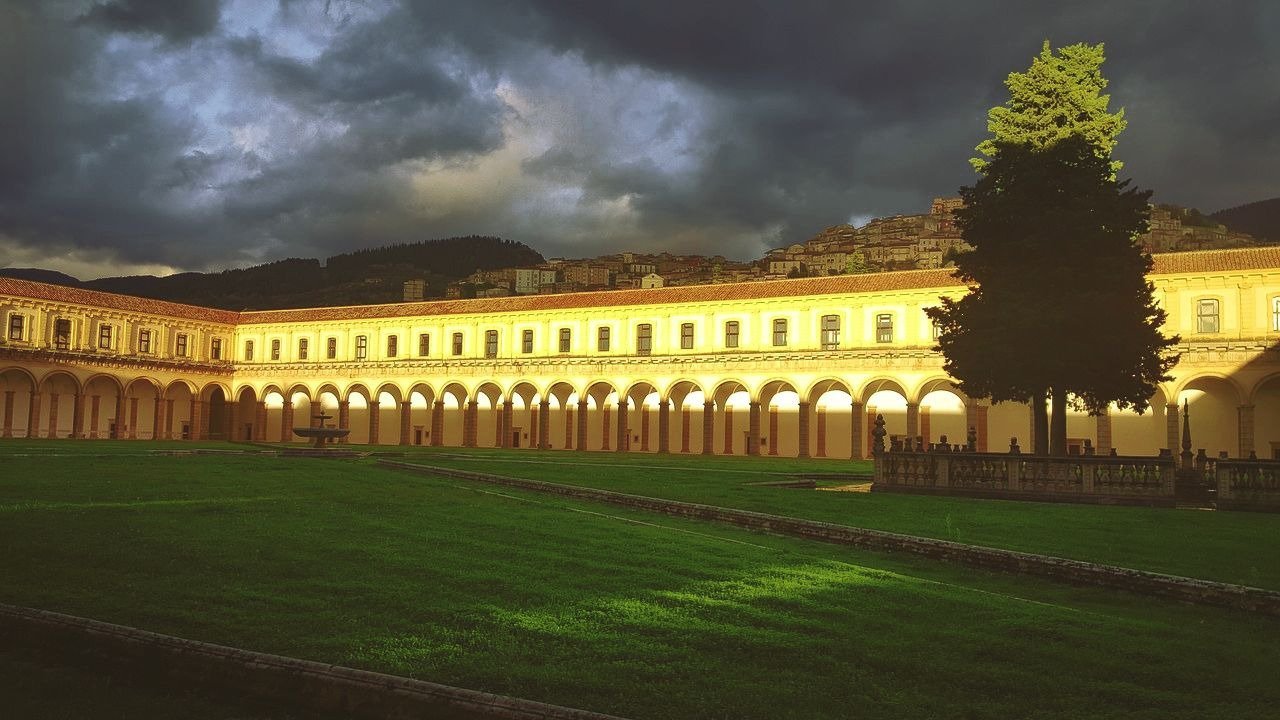
In the easternmost part of the Cilento Park, the Certosa di San Lorenzo di Padula is an architectural jewel in Baroque style declared World Heritage by UNESCO. Founded in 1306 by Tommaso Sanseverino is the largest Certosa d’Italia: it develops in fact on an area of over 50 thousand square meters and has 320 rooms.
Moreover, its cloister of 12 thousand square meters is the largest in the world. Open to the public, you can visit the archaeological museum of Lucania with finds from the excavations of the Necropolis of Sala Consilina and Padula.
Archaeological Park of Velia
The gates of Ascea extend archaeological park of Velia, the ancient Elea della Magna Grecia, the polis founded by the Focei fleeing from Corsica around 540 BC. The seat of a school founded in the 6th century BC by the philosopher Senofane, in the period of maximum splendor Elea was the most important center for the study of the philosophy of the whole Magna Greece.
Later it was also home to the oldest medical school in the European continent, antesignana of the prestigious medical school in Salerno. That's enough to make it ua place of great suggestion, even if little known, that definitely deserves a stop.
Start your visit from the southern district and the Roman necropolis, then continue towards the center, where there are the remains of important buildings dating back to the imperial age and the ancient Roman baths of the second century BC.
The only monument remained practically intact is the Great Pink door, almost six meters high, built with volcanic tuff blocks perfectly framed on each other without the use of lime.
A little further is the polygonal village with the ruins of a typical Greek theater of the 3rd century BC. in good state of conservation, with semicircle steps in front of the stage on which the spectators sat.
Follow the Sacred Way to the Acropolis, where you can admire the remains of a magnificent temple of the 5th century BC, probably dedicated to the goddess Athena.
Caves of Pertosa-Auletta
In the heart of the Alburni Mountains in the National Park of Cilento, the Caves of Pertosa-Auletta are a speleological complex rich in stalactites and stalagmites that extends for about three kilometers in the ground. What makes this place really special is the fact that here flows the only navigable underground river in Europe, the Negro.
An exciting excursion allows you to travel a stretch by boat, admiring the magnificence of the large caves and the straw of the underground waterfall, and then walk to Throne Room and the majestic Great Hall over 20 meters high. The caves, unique in Europe, also preserve the remains of a 2nd millennium B.C.
Chilean sea
Cape Palinuro
The coast of Cilentana is a succession of beautiful beaches, bathing centres and protected marine areas, such as those of Santa Maria di Castellabate and Costa degli Infreschi.
Palinuro is famous for the Cilento sea, but if you are in the area, don’t miss the boat trip Marine caves of Capo Palinuro, that will reveal landscapes and natural environments, accessible only from the sea. Embark on the boats Cooperative Palinuro Porto and away to the caves: during the trip you will visit at least four, one more surprising than the other, guaranteed.
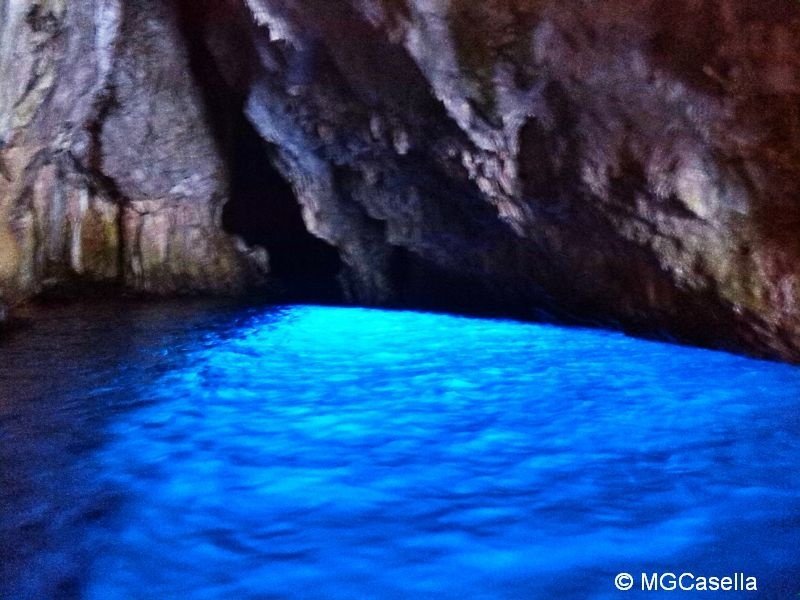
The first stage is at the extraordinary Blue Grotto, less famous than that of Capri, but not less suggestive. Moreover, the play of lights and colors is the same, produced by the rays of the sun that filters inside a tunnel located at 18 meters deep. Unlike the Caprese cave, however, there was no circus of boatmen and tourists, but we were the only visitors, so we could enjoy this natural wonder in peace.
Circumnavigating the boss, you will then visit the Blood cave, where the water has a disturbing reddish shade; that Sulfurea, characterized by the presence of hydrothermal phenomena; and that of the monks, full of stalagmites that seem, in fact, fraticelli with the sao. In the end, you will come to the astonishing Good Sleeping Bay, a name that is all a program, for a memorable dip in the waters that, according to legend, were the ancient residence of the sirens.
Costa degli Infreschi
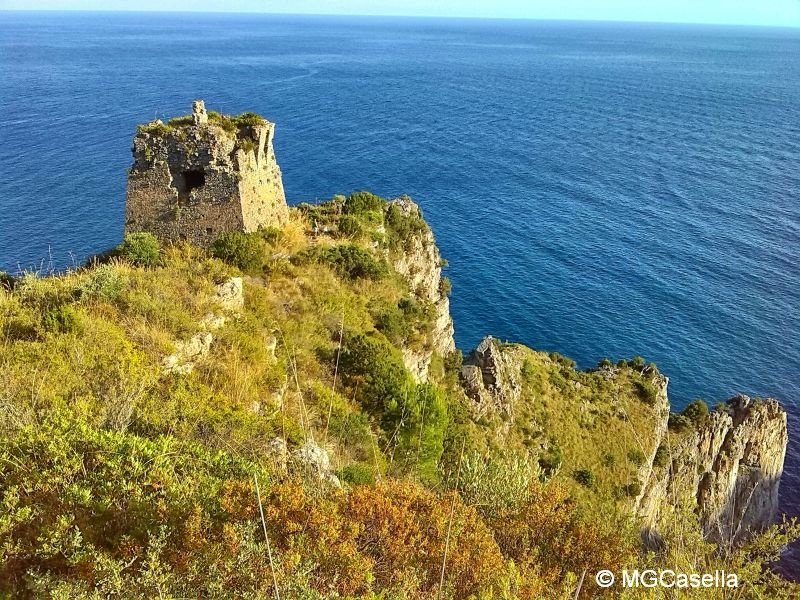
The enchanting Porto Infreschi, where according to the legend sang the sirens of Ulisse, gives the name to a stretch of coast among the most suggestive of the Chilean sea, which goes from the Zancale Tower of Marina di Camerota, to Scario in the Gulf of Policastro.
Since 2009 this coast of myths made of wild nature, marine caves and hidden coves is the Protected Marine Area of Campania. The natural port of the Costa degli Infreschi is today a destination for yachtsmen and diving enthusiasts, attracted by the countless cavities of the area such as the Blue Grotto, the Cave of the Noglio and the Cave of the Infreschi.
Cilentana cuisine World Heritage Site
It is now known: the benefits of Mediterranean Diet, the most virtuous of food lifestyles, declared by UNESCO intangible cultural heritage of humanity, emerged from a study conducted precisely in Cilento in the 1960s and 1970s. The research showed greater longevity of the populations of this area than those of the Anglo-Saxon countries and Northern Europe.
Merit of the rich and balanced food regime of the Cilentana cuisine, which favours some ingredients such as cereals, vegetables and fruit, olive oil and legumes, and to a lesser extent fish, meat and cheese. A food model that also has a great cultural value, since it is based on respect for the territory, biodiversity and traditions.
This will also be why every time you sit at the table, around here, it's a party.
Have you ever tasted a buffalo mozzarella bell dop Just made? An almost mystical experience, I assure you. That you can also do in the numerous dairies scattered in the Sele plain. We we stopped by Barlotti, Capaccio Paestum, a stone's throw from the excavations, where after visiting the stables in which the buffalo are bred, we witnessed the handmade processing of mozzarella according to the traditional method. And then deguised the finished product still lukewarm, which literally melted in the mouth. A true goodness!
If buffalo mozzarellas are universally known and you can also find them at the super below house, here you will discover dishes and products that you can hardly taste elsewhere, because indissolubly linked to the Chilean territory.
Where to taste the ancient recipes
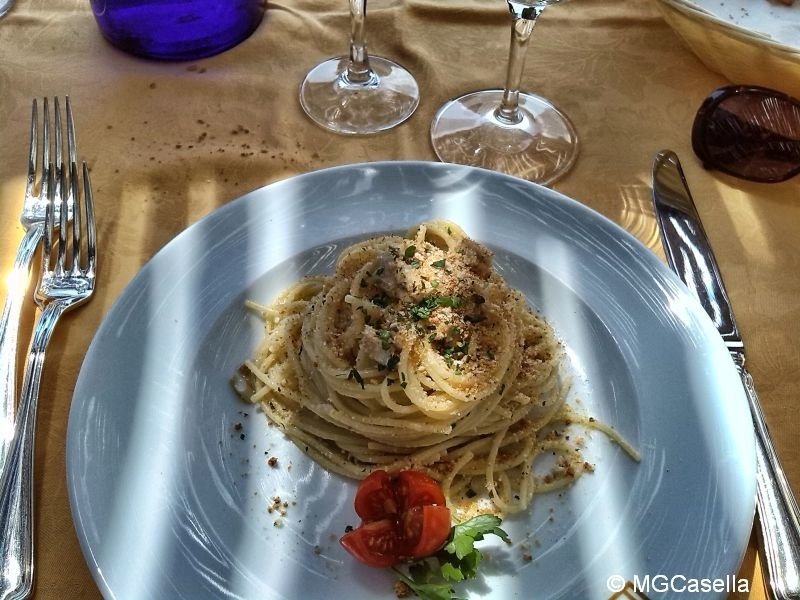
Like spaghetti with menaic anchovies and breadcrumbs, a simple but tasty dish that was served at the restaurant Grand Hotel San Pietro di Palinuro. This type of anchovies, Slow Food garrison, are so called because you still fish with menaics, a type of traditional net, from the fishermen of the Cilentana coast and put in salting in terracotta jars according to ancient techniques.
If you want to make a full dinner based on traditional dishes and ancient recipes of the most authentic Cilentana cuisine, all you have to do is go to the Cantina del Marchese in Marina di Camerota, where there is an experience that you will not forget easily.
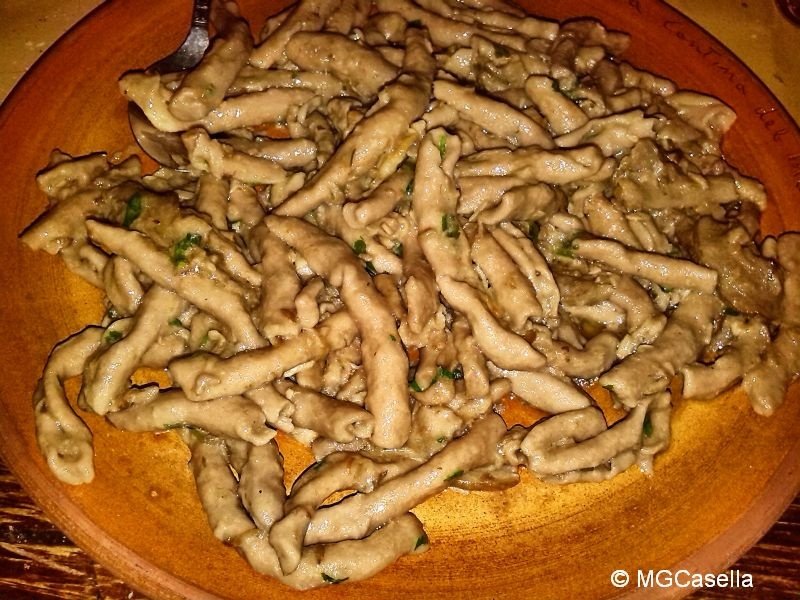
Despite being on the sea, do not be surprised to find a typical cuisine of land, in which predominant legumes, wild herbs, cheeses and meats, such as podolic caciocavallo or the suppressed and sausages of the norcini of the area, so much to begin with. Then throw yourself on real dishes such as chestnut flour fusilli with porcini mushrooms, cavatelli with chestnut ragù, ceci maritati (tasty soup of legumes and cereals) and, last but not least, the maracuccino.
I bet you've never heard of her, have you? Neither do I, before this delicious dinner at Cantina del Marchese. It is a polenta of Lentiscosa maracuoccio flour, a legume similar to the pea, cultivated only near Camerota. Very good, it is served flavored with onion and croutons of brown bread in oil. A land dish, simple and poor, but which is the emblem of the richness of biodiversity of this territory.

