

Valle d’Itria what to see in the most beautiful white cities of Puglia: Alberobello, Locorotondo, Cisternino, Fasano, Ostuni, Martina Franca, Noci e Ceglie Messapica.
Index of Article
VALLE D’ITRIA
The Valle d'Itria is a concentrate of Apulia most typical and authentic. That of the stretches of olive trees with a loss of eye, of white city, of the masserie transformed into a relais of charm and trulli, so much to understand.
As you can imagine, in summer this area is stormed by tourists, who crowd the shady countryside and the old villages on top of the hills at every hour of day and night, looking for a little refreshment from the heat of the coasts.
But out of season everything changes and it is a real pleasure to wander around the countries of the Valle d'Itria that have reappropriated their everyday life, discover its history and, of course, also the delicious gastronomy.
In short, there are all the ingredients to set up a weekend with flakes, couple or friends, less than two hours of flight (if you also want low-cost with Ryanair flying on Bari and Brindisi) from the cities of the north, as I did a couple of weeks ago.
For accommodation you only have the embarrassment of choice, even if I recommend you choose a masseria in a strategic position, to be used as a base to go to the discovery of the territory. We stayed at Masseria Ancella in Montalbano di Fasano, the only one in all Puglia to be equipped with a Spa dedicated to Vinoterapia.
Valle d’Itria what to see: the white cities
OTHERS 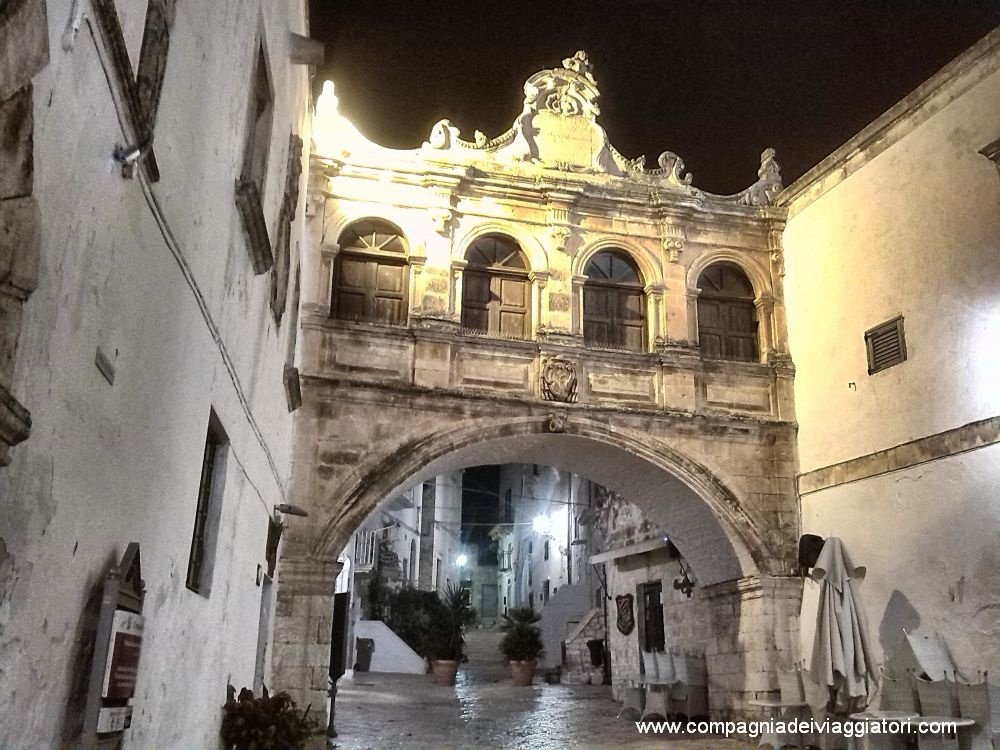
A handful of kilometers separate the farm from Ostuni, probably the most famous of the Apulian white cities. The old town, called The Earth, it is a labyrinth of alleys, small squares, short, uphills, arches and stairwells tangled on the top of the highest hill overlooking the plain of olive trees to the sea.
But what is most striking is the candor of houses and palaces, which as in the Middle Ages are whitewashed with lime not so much for an aesthetic issue, but for purely functional reasons.
In fact, not only does white give greater brightness to the streets with the houses attached to each other for defensive purposes, but also reduces the absorption of heat and, not least, has a strong igienizing power.
Following the main road, climb towards Fourteenth century cathedral, embellished with an original three concentric circle rosette. First, however, make a stop at the Museo di Civiltà Preclassiche della Murgia Meridionale, housed in the church of San Vito Martire, to admire a unique reperto as the Delia lime, the oldest mother in the world, lived in paleolithic.
If in the meantime there is hunger, look for the sign ofLost Time Osteria, one of the best typical cuisine of the area.
Tree 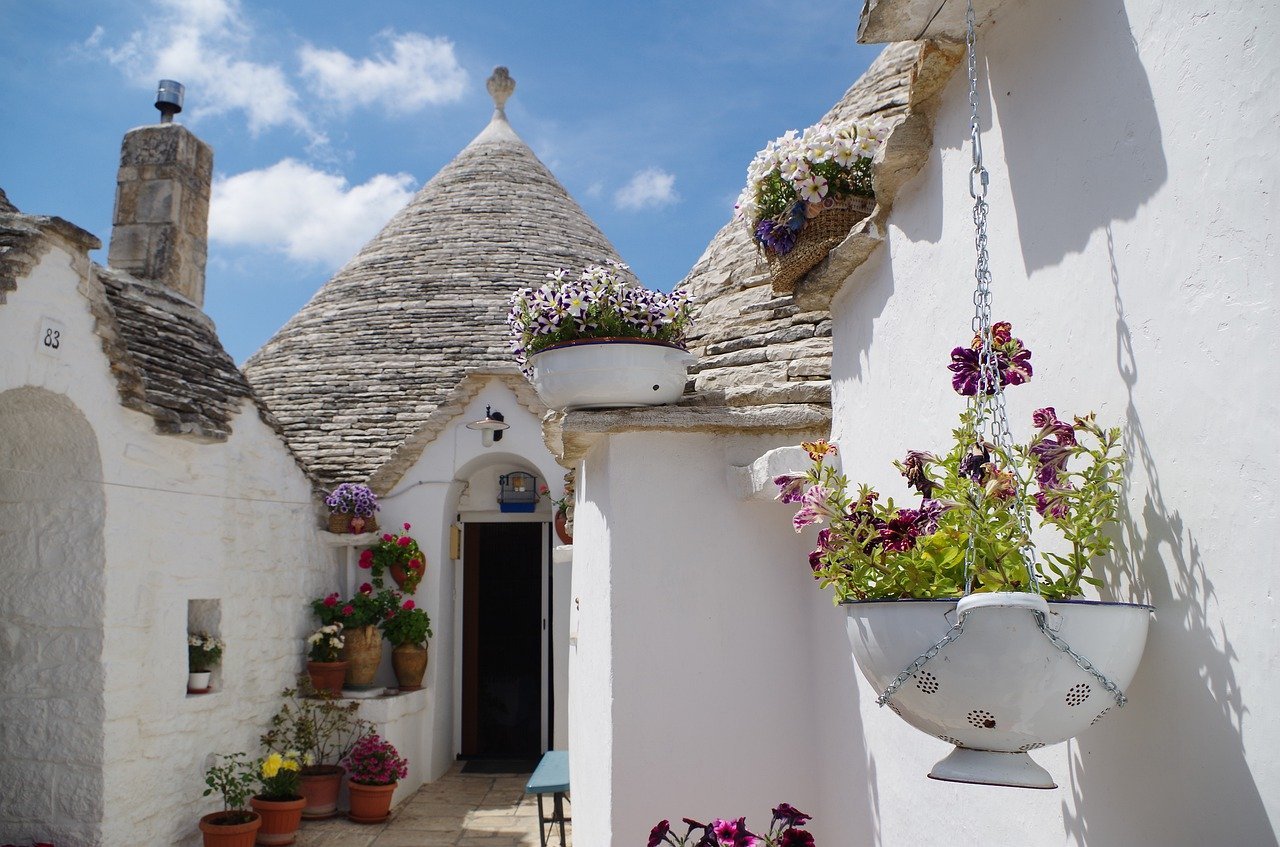
The trulli are the architectural feature of the whole Valle d'Itria, but Alberobello is the undisputed city of trulli. With over 1500 structures divided into neighborhoods Rione Monti and Aja Piccola, has in fact the highest concentration in the world of trulli, largely still inhabited, which make up an exceptional historical landscape recognized Unesco heritage in 1996.
Alberobello extends over two hill reliefs once interrupted by a hive: on the eastern hill extends the new city, where there is also the matrix church dedicated to Saints Medici Cosma and Damiano.
The opposite side is dominated by the trulli of the picturesque Rione Monti, on whose top stands the church of Sant’Antonio with a dome 21 meters high, obviously in the form of trullo.
If you want to visit the inside of a trullo, look for the Trullo Sovrano: there will be no difficulty identifying it because it is the largest in the country, the only two-storey building. It dates back to the middle of the 18th century and is open to the public as a museum of popular peasant culture, with antique furnishings and original environments recreated with the help of the testimonies of the older inhabitants.
Cisternine
The same atmosphere is found in the alleys of Cisternine, my favorite among the white cities of the Valle d’Itria. Not at all, in fact, it is one of Most beautiful villages in Italy.
Enter the Porta Piccola and get lost in the alleyways, squares with stretched cloths and flowered balconies of the ancient districts Bère Vécchie, Scheledd, u Pantène and L'ìsule, which are full of "furnelli", that is the typical butchers where you eat meat roasted at the moment.
In fact, actually, Cisternino is the capital of the stoves: there are practically every corner. Enter, choose the cut you prefer, or if you also want sausage, bacon, skewers or succulent bombettes (rolled veal slices, breaded and infilzate to the spit), wait a few minutes, just the time to activate the taste buds and...the sandwich is served.
Locorondo 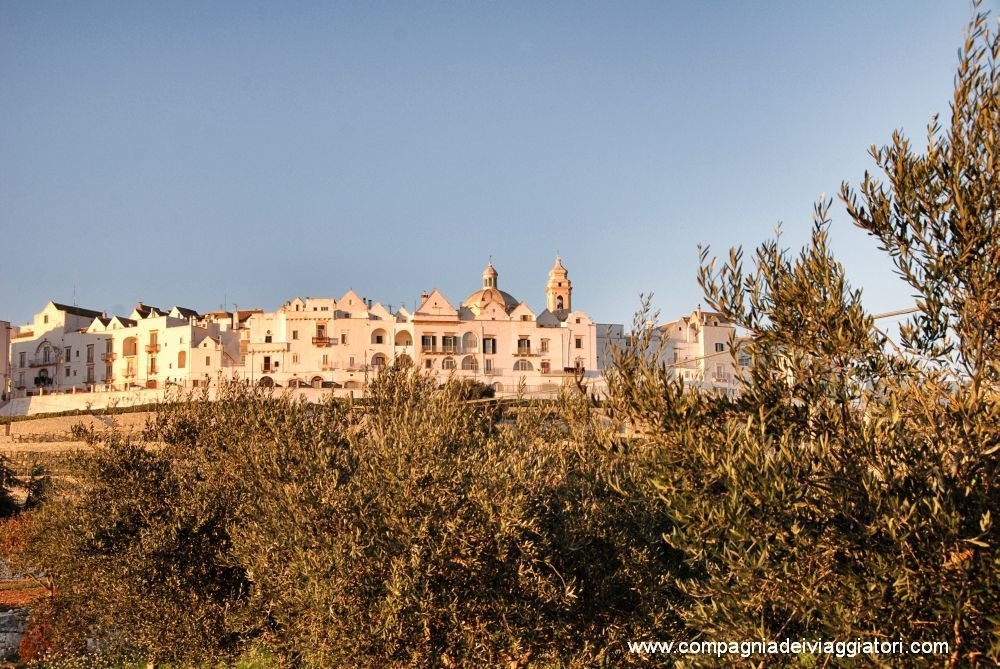
As the name says, the main feature of this other Most beautiful village in Italy is the circular layout. With its white houses still enclosed by the ancient walls dominates all the Valle d'Itria dotted with trulli.
Here too you will be irretired by the charm of the paved streets with the typical chianche that, winding along concentric rings, always lead to the 18th century. church of San Giorgio, on top of the country.
And walking through the alleys will certainly not escape the sharp roofs of the buildings, the cummerse characteristics, made with Chiancarelle, limestone slabs of which the subsoil is rich. Here, as in the other historical centers we visited in the Valle d’Itria, you can stay with the formula of the hotel diffused in local homes with all the comforts open to hospitality.
Fasano
Sets of centuries-old olive trees and rich Mediterranean vegetation draw the territory of Fasano that extends from the hills to the sea, marking the border between the metropolitan area of Bari and Salento.
The village is the crown of many coastal towns, including Savelletri with its beaches, the archaeological excavations of Egnatia, the picturesque fishing town of Tower Canne and countless fortified farms of medieval origin transformed into charming hotels.
According to popular etymology, the name Fasano derives from the "Faso", a large wild dove, also represented on the civic coat of arms, which was watered in the mouth, a sort of swamp formed by the water flowing from the surrounding hills.
Among the major attractions of the area is the archaeological park of Egnatia, the ancient Messapian city that after the conquest by the Romans became an important shopping center. Its decline followed that of the Roman Empire, until it was abandoned in the Middle Ages due to the spread of malaria in the area and the attacks of the Saracens that flooded on the coast.
It is a place of great charm, famous for the discoveries made in the tombs of the evocative mass necropolis, carved entirely in the rock, whose finds can be admired in the museums of Fasano and Bari.
The ruins of the thermal baths of augustea age, in particular, are among the best preserved monuments of Egnatia. Thanks to a catwalk you can admire from above the various environments of the complex, such as the dressing room, the vestibule, the furnace and the real thermal environments.
Ceglie Messapica
Among the least known of white cities of the Valle d’Itria, Ceglie Messapica is a lovely historic village near Ostuni where you rarely stop for a visit. Instead it is worth a few hours to visit the incredibly well-preserved old town of what is considered one of the oldest city in Puglia, dating from the 15th century BC and then the Greeks called as Kailia Messapi,
It rises between the low hills of the Murge and the plains of Salento, about halfway between Brindisi and Taranto, surrounded by olive groves, vineyards, dry walls, trulli, masserie, karst caves and rock churches. Unlike the other white cities in Puglia, it has a vaguely Moorish style, with a labyrinth of streets, whitewashed buildings and churches.
On everything dominates the mole of Ducal Castle built in the 15th century around an ancient Norman tower by the noble Sanseverino family.
And if the walk has put you appetite, do not miss the opportunity to enjoy the renowned local cuisine in one of the many restaurants and trattorias in the area, which made Ceglie Messapica one of the South Salento foodies.
Martina Franca 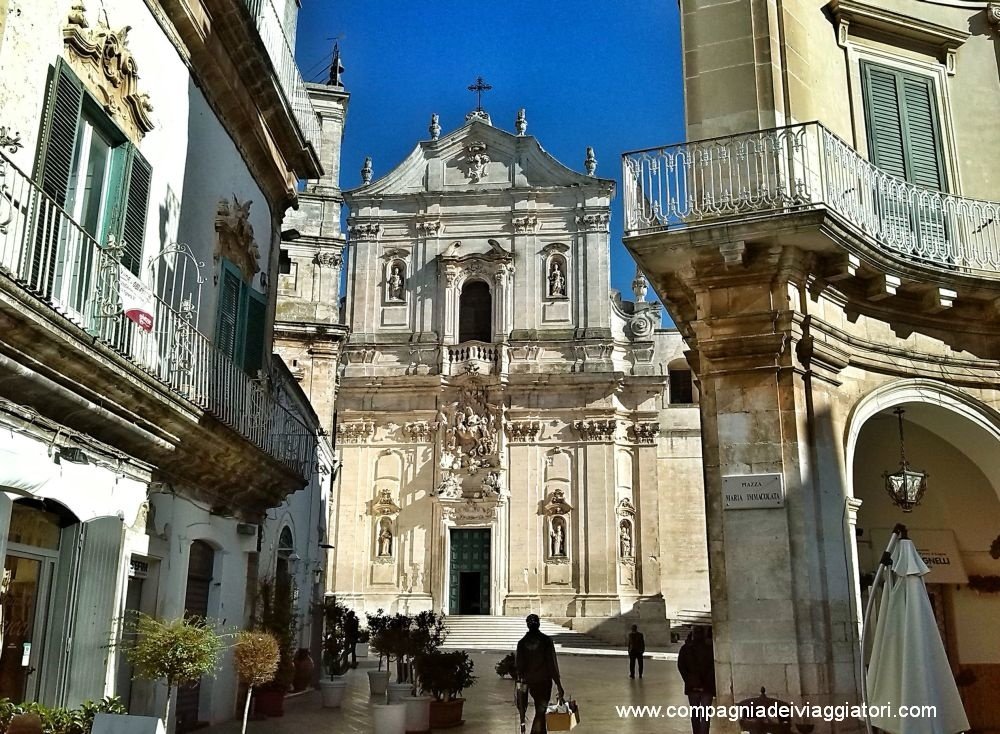
Sleepy and elegant, Martina Franca is a real town, embellished with stately palaces and monumental churches, so much so that it is considered the other capital of the Apulian Baroque. This is the emblem of the splendid Basilica of San Martino, from which the village takes its name, with the facade decorated by an admiral of the encounter of the saint with the poor beggar.
Walking through the old town you will discover refined wrought iron balconies, finely decorated portals, hidden gardens and suggestive perspective views, until you reach the Doge's Palace, the greatest of all. Today it is home to the municipality, then open to the public.
Climb the staircase of honor that leads to the frescoed rooms of the royal apartment, only a small part of the complex that originally counted the beauty of 300 rooms, as well as chapels, theatre and stables.
Noise
Between Gioia del Colle and Alberobello, Noci is a characteristic village of Norman origin.
It is a real pleasure to turn around the historical center that has preserved the medieval system with the spider web of vicoletti lined with houses and whitewashed buildings that conceal the gnostre characteristics (from cloister, from the Latin claustrum, closed place), the small common courts where once the life of the neighborhood took place.
Wherever you are attracted by games of stairs, small lodges, flowery balconies and sumptuous portals that prelude to noble palaces today transformed into delicious dwellings and tree-lined.
There are many churches and convents, including the Mother Church entitled to Sancta Maria de Nucibus, that already existed in 1180 and around which the first nucleus of the inhabited area, originally known as Casale di Santa Maria delle Noci.

