
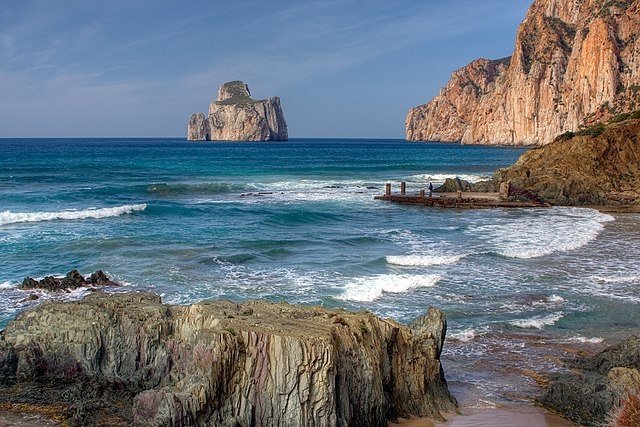
Out of season Sardinia It's more beautiful than ever. Not yet invaded by tourists, it is the ideal destination for first weekend at the sea of the season, maybe taking advantage of the tasty events I told you about here and here. The sun is already warm and it is easy to find place in hotels and on Ferries to Sardinia, which, unlike the plane, offer the possibility to travel with your car to the following, a nice comfort to move freely on the island, to discover areas and itineraries little beaten.
How Sulcis Iglesiente and the south coast, a corner among the most fascinating of the island, where in addition to crystal clear sea and white sandy beaches, you will also find an atmosphere still wild, breathtaking views, friendly people, genuine cuisine and a unique historical and archaeological heritage.
Come on. Nora, for example, archaeological site among the most suggestive, lying on a promontory on the sea. Founded by the Phoenicians, the city reached the peak of its splendor in the imperial era, as evidenced by the remains of the Forum, the Baths that preserve splendid mosaic floors, the Temple of Esculapio located on the extreme tip of a hill overlooking the sea. To learn more, visit the small but significant Archaeological Museum of Pula, a village that preserves ancient houses with loggiati and courtyards in the typical Campidanese style and artisan shops where to buy ceramics and typical carpets.
Sailing experts, the Phoenicians explored the entire southern coast of Sardinia and today you can retrace the route also following the coastal road, looking for a quiet bay for the first tintarella of the season. You only have the embarrassment of choice between the beautiful beach of Chia, protected by high sand dunes, the nearby Cipolla, more intimate and sheltered, or the amazing beach of Tuerredda.
Leaving the coast we immerse ourselves in the natural landscapes of Iglesiente, land of mines and ghost villages. We rise in Santadi, immersed in the green of the Mediterranean scrub and surrounded by forest of Pantaleo, where it is not difficult to spot sardi deer, daini and wild boars. In the area you can visit ancient settlements such as the Phoenician-Punica Fortress, the Giant Tomb of Barrancu Mancu and the Piana dei Menhir.
You will notice the furriadroxius, small agglomerations of farm houses made almost always with clay bricks, which in the past welcomed those who dedicated themselves to agricultural activities. This is in fact a generous land, which produces wines of great pleasure and quality, such as Carignano del Sulcis, Vermentino, Cannonau and Nuragus of Cagliari, which you can taste (and buy) at the Cantina di Santadi, one of the best known in the region.
Iglesias is the main gateway to access Sardinia mineraria, which has its core in the abandoned villages of Arenas and Tini, where the open-air mines of zinc, lead, fluorite and barite were found, gradually exhaling from the 1970s.
You can still see traces of the Open-Pit, a huge mining crater with typical dark colours that creates a striking colour contrast with the green of the surrounding nature. The various sites, which today are part of Geominerario, Historical and Environmental Park of Sardinia recognized by UNESCO, they visit following the old paths of the miners, overlooking suggestive and impressive sites of industrial archaeology
Nearby are also the quarries of Sa Duchessa, ancient abandoned deposit in the Sixties located in a beautiful natural oasis at the foot of the Marganai. Here the lush vegetation of oaks and Mediterranean scrub has slowly reappropriated the territory, covering the old plants and buildings of the village, giving the entire area a particularly suggestive atmosphere.

