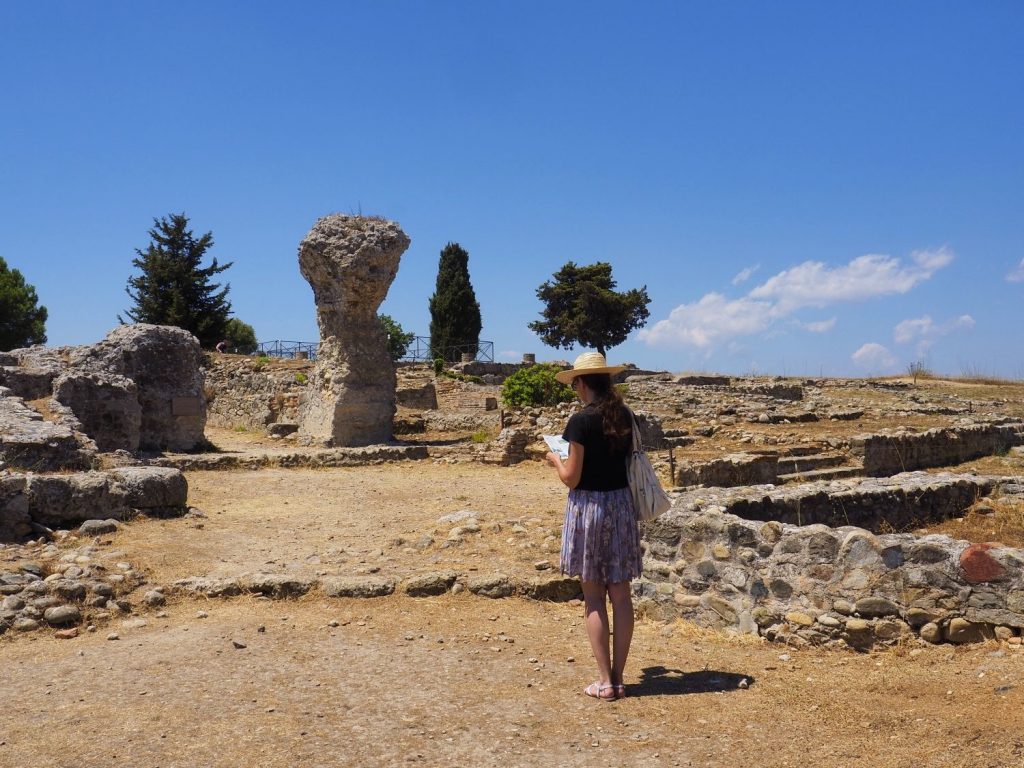

Corsica what to see on the Island of Beauty? In this reportage I will give you 10 places not to miss for a holiday between sea and mountains.
Discover an alternative Corsica, crossing the island from north to south it was an experience to say little exciting. I knew already the coasts and beaches of Corsica, so during my recent travel trip for Corsica Vivila Now I chose to explore the other face of Corsica which, not by chance, is nicknamed "the mountain on the sea". And I guarantee that surprises have not missed.
Here is my itinerary, updated to spring 2020, of what to see in Corsica in 10 stages unusual, alternatives or simply little jokes, which represent as many ideas for day trips from holiday resorts. While here you can follow my trip to Corsica live through posts published on social media.
Index of Article
Corsica what to see
1. Bastia
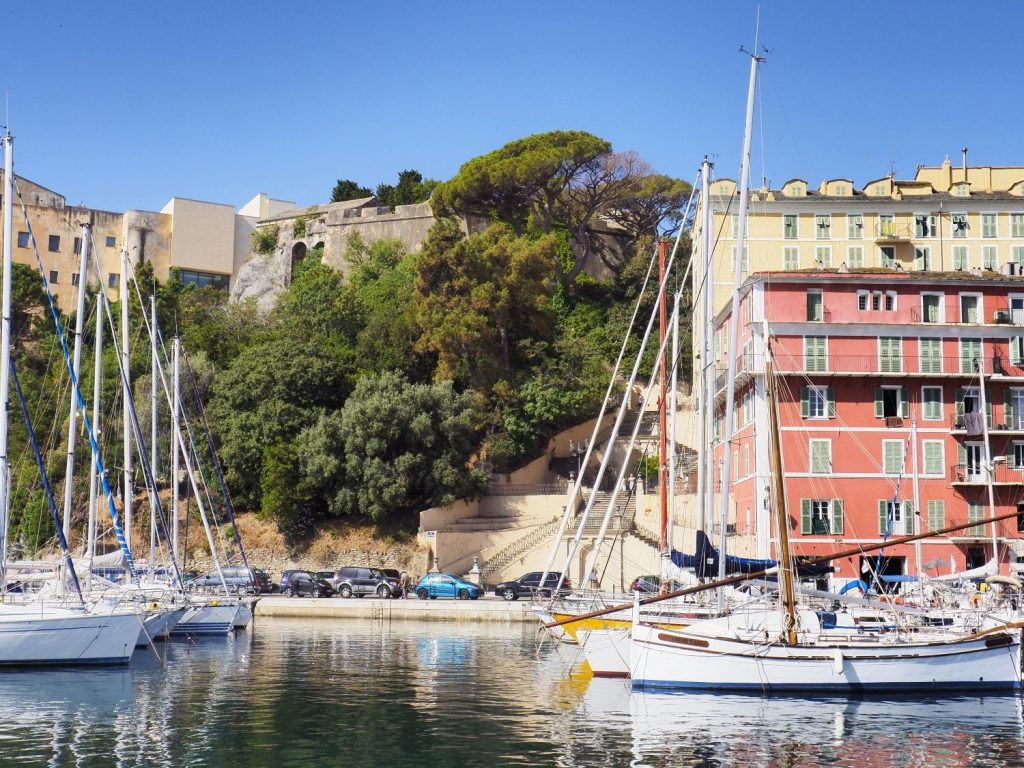
It usually lands from the ferry and away, to the final destination. But this time I wanted to take all the time for visit Bastia, which is still the second city of the island, going to the streets of the old town gathered around the Vieux Port founded by the Genoese.
Beautiful marina with sailboats and some yachts, old pastel houses and pieds-dans-l’eau for romantic candlelit fish dinners. On the top, on the hill, there is the Citadel with the governor’s palace, which is then the ancient Bastille that gives its name to the city, I reach through the Romieu garden, until I reach the monumental Porta Luigi XVI.
The Citadel contains most historical monuments of Bastia, including the Palace of the Governor built around a tower that is one of the oldest parts of the complex: modified several times over the centuries, today is the seat of the Ethnological Museum of Corsica. Not far away is the Cathedral of Santa Maria Assunta, built in 1619.
On one side of the Cathedral, a road leads to the Oratory of Sainte-Croix, a charming baroque chapel built around 1600 in which a rare statue of the black Christ is to be found. I didn’t miss the opportunity for a walk in the labyrinth of streets Old age, the oldest district of the city that extends behind the port, with the old houses from the discolored plaster collected around the church of St-Jean-Baptiste.
2. The Chapel of San Michele di Murato
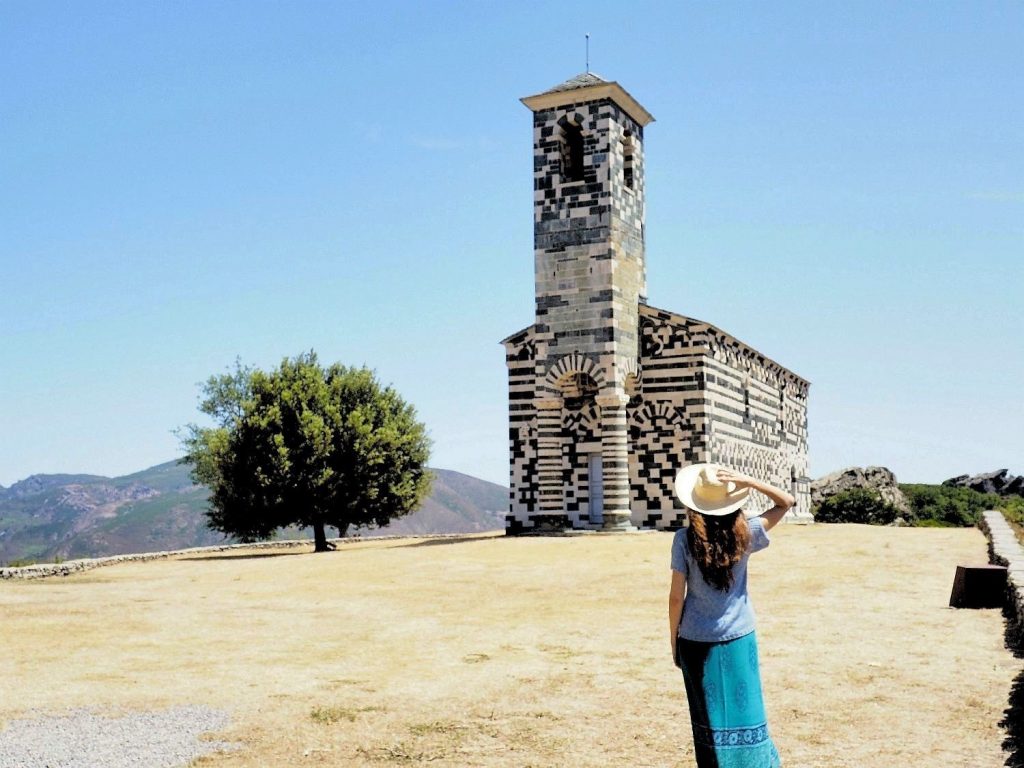
Leaving Bastia, I made a deviation (which I recommend to you too!) to go to see the beautiful Chapel of San Michele in Murato, a true jewel of Romanesque art with perfect proportions that, according to a legend, would have even been built by angels in the span of one night.
3. The Regional Natural Park of Corsica
Between What to see in Corsica there is definitely the Regional Natural Park of Corsica. Two-thirds of the island is protected area, an unpaved green heart of forests, abetaries, lakes, rivers, alpine pastures and a hundred peaks that exceed 2000 meters, crossed by the mythical GR 20, one of the most scenic routes in the Mediterranean. A real paradise if you are passionate about hiking and hiking.
Heart of the Regional Natural Park of Corsica, Court is dominated by the imposing Citadel, built in 1419 on rocky promontory in the city center to the confluence of the rivers Restonica, Orta and Tavignana.
I reach it easily by following the streets that climb up the hill, not before but having made a stop at Belvedere from which, with a great eye, embraces a panorama ranging from Citadel to river valleys and mountains surrounding the city.
Today the Citadel hosts two of the major local cultural institutions: the Museum of Corsica in Corte, which is the ideal starting point to know the history of the island, and the Museum of Art and History, with a collection of Italian paintings donated to the city by Cardinal Fesch.
And speaking of history, returning to the compulsory stopover center in Place Gaffory with the statue of Jean-Pierre Gaffory, leader of the resistance movement in Corsica before Pasquale Paoli. Some of the most significant buildings of the Court surround it, including Church of the Annunciation, the oratory of the 15th century and the Maison Gaffory with the façade marked by numerous bullet holes, probably dating back to a battle for independence against the Genoese.
4. The "villages fleuris" of the Park
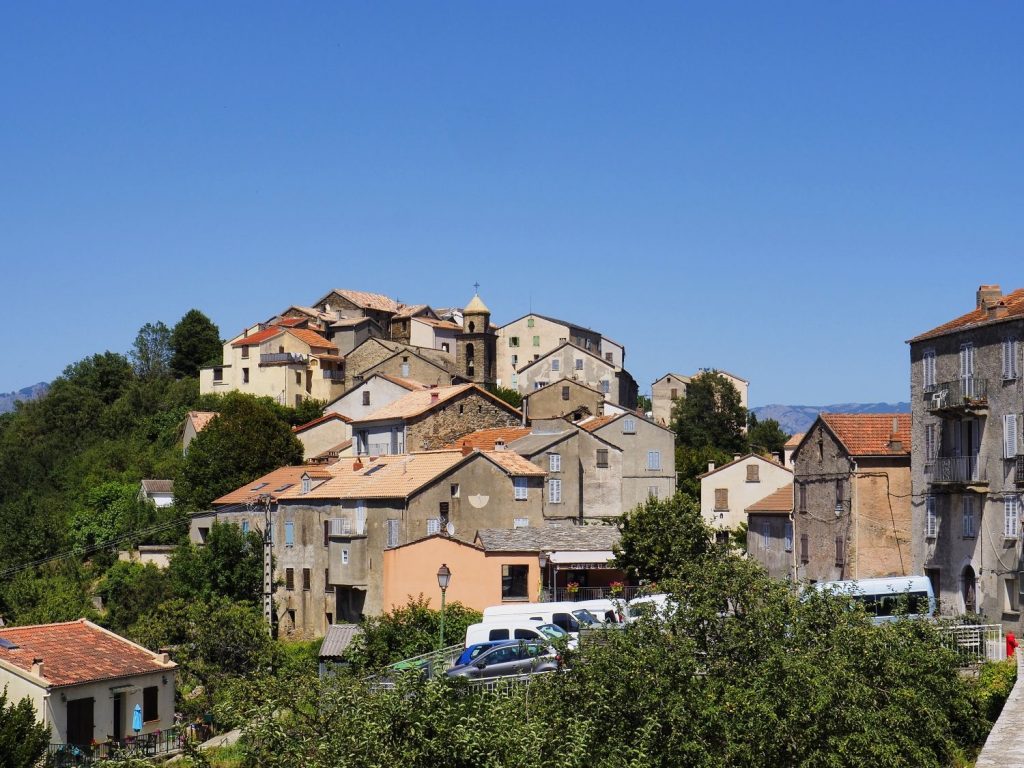
Soveria, Riventosa, Ghisoni, Guitera, Venaco, Vivario, are just some of the delightful mountain villages I crossed during my travel Corsica to see and they deserve a stop. Also only to breathe good air or drink a stone beer "ambered to the chestnut" in the dehor of the bar of the square. Many are part of the "villages fleuris" circuit and for this reason, if you are careful, they have flower pots and flower beds everywhere.
5. The Vizzavona Forest
In the center of the island, it is one of the most beautiful areas of Regional Natural Park of Corsica, kingdom of the majestic laricio pine: 1500 hectares of Nordic forest crossed by a tangle of hiking trails of every difficulty, including a section of the GR20. It is easily accessible, as well as by car, also by train, going down to the station of Vizzavona.
6. The ancient Genoese towers
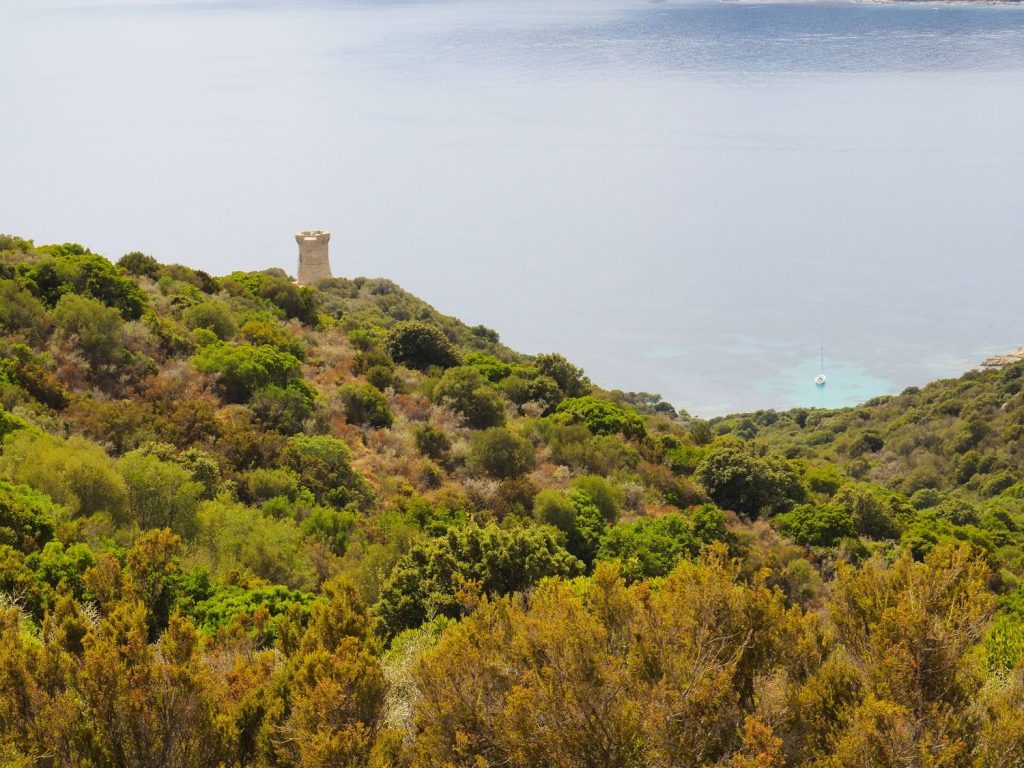
Ancient Genoese guard towers still dot the coasts of Corsica what to see. Built to protect the populations from pirate attacks, today they represent the stages of suggestive waterways, along paths immersed between the maquis and the beaches. I traveled around the promontory of Porto Pollo to the Tour de Capannella, but which then continues towards the beach of Cupabia and the tower of Capu Neru in a landscape that leaves breathless.
7. Sartène
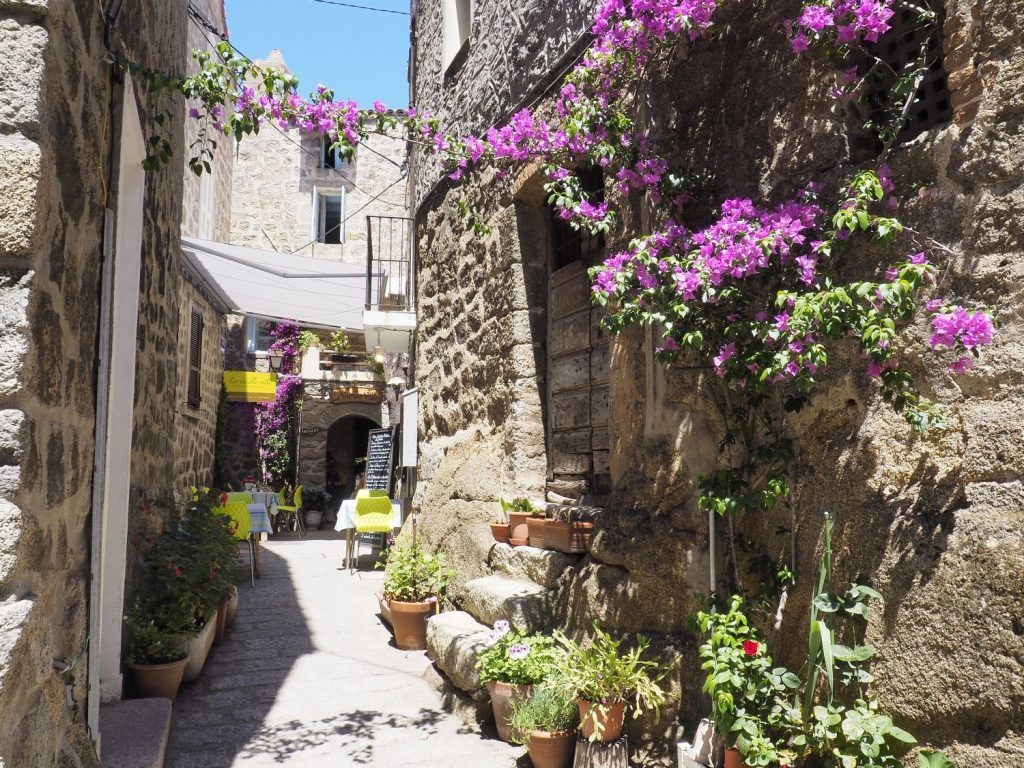
"The most còrsa of the còrse cities", Sartene It is a charming ancient village with old stone houses, medieval alleys and squares shaded by odorous lime trees where to walk without haste.
How Place de la Liberation, where the weekly market of typical products is held, surrounded by the dehor of cafes and restaurants and some of the most important buildings of the town, from the Town Hall to the Palace of the Governor.
Then enter the church of the Assumption, on the main square, to see the wooden cross of 35 kilos and the chain of 17 kilos that are used on the evening of Good Friday for the traditional Catenacciu procession, which is the protagonist of a penitent whose identity remains strictly secret.
Through a passage at a time near the town hall you enter the old town, the most characteristic district of Sartène, with the ancient stone houses close to each other, connected by arches, porches and flowered vicoletti to discover the Echauguette, the stone guard tower which was part of the defensive walls built in the 12th century.
Un delicious corner of old Corsica in which to walk without destination and then sit at the tables of a typical restaurant to taste a assiette de charcuterie, what more typical course you can want!
8. Boniface
Awesome the eyelash of the "blankville" suspended at the top of the limestone cliff, overlooking the spectacular Bocche di Bonifacio that separate Corsica from Sardinia.
Founded in 833 by the Marquis Bonifacio of Tuscany and built with ingenious works of channelling to resist to very long axis, the Citadel still enclosed by mighty bastions, with steep alleys and fortress houses, reports back to the times when it was often targeted by pirates and invaders coming from the sea.
Absolutely among the Places to visit in Corsica the village has maintained its medieval character with the houses-fortress of the ancient noble families embellished by stone arches, the beautiful churches that preserve valuable works of art and a spoken characteristic, practically a dialect of Ligurian origin, which reveals the strong bond of the city with Genoa, handed down over the centuries.
Not by chance, it's just through Porta Genova that within the citadel still protected by the remains of the Pisan and Genoese fortifications, of which Bastion de l’Etendard is the most impressive element. A formidable defensive structure used until the French Revolution, which only in rare cases failed to protect the city from invaders.
On those occasions, the inhabitants could still save themselves through the Escalier du Roy d’Aragon, the steep staircase of 187 steps dug in the live of the cliff that descends to the sea. The legend says that it was built in one night only by the soldiers of King Alfonso V during the siege of 1420.
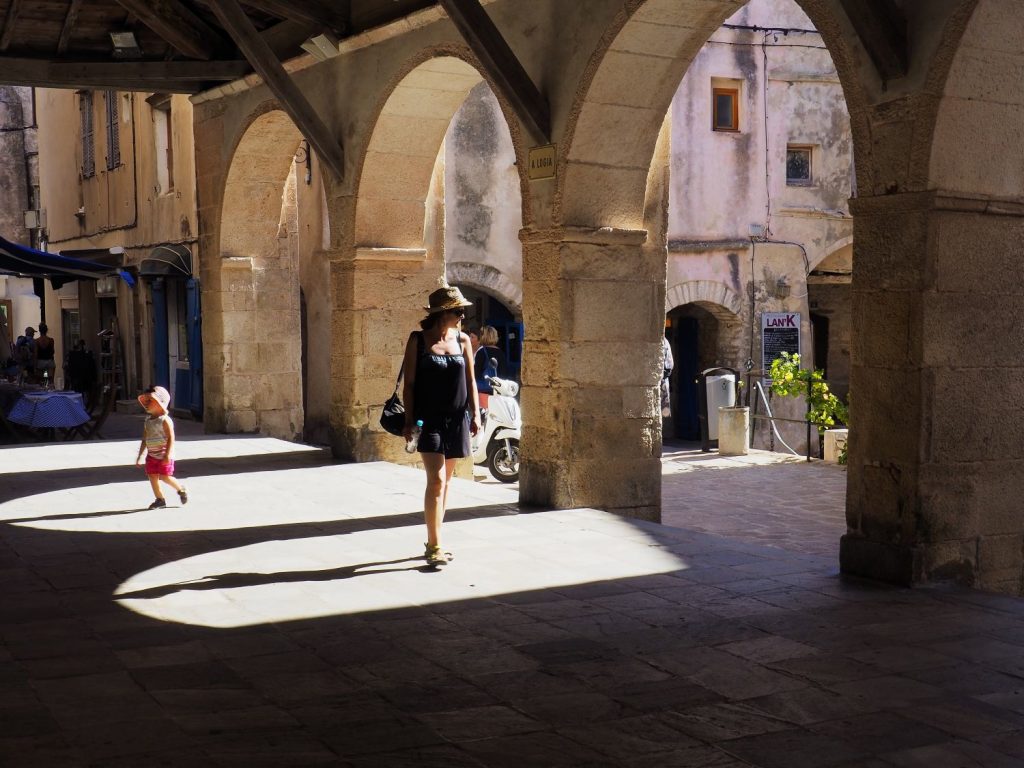
In the haute-ville, do not miss a visit to Ste Cathedral. Marie Majeure, built by the Pisans in the 12th century and therefore considered the oldest religious building in the city, characterized by an external loggia, under which in the past the meetings of the city authorities were held. Not far up the octagonal bell tower church of St.Dominique, one of the rare Gothic buildings in Corsica.
The new part, animated by locals and restaurants, extends instead around the safest and most protected port of the island. Do not leave the city without visiting Cimitière Marin, considered the most suggestive of the Mediterranean.
9. Le Aiguilles de Bavella
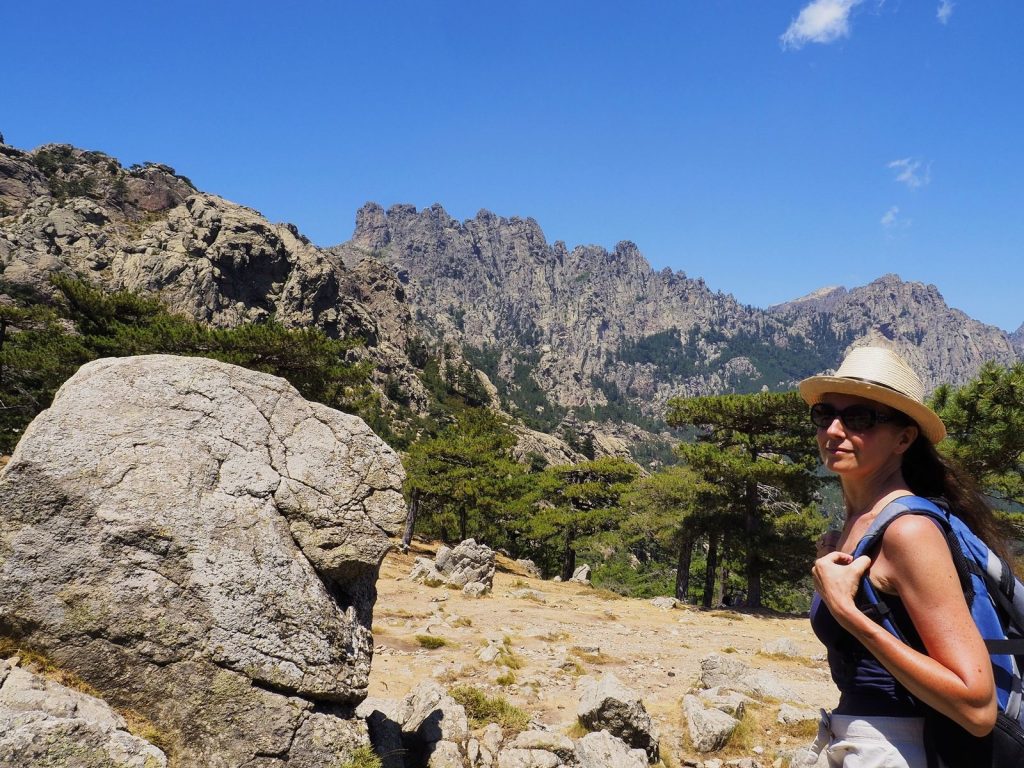
You have to climb up to 1218 meters of the Col de Bavella to touch the sky with a finger. In fact, seven fingers! Many are the "stone towers" that form the Aiguilles de Bavella, a group of subtle spires that seem almost serrated in the rock and recall the Dolomites.
A truly sensational setting, which includes the whole Massif of Bavella, an ideal destination for a hike in the hectic of the woods. You can easily reach them both from within the Regional Natural Park of Corsica, from the coast, as I did, climbing from Solenzara.
10. Other
If you are passionate about archaeological sites and you are on the eastern coast of Corsica, do not miss the opportunity to visit Other, the ancient capital of the island that reached its maximum splendor in Roman times. At that time the ruins of the triumphal arch, of the hole, of a temple, of the thermal baths and of the Capitol spread over a large assolate plateau, while in the nearby museum are exposed the finds found during the excavations.