
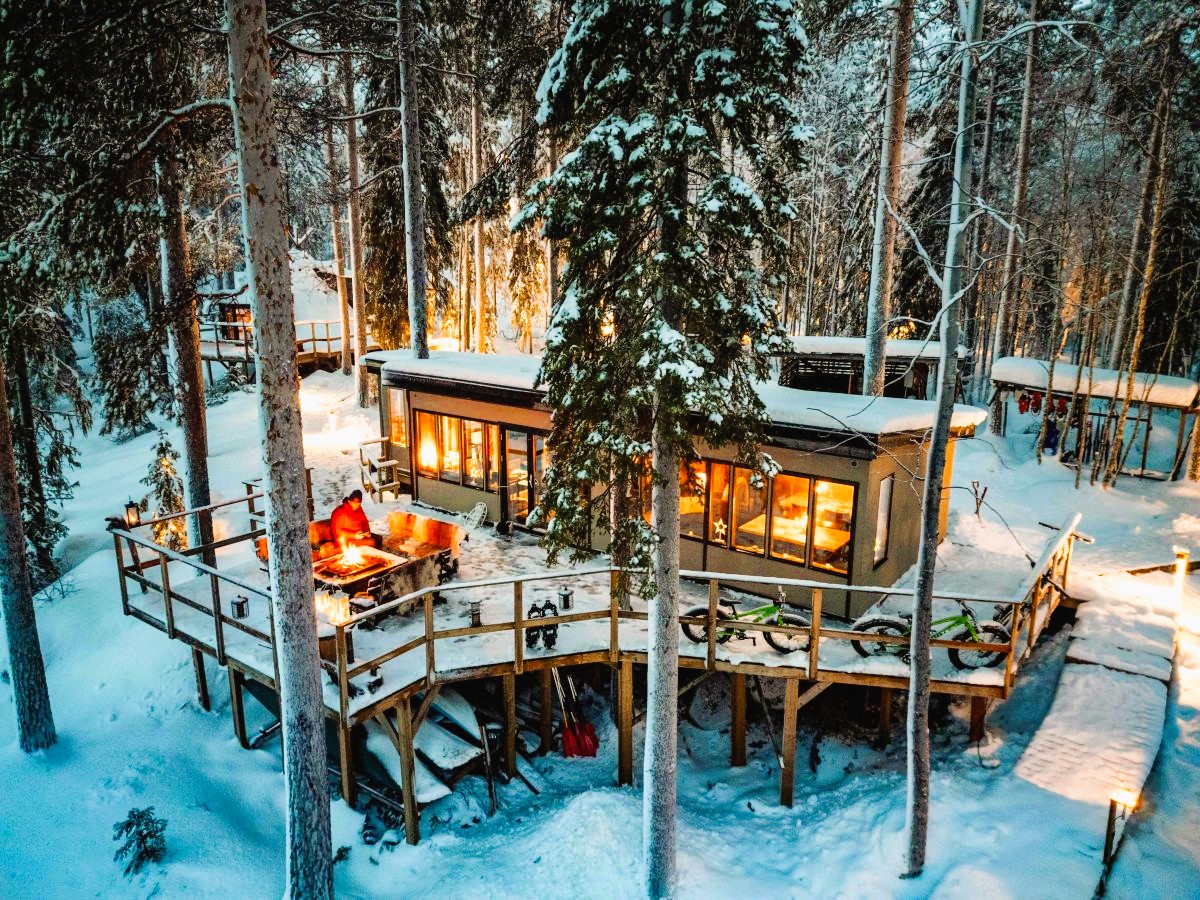
Discovering the Swedish Lapland between boreal aurores, dog-driven sleds, Sami villages, Arctic glamping and baths on the dock, to experience an authentic winter experience between nature and traditions in one of the last wild areas of Europe.
After the long months flooded by uninterrupted light and the sun that never sets, in Swedish Lapland the days gradually begin to shorten, offering the perfect scenery to admire the ethereal spectacle of the boreal aurora that paints the sky with its bright dances. This region is acclaimed as one of the most suggestive places in the world to observe this natural phenomenon, manifested throughout the territory, both beyond the Arctic Circle and south of it, from Abisko among the mountainous reliefs of the north-west, to Luleå, overlooking the Gulf of Botnia.
However, a winter stay in these distant lands offers much more than the only vision of celestial lights. The Swedish Lapland, which extends over a quarter of the entire surface of the country, remains a destination still far from mass tourism, able to offer authentic and extraordinary experiences immersed in the Arctic lifestyle, deeply intertwined with the surrounding nature.
Index of Article
What to do in Swedish Lapland in winter
Starting from Luleå, the city centre and entrance to the region, you can reach, within a few hours, villages like Jokkmokk and many other authentic locations, both in the hinterland and along the coast, from the lively Piteå to Haparanda, bordering Finland. In these places you can experience small-scale activities, close to tradition and local everyday life, as spectacular excursions in unspoilt nature on board sleds towed by dogs, in snowmobile, skiing through the woods or walking with snowshoes, participating in open-air lunches on live fires, fishing on the ice or meeting the Sami and their reindeer.
And of course, the purifying experience of a wood sauna cannot be missed, an indispensable ritual for those who want to truly immerse themselves in the Nordic spirit. The trip would not be complete without a discovery of local flavours, with rhine-based dishes, Arctic sausage, white choregone eggs, berries and mushrooms collected in the lap forest.
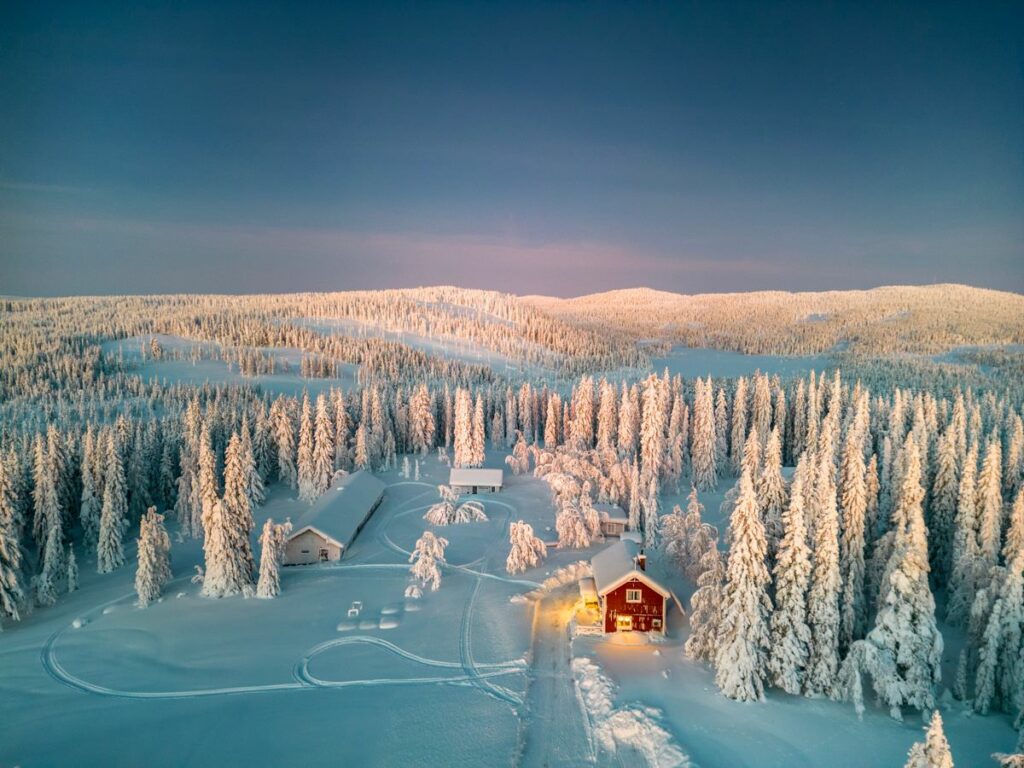
Swedish Lapland is one of the rare seven places on the planet where you can live the Arctic environment in all its majesty. From November, the mountains and the immense forests are dressed in immaculate white, while lakes, rivers and even the sea freeze until May. Often described as the last great wilderness of Northern Europe, this region is a living cultural landscape, where the Sami people, the last indigenous group in Europe, maintains a millenary tradition. Jokkmokk, in the heart of the region, is the center of Sami culture in Sweden, hosting every year, from the first days of February from the far 1606, the iconic winter market.
The charm of the boreal aurora
Peace & Quiet Hotel, located outside Jokkmokk, is one of the best places in Swedish Lapland for admire the boreal aurora. On the frozen shores of the river Lule are located eight glass igloo immersed in wild nature, close to Laponia, UNESCO heritage site, which includes four national parks and two natural reserves. The absence of light pollution allows to observe, from September to March, the spectacular lights of the North directly from its igloo.
During the day, owner Björn Hedlund Länta and his team offer excursions, including a dog-drawn sleigh leading to a Sami family. Here you can approach the reindeer, listen to traditional music "jojk" and enjoy a Sami meal cooked on a live fire. The igloo are accessible in winter only in snowmobile, tobogganing by dogs or reindeer.
Safari between quay and candlelit dinner on the frozen sea
Located on an island north of Luleå, the Brändön Lodge, with its 15 cozy cabins, overlooks the sea and the surrounding islands, offering an ideal starting point for live the typical Arctic adventures. During the winter, it is possible to try in activities such as ice fishing, snowshoeing and snowmobile safari, which lead to the external archipelago, where spectacular landscapes of snow and snow.
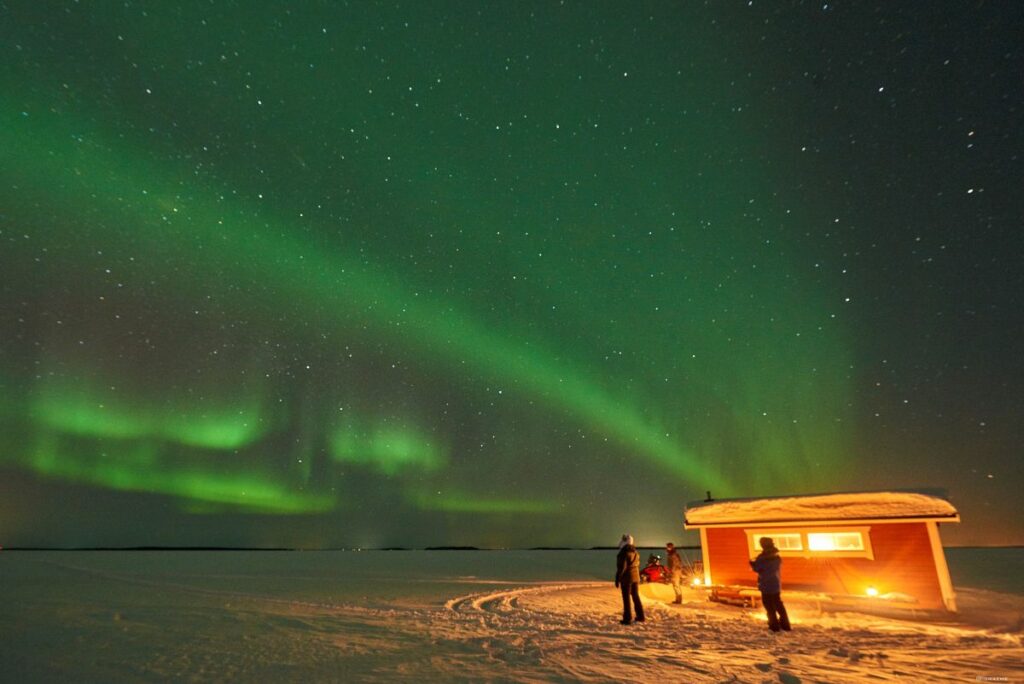
An unmissable experience is the Aurora Hideaway Dinner: a romantic sled trip under the stars to a cottage on the frozen sea, where, surrounded by silence, a candlelit dinner is served. While enjoying local dishes cooked on an open fire, with a little luck, you can admire the boreal aurora that illuminates the sky.
Visit to the reindeer breeders with tasting of Sami delicacies
For those who want to look closely at the reindeer and discover the life of the breeders in Sweden, a visit to the farm of Katarina and Ronny Parfa, a Sami couple, is a unique experience. During winter, live in the forest with their reindeer, taken to the plain after the summer pasture. Most animals live free in the forest, while some are in a large fence to allow visitors to see them and feed them. The visit continues within a typical teepee, where Katarina and Ronny offer coffee prepared on fire and delicious Sami specialties, sharing the history and traditions of their indigenous people. Parfa Reindeer is located near the coast, between Luleå and Piteå.
Meeting with Sami culture at the historic market of Jokkmokk
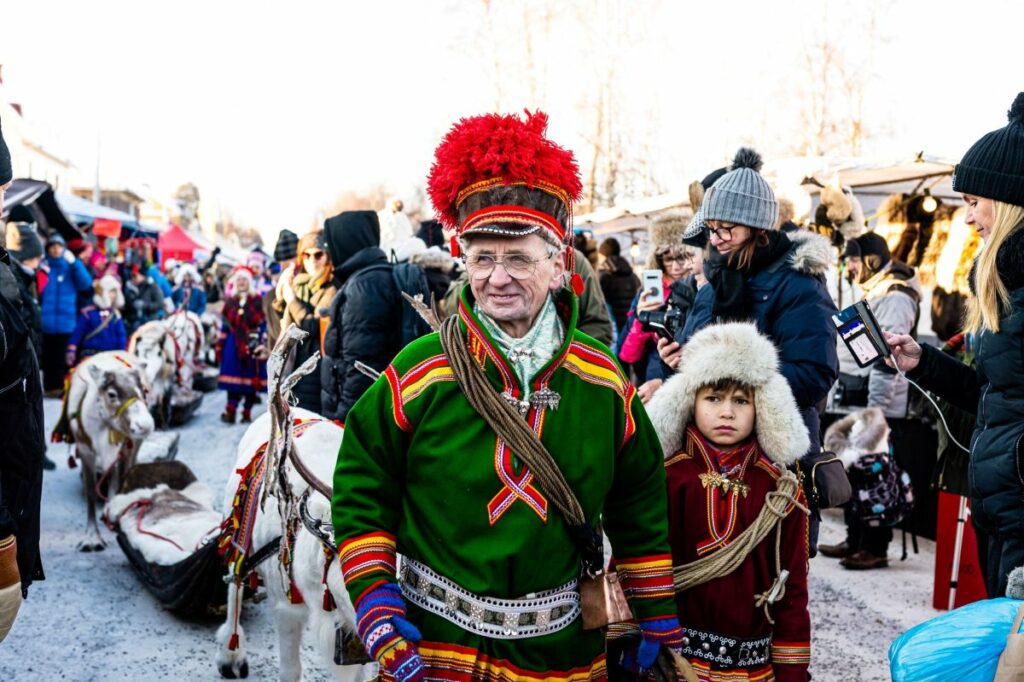
From 6 to 8 February 2025, for the 420° consecutive year, will take place the historical winter market Sami in the small community of Jokkmokk, located just north of the Arctic Circle. This event is an excellent opportunity to immerse yourself in the culture of this indigenous people, as the Sami from all over Sapmì (the traditional territory that extends between Sweden, Norway, Finland and Russia) gather here every year since 1606.
The market offers a wide variety of cultural activities, with sale of handmade and artistic products, a colorful parade of traditional costumes, reindeer races and authentic culinary experiences, all in the heart of the winter lap. There is also a visit to the renowned Swedish Mountain and Sami Museum, Ájtte, which presents several exhibitions on the history and traditions of this fascinating people.
Stay in the hotel of spies
The twin cities of Haparanda, Sweden, and Tornio, Finland, are located on the Finnish-Swedish border, where the Torne River flows into the Gulf of Botnia. During a stay in this charming area, you will have the opportunity to participate in various activities that cross the border, both in the city and on the river and on the frozen sea. Thanks to the time zone, New Year can be celebrated twice: first on the Finnish side and an hour later on the Swedish side! In the past, Haparanda represented the border between East and West, as well as between Europe and Tsarist Russia.
The historic Haparanda Stadshotell, inaugurated in 1900, was the meeting point of spies, smugglers and traders. Today, this charming hotel has been reported to its ancient splendor, maintaining the authenticity of the city’s most important building. The hotel’s restaurant is considered one of the best in the region, offering fine cuisine based on lap ingredients.
The thrill of Arctic Bath
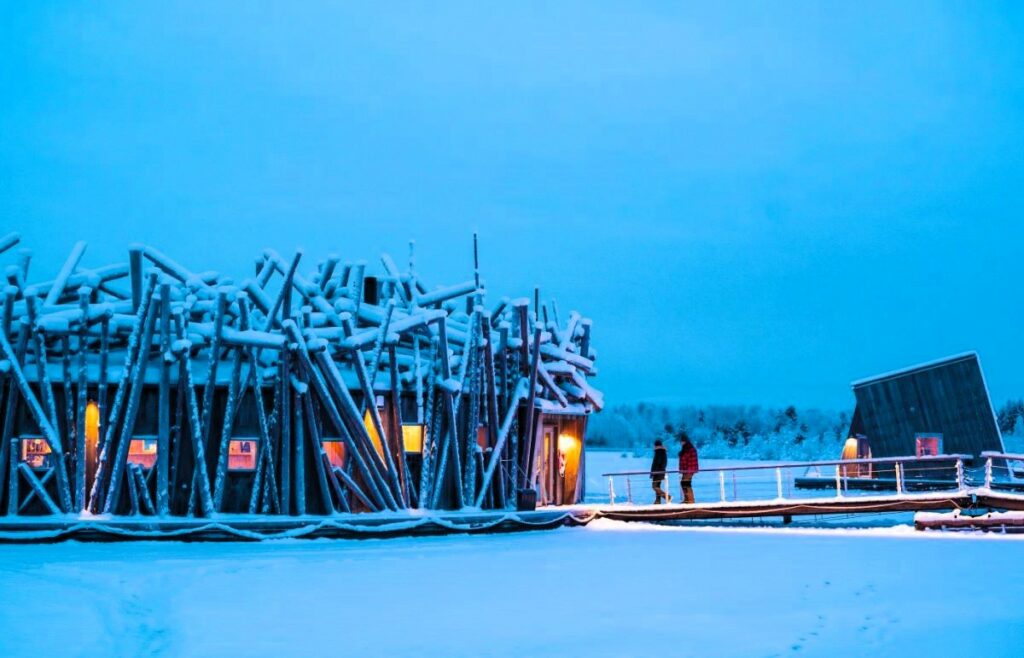
In the village of Harads, along the river Lule, is the Arctic Bath, a hotel and spa floating with spectacular design, inspired at the time of the flow of timber. The circular structure houses six cabins, trapped in the ice during the winter, connected to the shore through a wooden walkway and equipped with a private terrace to admire the northern lights at the nightfall.
Alternatively, you can choose to overnight in one of the houses on the shore, surrounded by snow-filled betulles, with large panoramic windows that allow light and nature to enter. After a dip in the icy water of the river, you can relax in the whirlpool and sauna. Dinner is served in a typically Scandinavian design room, where you can enjoy a tasting menu based on local products, inspired by the beauty of the surrounding nature.
Excursions with toboggan dogs in the Arctic nature
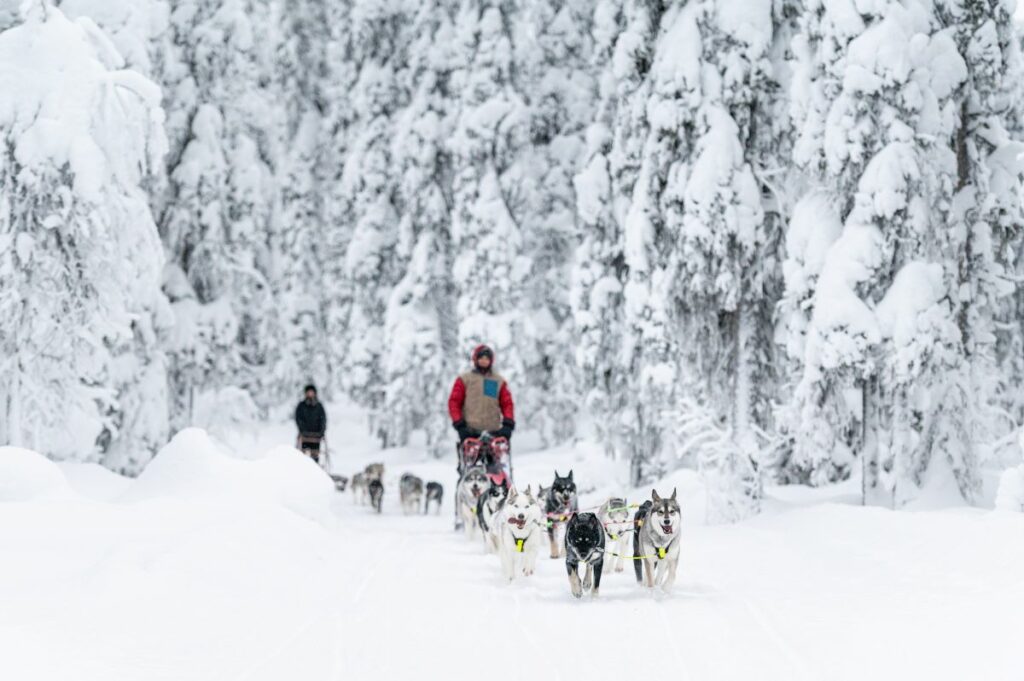
A dog-driven toboggan hike is a winter experience to do absolutely in Swedish Lapland. Dogs, full of vitality, dazzle with joy as they are prepared to guide you through enchanted forests. Among the small breeders who offer the opportunity to share unique moments with their husky, are Anki and Mauro of Luleå Adventure, an Italian-Swedish couple.
You can choose between day tours or evenings, or visit their reed to spend time pampering dogs. If you prefer, an hour away from Luleå, you can visit the family company Yellow Snow Husky Tours and know their affectionate dogs. Whether you opt for a day trip or a multi-day adventure, you will have the opportunity to take care of your mute and immerse yourself in the unspoilt nature of the Arctic.
Icebreaker and bathroom tours in the docks
Sailing on board a icebreaker and diving through the docks is a unique experience in Swedish Lapland, where winter temperatures can go down to -20°C. Aboard an impressive 400-ton ship, they sail the frozen waters of the Gulf of Botnia, stopping to live the adrenaline of walking on the frozen sea.
In addition to exploring the surface, you can also try the emotion of floating between the ice blocks, wearing a stagnant suit that will protect you from the stinging cold. Two icebreakers tour from December to March: the Arctic Explorer, which departs from Piteå, about 45 minutes south of Luleå, and the Polar Explorer, which sails from Kalix, an hour north of Luleå.
Arctic Glamping with Alci sighting
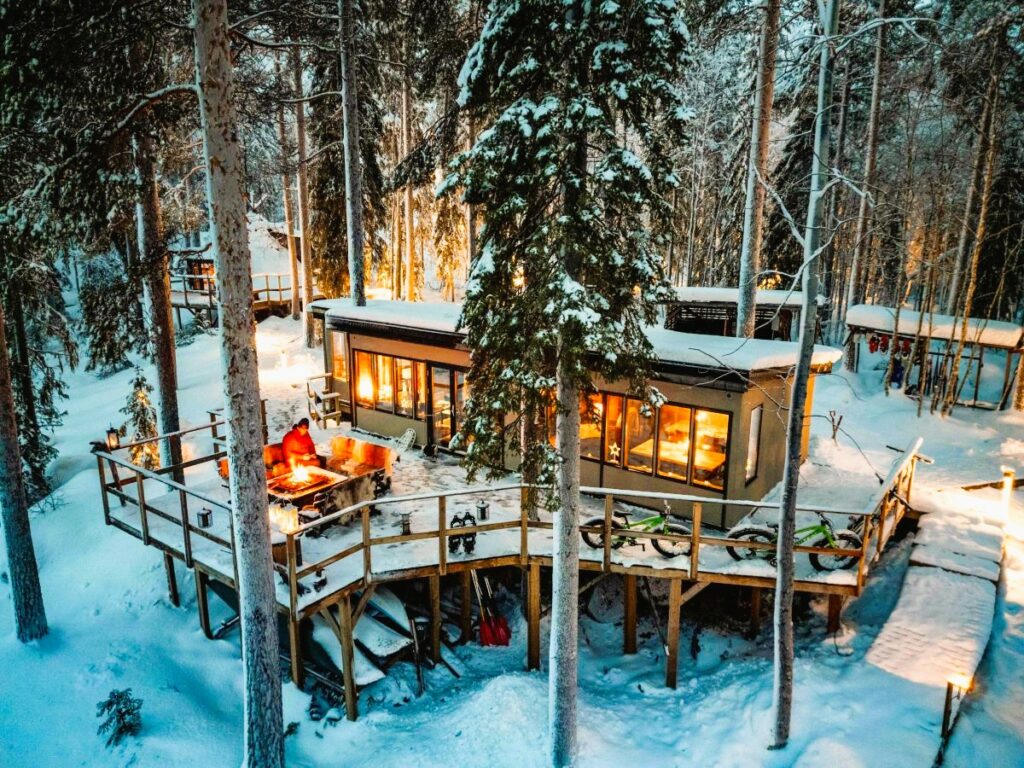
In the remote village of Lassbyn, Jonas and Naila manage the Aurora Safari Camp, the first Arctic glamping in the world, inspired by African fields but adapted to the harsh climatic conditions of northern Europe. Immersed in the woods, the camp offers three cosy teepee-style cabins and two cone-shaped structures, equipped with panoramic windows to admire the northern aurora.
The last stretch to reach the camp runs through snowmobile, crossing the forest and the frozen river. During your stay, you will be able to participate in dog-drawn safari, spotting elks – the majestic inhabitants of the surrounding forest – and enjoy a lunch cooked outdoors on a fire lit in the middle of nature. On the return, the sauna and a dinner with traditional homemade dishes.
The parish village of Gammelstad, UNESCO World Heritage
A few kilometers from Luleå is the parish village of Gammelstad, one of the 15 Swedish World Heritage Sites. The characteristic red wooden cottages, built in the 17th century around the late medieval church, served as a lodging for the peasants who, due to long distances, could not go on the day to compulsory religious services.
Today, more than 400 of these houses have been preserved, and the tradition of temporary accommodation is renewed in the summer months. With a guide, you can walk through the alleys that separate the cottages and listen to Gammelstad's stories. On December 7th and 8th, the village is further enlivened with the traditional Christmas market at the outdoor museum Hägnan.

