
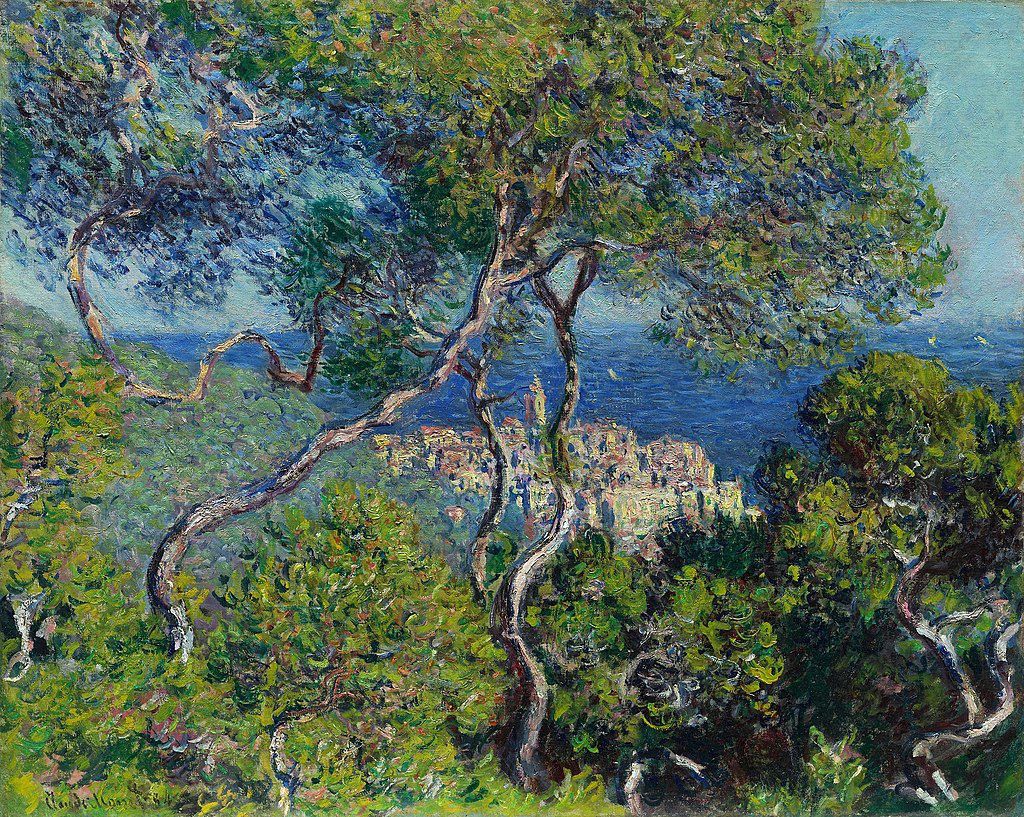
Bordighera what to see during a holiday in the charming town of the Riviera dei Fiori.
The first thing that strikes you Bordighe is its aristocratic atmosphere, which brings back to the splendour of the Belle Epoque. When Bordighe, then little more than a fishing village, was attended by the high European society and with its views, flowers and colors haunted artists and painters.
A bit of that charm is still found among its villas, squares and gardens, where the mild climate also in winter and 300 days of sun a year make this charming tourist resort between Sanremo and Ventimiglia the ideal destination for a holiday or a relaxing weekend.
Index of Article
Bordighera what to see
The Lungomare Argentina
I suggest you start your visit Bordighe from the famous promenade Argentina, a beautiful walk of about two kilometers next to the beautiful pebble beach with clear water, on which for several seasons the blue flag is waving. The name of the waterfront, which is quite unusual, is due to the fact that it was inaugurated by Eva Peron during his historic visit to Bordighera in 1947.
This is one of the most touristy and lively areas, where shops, restaurants and hotels are also concentrated, including Gold Hotel a few steps from the sea and the center. A cozy 3 star hotel where you can stay in rooms with every comfort, relax in the large garden reserved for guests and enjoy the typical Ligurian and Italian cuisine in one of Best Restaurants in Bordighera.
Head and church of Sant’Ampelio
Walking the waterfront arrives at Head of Sant’Ampelio, that with its rocks it protects in the cobalt blue sea. It is the southernmost point not only of Liguria, but of northern Italy, since it is located more or less at the same latitude of Pisa. It deserves a stop, both for admire the amazing panorama that arrives to Cap Martin, in France, both for a visit to church of Sant’AmpelioThat's right there.
Do not be fooled by appearances, even if it seems recent, since it is fresh of restoration, in fact the chapel is ancient, it would even rise to the 11th century. It was built in honor of the patron saint of Bordighera, arrived from the sea bringing in gift the seeds of the palm trees that then spread prodigiously along this stretch of coast, so that still today Bordighera is known as the city of palm trees.
Exotic garden Pallanca
And speaking of plants, if you have a passion for botany, continue along the coast to the Exotic garden Pallanca, which is a real wonder for the eyes! Over 300 species of plants and flowers grow on large terraces overlooking the sea, including many rare species from distant countries. The greatest attraction of the Exotic garden Pallanca However, it is the large collection of cactus and oily plants, many of which are remarkable in size and create spectacular compositions enhanced by the blue background of the sea.
On the footsteps of Monet
Bordighera was once famous for its lush gardens: well before becoming a fashionable seaside resort, it was the destination of artists and painters who came to portray its lush views.
Also Claude Monet remained enchanted by the Mediterranean light and the sweetness of the landscape Bordighe, where he arrived in 1884 to paint the gardens Moreno, once renowned, but that today no longer exist. Other views and buildings in his paintings are still easily recognizable walking through the streets of the country.
Among these the delicious Villa Garnier, residence of the architect who built the Casino Monte Carlo and the Paris Opera, which has spent much of his life here.
The villas Belle Epoque of Bordighera
In addition to Villa Garnier, there are many villas of the Belle Epoque, which date back to the golden years in which Bordighera was the ambite destination of the Russian and English nobility that came on the Riviera to escape the cold Nordic winters. Some of these elegant dwellings are located along the Via Romana, which takes its name from the ancient commercial road to France of Roman times.
This is where the Villa Regina Margherita, built as a winter residence for the first queen of Italy, who spent the last years of life there. Recently restored, it is the seat of the Terruzzi Foundation, which has set up an interesting art gallery in which are exhibited the works of the rich art collection of the family, including canvases of the six and eighteenth century Italian and Dutch and Flemish artists.
Bordighera Alta
The lively promenade and the elegant Via Romana contrast the alleys of Bordighera Alta, the original nucleus of the town, built in the Middle Ages on a height above the marina. The fortified pentagon-shaped area is the most picturesque part, a labyrinth of alleys and squares that spread around Via Dritta and Via Lunga, where it is nice to get lost among shops, some bars and cloths spread to dry.
In case, you can keep the bell tower of the church of Santa Maria Maddalena, built in the Middle Ages as a sighting tower. The 16th century church dominates Piazza del Popolo, the heart of the village, and its interior is a real berry, all stucco and paintings.
Sasso and Borghetto San Nicolò
The hamlets of Sasso and Borghetto San Nicolò, located in the hinterland, beyond the highway, have maintained the look of the old village.
A short walk through palm trees, olive trees and aromatic herbs takes you to the Sasso valley, with the narrow houses around the Church of St. Peter and Paul of the eighteenth century and wide views of the surrounding countryside and the sea in the distance that enchanted Monet here, in 1884, painted the "Little Farm of the Country in Bordighera".

