
Rio de Janeiro what to see and do, an itinerary to discover the city of Meraviglisoa, from the beaches to Corcovado.
Visit Rio de Janeiro without a stop at the beaches, the Corcovado and the Pão de Açúcar (Pan di Zucchero) is like going to Paris and not seeing the Eiffel Tower. The statue of Christ the Redeemer on the Corcovado and the cable car of the Pão de Açúcar, famous icons of the wonderful city, are also part of the National Historical Heritage.
Index of Article
Rio de Janeiro what to see
Corcovado Rio de Janeiro
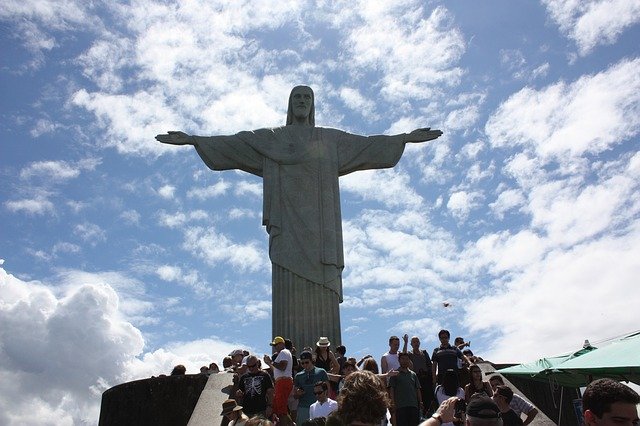
The statue of Christ in Rio de Janeiro, on Mount Corcovado, was inaugurated on 12 October 1931.
To admire it closely, tourists have three possibilities: by helicopter, starting from the Laguna Rodrigo de Freitas and flying so also the Pão de Açúcar; by car, following the Paineiras road and continuing then to the statue with authorized shuttles; by train, starting from the Ferro do Corcovado station (every day from 8.30 to 18.30) in the district of Cosme Velho.
First railway built exclusively for tourist purposes in Brazil and first to exploit electricity, the Estrada de Ferro del Corcovado is older than the same monument of the Christ Redeemer. It was precisely on this train that they were transported to the top of Mount Corcovado materials to build the statue of Christ of Rio de Janeiro.
The first illustrious passenger to travel through the Tijuca Forest was Emperor Don Pedro II, who inaugurated the Estrada in 1884. The train, at the time steamed, was considered a miracle of engineering as it traveled 3,824 meters of tracks on a totally irregular terrain. Since 1979 Swiss manufacturing wagons, more modern and safe, have replaced the original wood.
Practically from every point of view Rio de Janeiro It is possible to contemplate the Corcovado with the Christ of Rio de Janeiro, who became a symbol of the sympathy of the carioca people, who welcomes all with open arms.
From the top of the monument you can admire almost the whole city. Located at the foot of the statue, a map shows visitors the Laguna Rodrigo de Freitas, the beaches of Copacabana and Ipanema, the Maracanã Stadium, the Rio-Niterói Bridge, the Fiscal Island and of course the Pão de Açúcar with its famous cable car.
Pan di Zucchero Rio
It represented the carioca capital in the election of the seven natural wonders of the planet: it is the Pan di Zucchero di Rio, Pão de Açúcar, with its irresistible teleferica inaugurated in 1912 and recently expanded.
The only one in the world whose cabins have completely transparent side walls, to allow visitors to enjoy 360° a breathtaking view ranging from the beaches of Flamengo, Botafogo, Leme, Copacabana, Ipanema and Leblon to Pedra da Gávea, from the Tijuca massif to Corcovado and the city center, from the Rio-Niterói bridge to the Serra do Mar in the background. The cable car runs every day every twenty minutes and the ticket office is open from 8 to 19.50.
With its 396 meters high, the Pão de Açúcar is the Brazilian mountain offering the most climbing routes: almost 60!
The first individual climb of the peak was made in 1817 by Henrietta Carsteirs, who once arrived on the summit planted the English flag. But in December 2, 1877, the Pão de Açúcar was climbed for the fourth time by the British John Branner, J. Oliver and E. Benest, who planted the Brazilian flag instead. Twelve years later, upon returning from a trip to Europe, Emperor Don Pedro II was welcomed by a band with the written "save", placed on the top of the mountain by the cadets of the Military School.

