
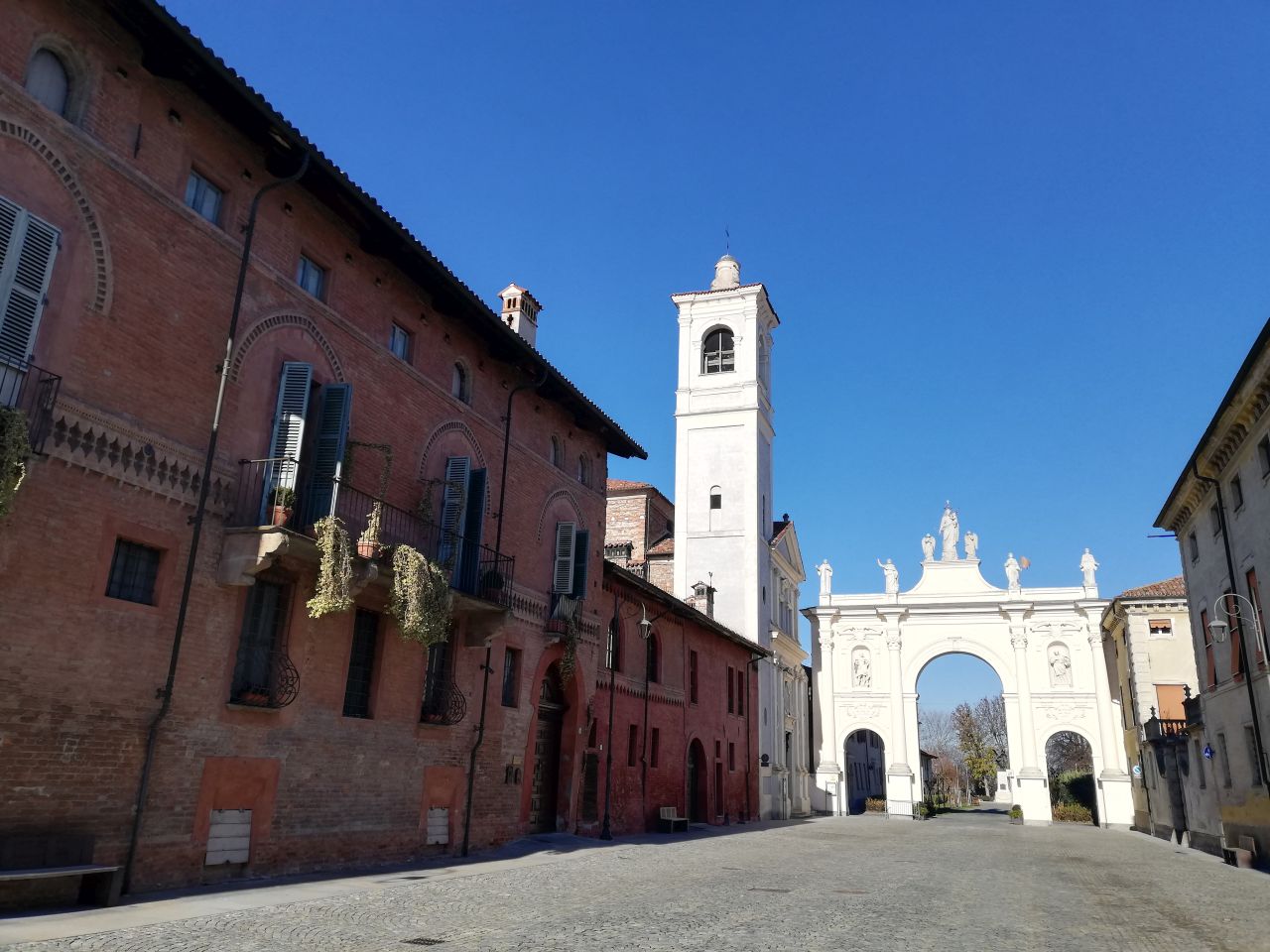
Discovering Cherasco, the "city of the paci" where contemporary art dialogues with baroque palaces, historical churches and famous chocolate kisses.
There are places that preserve ancient stories and yet breathe of contemporaneity, where the past and the present intertwine in a silent but eloquent dialogue. Cherasco is one of these. Situated at the foot of the Langhe, this once fortified little town tells centuries of history through its stones, its triumphal arches, its baroque churches. But it is also a center that looks forward, which has been able to reinvent itself without betraying its identity. And we're here to find out, step by step, Let us be guided by colors, from the scents, from the emotions that such a place can give.
Index of Article
The art that embraces the community
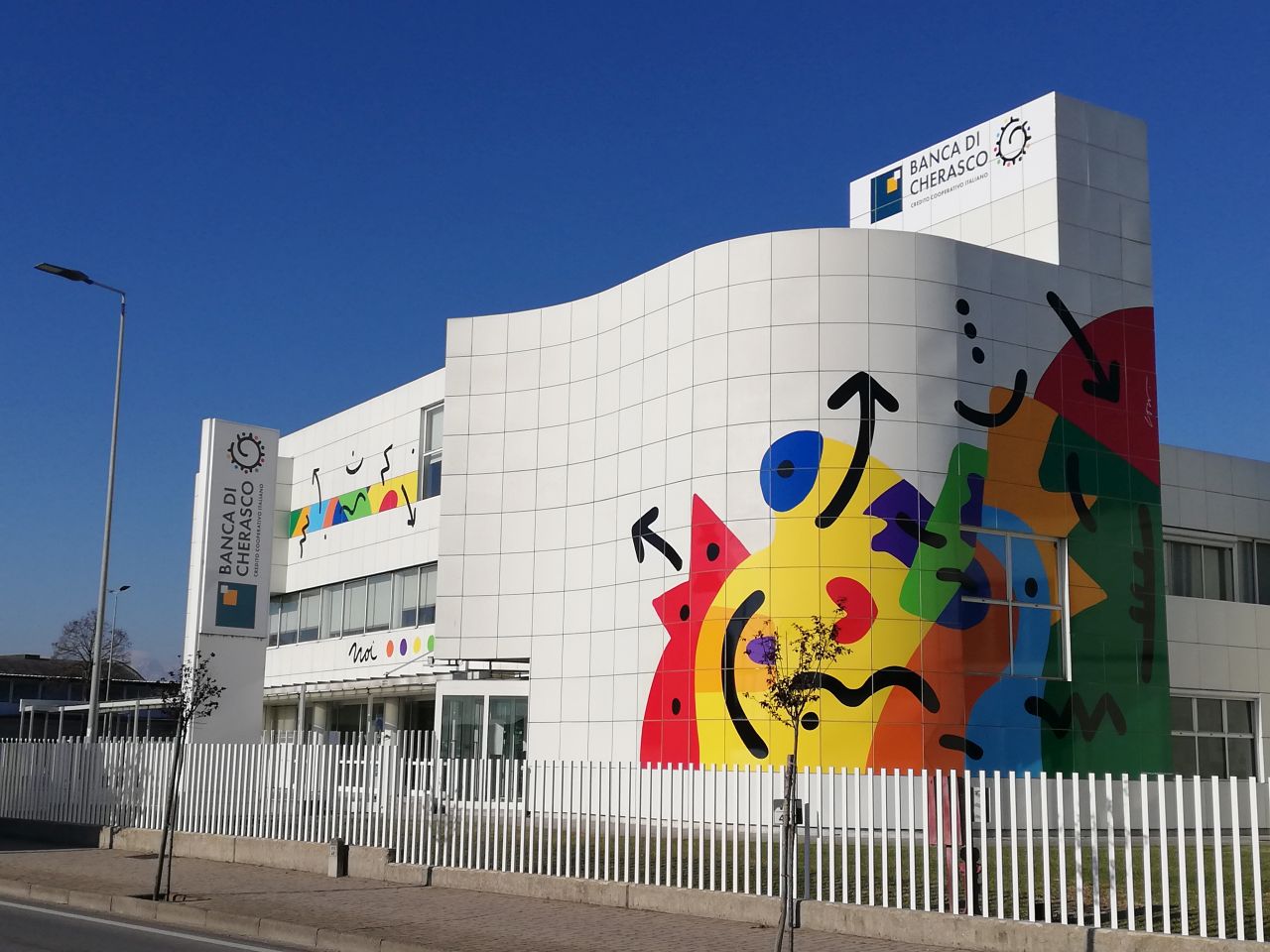
Our journey begins in Roreto hamlet, in front of the headquarters of the Bank of Cherasco. Here, to strike us is an explosion of color that seems to vibrate under the light of the morning: red, yellow, green, blue, intense shades that run on the facade of the building, crossed by decisive black signs, almost an ancestral writing that everyone can interpret in their own way. It is the work "we" by Coco Cano, Italian- Uruguayan artist who has transformed the white architecture of the banking institution into a visual manifesto of community and belonging.
Let's stay a few moments in contemplation. There is something deeply Italian in this work: that sense of community, family, friendship that the artist wanted to celebrate. Primary color blocks speak a universal language but intensely local, a bridge between cooperative tradition and contemporary language, while the lines open in arrows pointing upward, as prosthetic branches to the sky. "It is a tree," says Cano, when we meet him, – a tree of relationships and connections that sinks the roots in the territory and grows towards the future. "
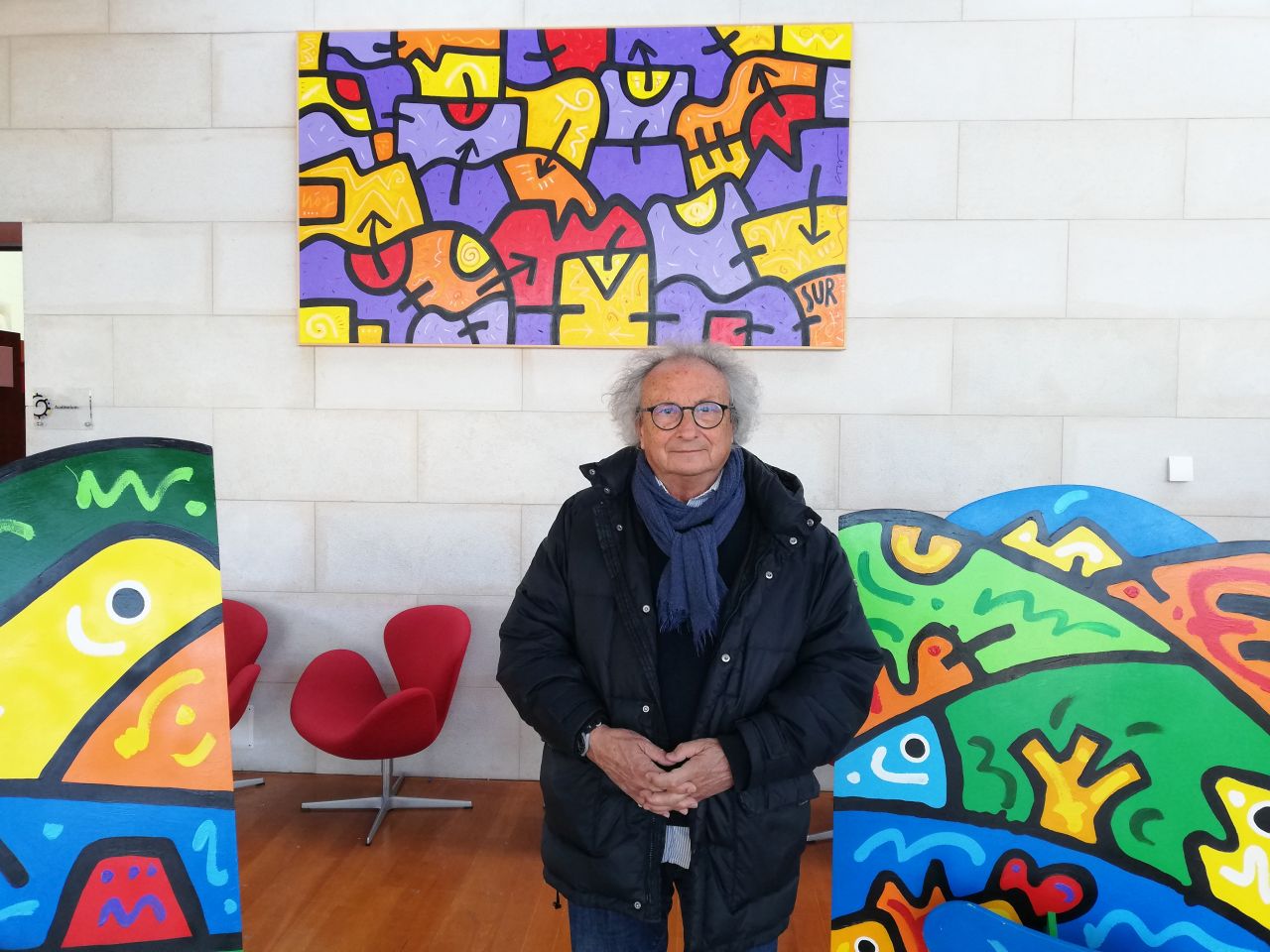
Upstairs, on the facade, camping the new bank logo, which takes back the starry form of the ancient fortifications of Cherasco, the same one that inspired Gina Lagorio for his lucky novel "The city with starry walls. "I started from the historical image of the medieval city surrounded by Renaissance walls," the artist explains. His voice is calm, his hands draw in the air the forms he created. "Now the colors transmit vitality and the mure open outward, to embrace and protect. Inclusion and opening: the two pillars of each community. "
In the ancient heart of Cherasco
And then we go to know her, this community rich in history, which has its roots in the Middle Ages. Let's leave the valley floor and forward to the old town. The atmosphere changes, it becomes more rarefied, almost suspended. The orthogonal ways open before us as pages of an ancient book, and every palace, every tower, every church tells a chapter in the history of Cheraschese. Founded in autumn 1243 as a fortified city, Cherasco was the protagonist of events that marked the history of Italy: here they signed decisive paci, here the Shroud and Napoleon imposed his will to the Savoy.
The old town is unveiled in its perfect geometry: a square plant enclosed between two large arches, the 16th century Belvedere on one side and the 18th century Arco di Narzole on the other, crossed by two districts that divide the village into four districts. We walk slowly, letting the look rest on the details: the ancient porticos, the fifteenth century friezes, the terracotta facades that the sun shines with ocher and golden shades.
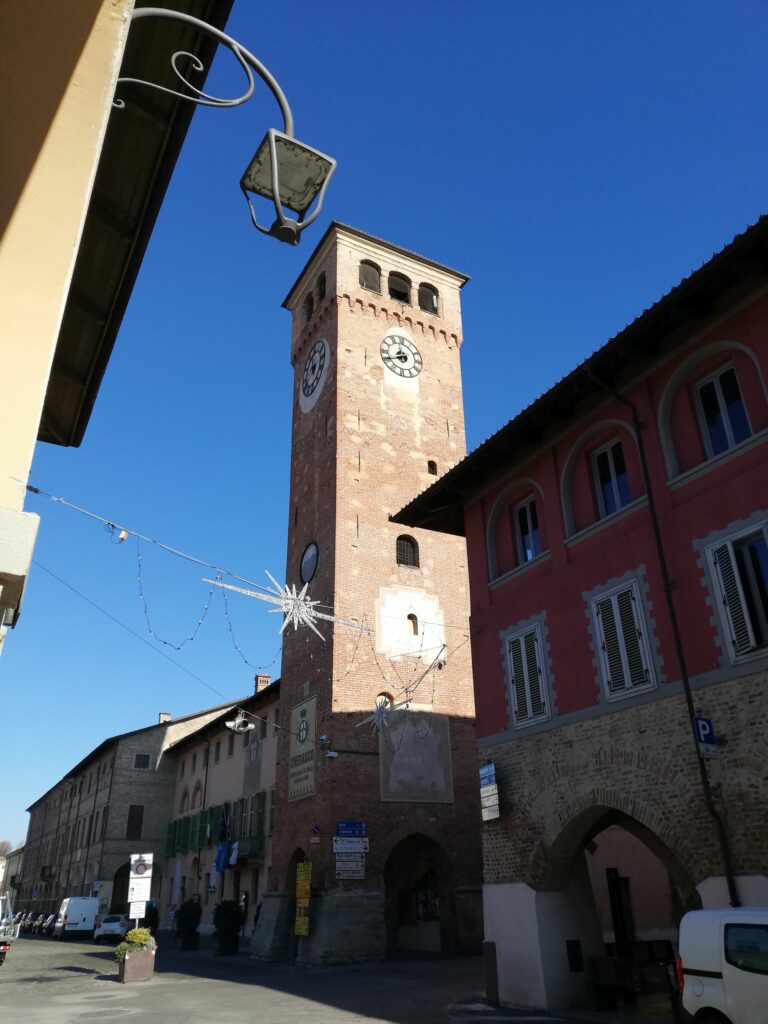
The Civic Palace, recently restored, welcomes us with its municipal tower from which emerges a precious lunar on which, according to the lunar phases, the silver star rises and sets on a grove scene painted centuries ago, a poetic mechanism that still today scans time. The facade of the building reveals a fresco of the 18th century with the fantastic coat of arms of Cherasco: the Tanaro and Stura rivers, represented by two young people who confuse their feet in the confluence of the valley bottom. An image that speaks of union, territory, deep identity.
The Arch of the Belvedere overlooking the valley
We head towards the imposing Arch of the Madonna del Rosario, also known as Belvedere, from which the view spans the hills of Langhe and Roero. built between 1647 and 1688 as a vote of the city to be spared by the plague, surmounted by the statue of the Virgin who watches from above surrounded by a court of saints. There is a great solemnity in this structure, but also a grace that softens its baroque monumentality.
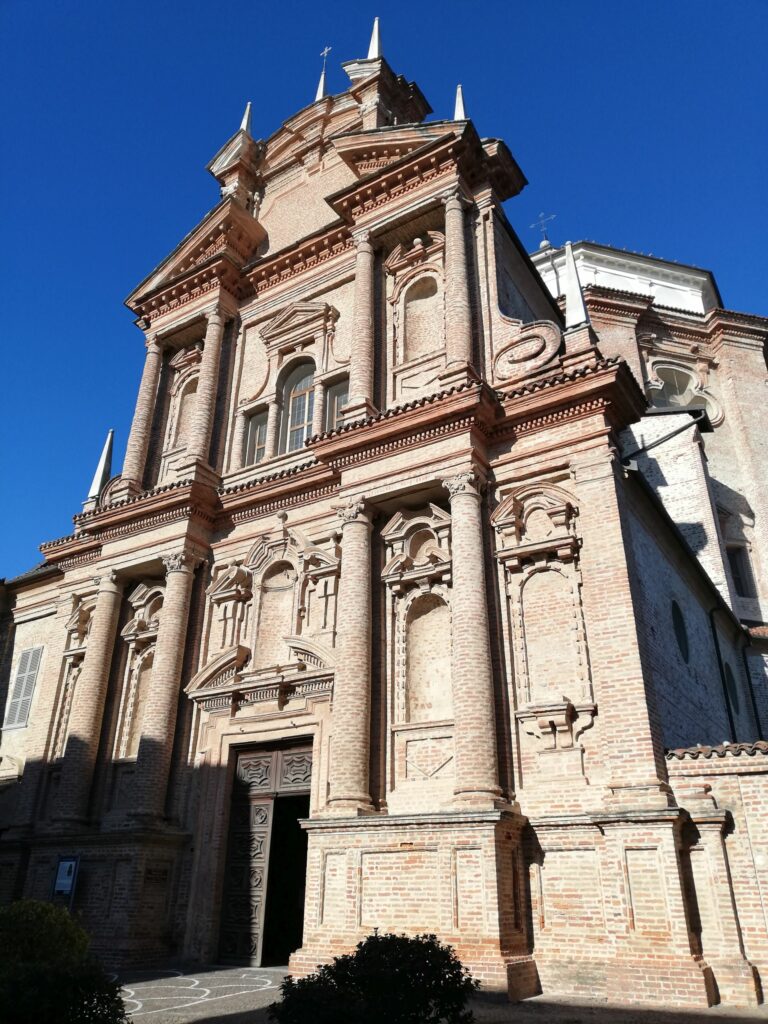
We continue towards Church of Our Lady of the People with its beautiful terracotta façade, completed in 1702. We see the threshold and the interior envelops us in a tripod of art: 18th century wooden statues, frescoes of the Aliberti, the precious "adorations" of Pietro Metey. Every chapel, every altar tells devotion and craftsmanship, while silence seems to invite us to sit in the docks, to stop in contemplation under the third largest in Piedmont that dominates majestic this magnificent place of prayer.
A secret garden in the heart of the ancient village
In the shadow of that same dome we discover a surprise: the Ancient Garden of the Somaschi Fathers dedicated to edible and ornamental flowers. A space of quiet where the green is protagonist, curated by the University of Turin with dozens of different botanical species. We walk through the flower beds, breathing the scents of herbs and flowers, and we feel like time travelers who have discovered a secret corner of the city. As an ideal bridge, this precious garden connects the historic centre to the bastions, integrating nature and architecture into a path that satisfies the eyes and spirit.
Palazzo Salmatoris, where history meets art
Our walk finally leads us to Palazzo Salmatoris, the most prestigious building in Cherasco. In its sumptuous rooms in 1631 the peace that ended the Monferrato wars, while in 1796 Napoleon imposed the armistice on the Piedmontese. For these two episodes Cherasco is known as "People's city", a title that bears pride.
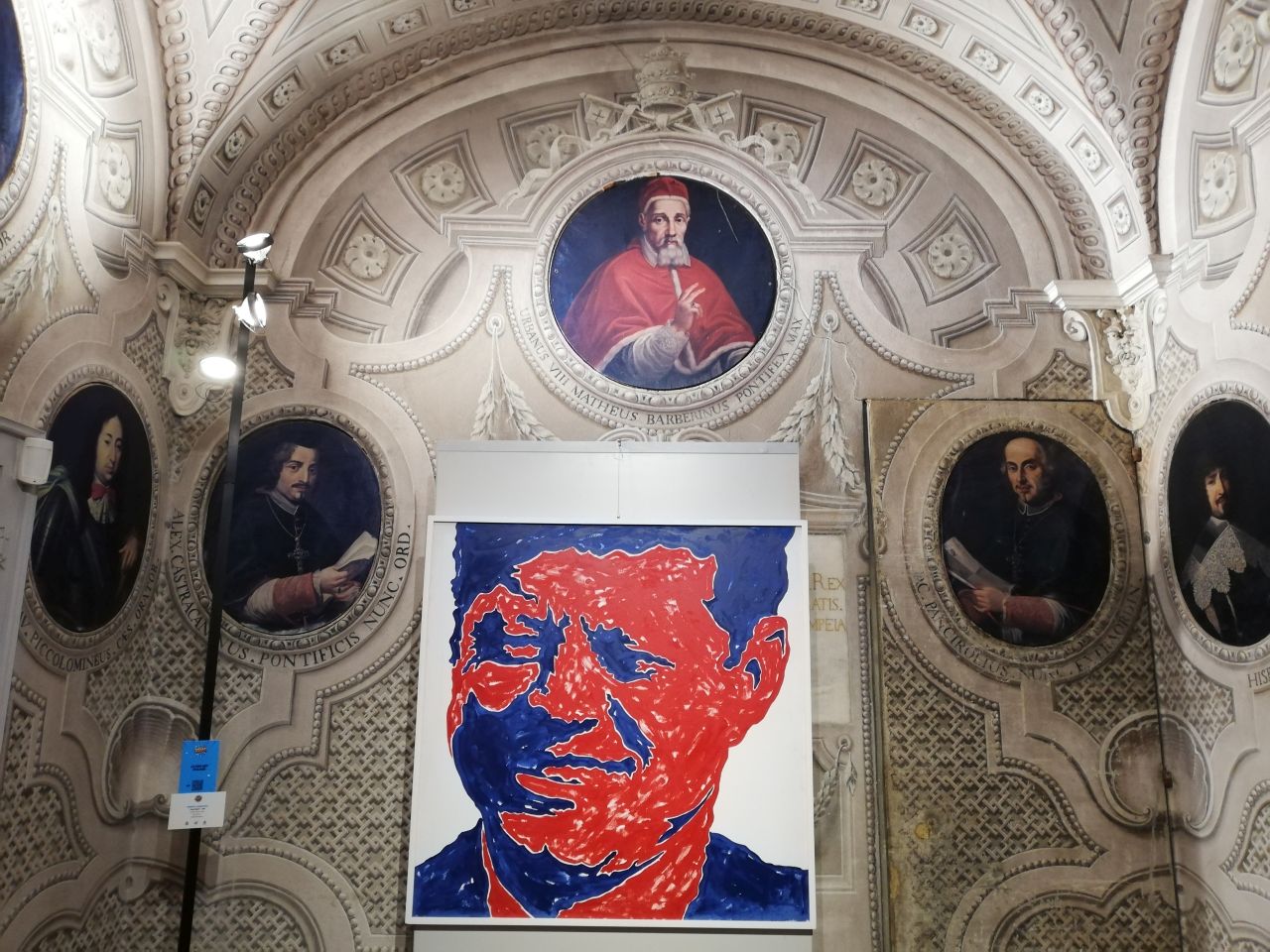
Restored and valued, the building is now home to exhibitions of modern and contemporary art. In the past it hosted exhibitions of great artists who marked the twentieth century, such as Picasso, De Chirico, Guttuso, Morandi, Chagall, Mirò, Magritte. It's in progress right now. "SBAM! A path in the POP ART", a vibrant journey through the movement that revolutionized the art of the 20th century. Over one hundred and fifty works dialogue with each other: from the Nouveau Réalisme of Arman and César to American icons of Warhol, Lichtenstein and Indiana, up to the "Italian road" to Pop with Schifano, Tano Festa, Valerio Adami.
We pass through the rooms, allowing us to be surprised by the bright colors, by popular images transformed into art, by the daily made extraordinary. It is fascinating to discover how Pop Art has been able to grasp the pulsations of an era in transformation, and as today, in this palace that was the scene of peace treatises, continue to talk about change and contemporaneity.
A sweet goodbye
Exit from Palazzo Salmatoris, we follow the call of the arcades, which are full of shops and small shops made under ancient times. Our step slows down in front of the Pasticceria Barbero, historic place that seems out of a vintage print. The sign, the windows, the furniture: everything speaks of a time that was but that here continues to live, also thanks to the fame of famous Kisses of Cherasco, invented by Mario Barbero in 1881.
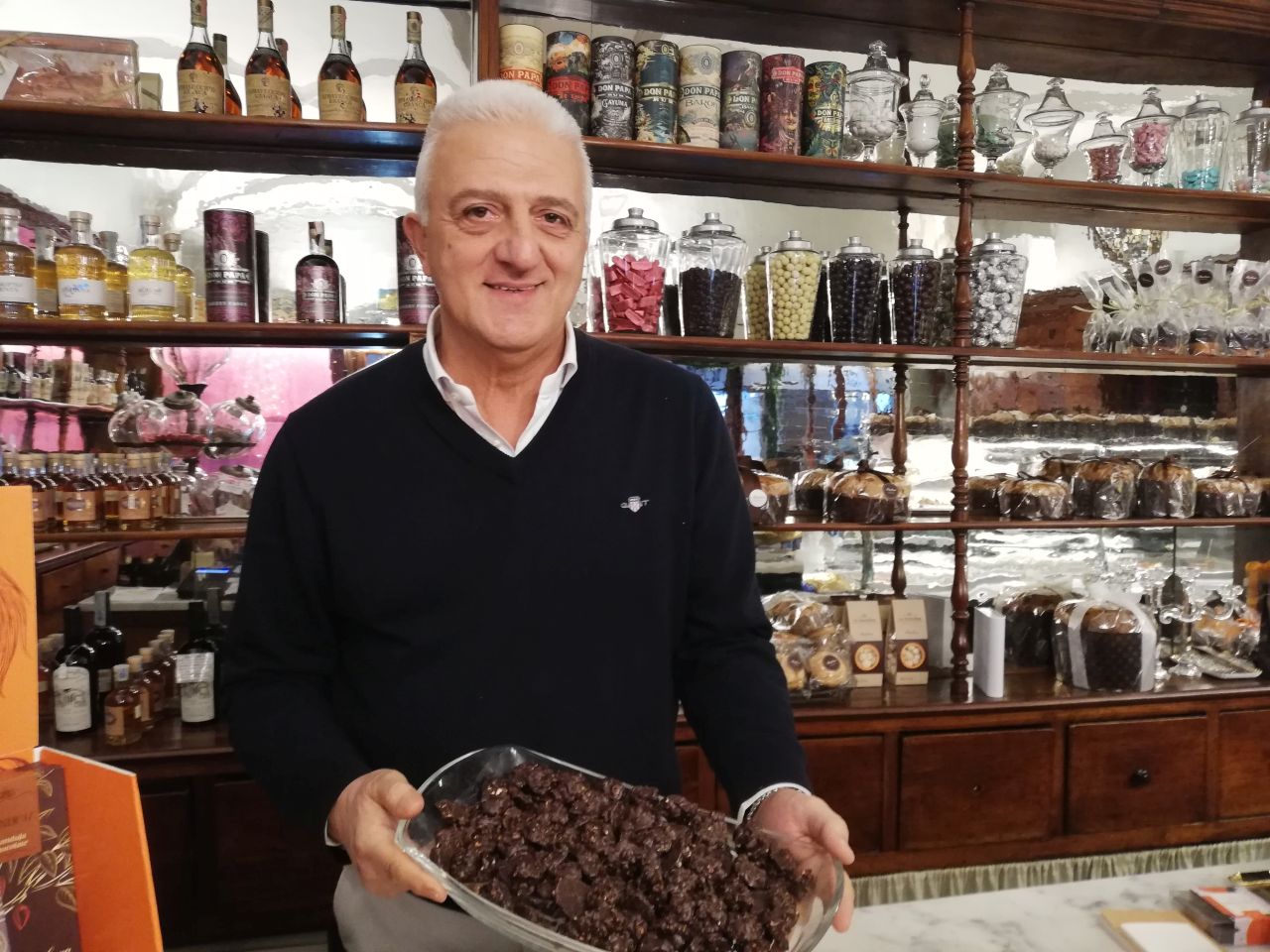
The recipe has remained the original one, bitter chocolate and roasted hazelnuts in the wood oven, for a sweet superlative with an intense and decided taste, which is reductive to simply call chocolate. A taste (and even more than one) is the sweetest way to leave Cherasco, bringing with us the taste of a city that knows how to be ancient and modern, collected and open, custodian of traditions and laboratory of future.

