
Discover what to see in Brescia: 10 places not to be missed between contemporary art, historical castle, Tosio Martinengo Pinacoteca and the Santa Giulia Museum. A cultural journey among the artistic treasures of Leonessa d’Italia.
Welcome to Brescia, a modern and vibrant city, where history blends harmoniously with contemporary culture. This Italian jewel offers a unique and authentic experience for visitors looking for exciting and original places, far from the usual tourist destinations. We discover together what to see in Brescia, through its historic center, museums, contemporary art, artistic and cultural treasures, and much more.
Index of Article
Explore the Heart of the Old Town: The Three Squares
The tour begins in the three historic squares that form the old town, an area mostly pedestrian.
1. Piazza Paolo VI
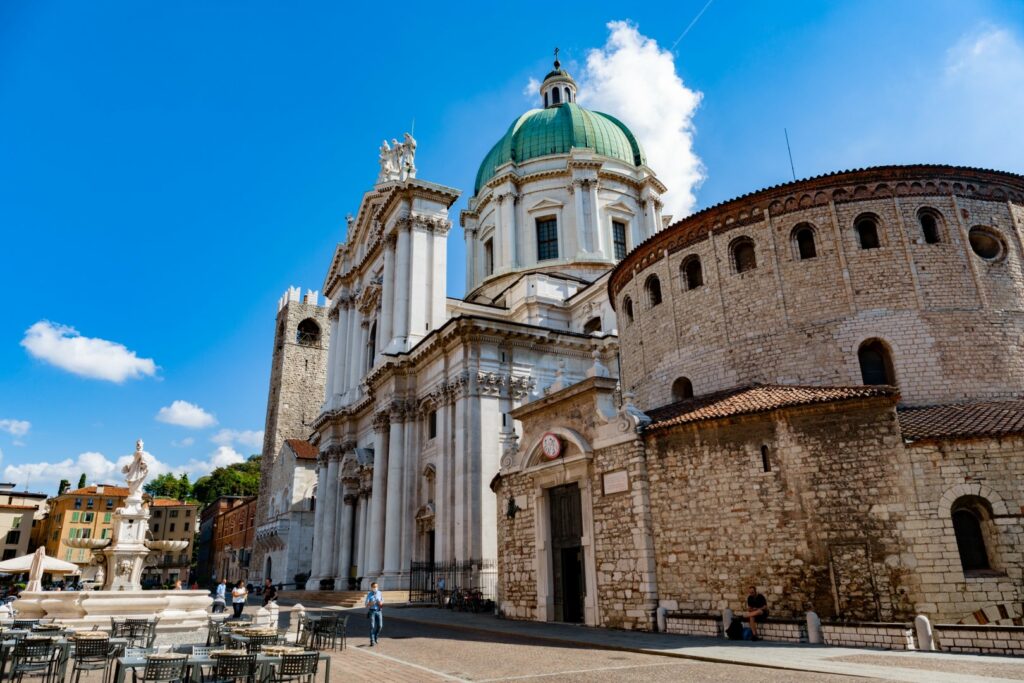
First, Piazza Paolo VI, the spiritual heart of Brescia, entitled to Giovanni Battista Montini, the Brescian pope, is an unmissable destination for visitors. Surrounded by historic buildings, such as Broletto, Duomo Nuovo and Rotonda, the ancient Romanesque Cathedral with a round plan that recalls the Holy Sepulchre of Jerusalem, is dominated by the splendid Cathedral of Santa Maria Assunta.
2. Piazza della Loggia
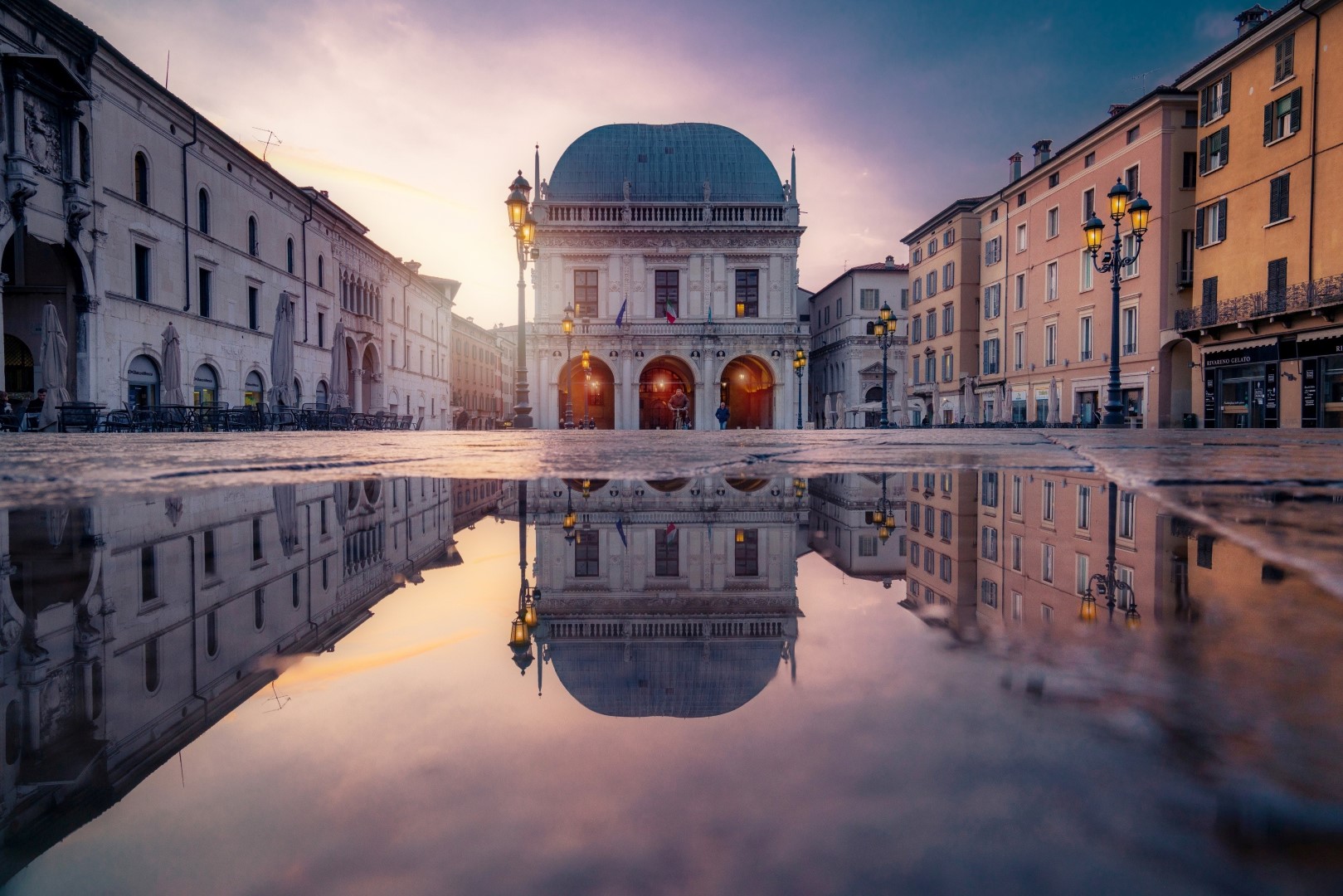
Next, Piazza della Loggia, a Renaissance jewel with the majestic palace of the same name, the arcades and the clock tower, symbol of Brescia. Every day, the square is animated by a lively atmosphere, thanks to cafes and restaurants that crowd the arcades, offering delicious local food and drinks. Piazza della Loggia is also an important historical testimony: in 1974, a tragic terrorist attack took place, leaving an indelible mark on the city. Therefore, the square is also a place of memory and reflection, where visitors can admire the architectural beauty and, at the same time, pay homage to the resilience and strength of the Brescian community.
3. Piazza Vittoria
Finally, Piazza Vittoria, characterized by its candid and rigorous architectures symbol of the rationalist era. These historic squares offer an ideal background to stop in one of the bars with outdoor terraces, enjoying an authentic Pirlo, the Brescian aperitif par excellence, or experiencing the delicious culinary proposals of restaurants, which skillfully combine local cuisine with contemporary creations.
Diving in History: The Museum of Santa Giulia and the Archaeological Park of Brescia Romana
4. Brixia Archaeological Park of Brescia Romana
Continuing, Via Musei takes us on a journey back in time, through the archaeological area of BRIXIA. Archaeological park of Brescia Romana, which contains the most extensive and best preserved Roman ruins of northern Italy. Located in the heart of Brescia, this archaeological park offers an extraordinary experience of discovery and knowledge. Through meticulous excavations, the remains of important Roman buildings, such as the Forum, the Thermal Baths, the Theatre and the Basilica, have come to light.
These findings are carefully preserved and exhibited, offering a fascinating perspective of daily life in the ancient Brixia. The park is a place of cultural sharing, where events and exhibitions enrich the understanding of the history of Brescia and the entire region. Visitors can wander through secular ruins and let themselves be transported on a journey through time, admiring the union between antiquity and modernity that characterizes this charming city of Lombardy.
5. Santa Giulia Museum
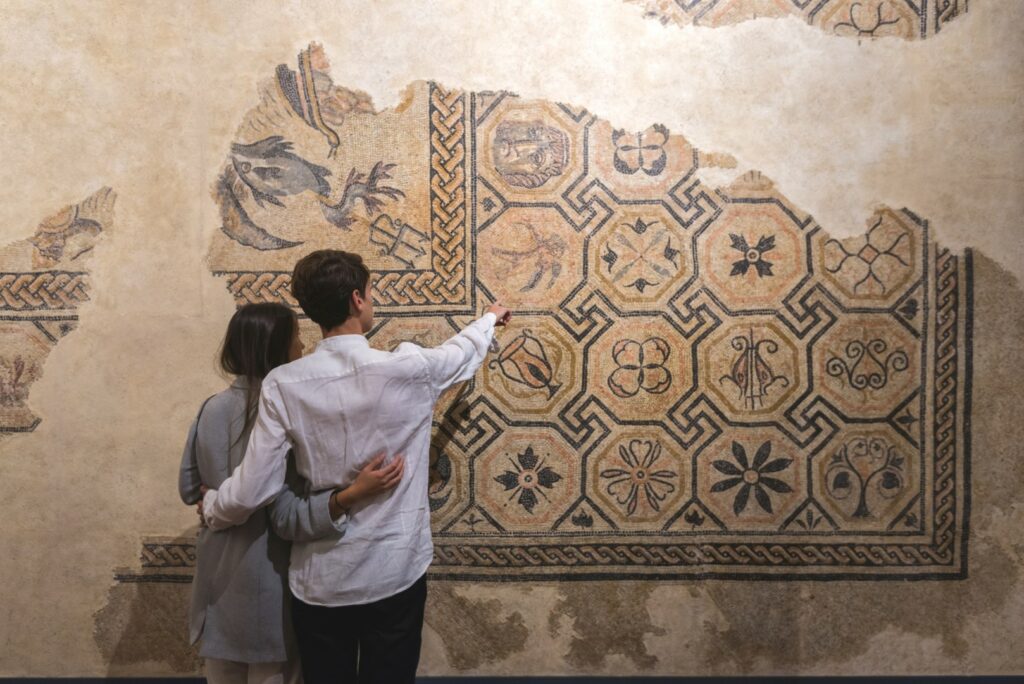
The Santa Giulia Museum is a unique exhibition complex in Italy and Europe. Here you can retrace the history of the city from the Bronze Age to the present day, admiring remains of Roman domus, churches, cloisters and treasures such as the Cross of Desire, a precious jewellery Carolingian. One of the most extraordinary pieces is Winner Alata in the Capitoline Temple (Capitolium), a rare large Roman bronze dating back to the first half of the 1st century AD, admired by illustrious characters such as Gabriele d’Annunzio and Napoleon III.
What to see in Brescia: Artistic Treasures
6. The Pinacoteca Tosio Martinengo
If you are an art lover, you cannot miss the Pinacoteca Tosio Martinengo. This gallery houses an extraordinary collection of works of art, including masterpieces by Raffaello, Lotto, Hayez and Canova. The heart of the gallery is the Brescian painting of the Renaissance, with works by masters such as Foppa, Savoldo, Romanino and Moretto. Admire the paintings in a refined setting surrounded by velvet upholstery with bright colors, which enhance the chromes and highlight decorative art objects such as goldsmiths, avours and glasses.
Contemporary Art in Brescia: Artistic spaces and interventions
7. Palazzo Martinengo Colleoni
Brescia also offers a lively panorama of contemporary art. Important exhibition spaces and galleries present international exhibitions and cultural initiatives. Palazzo Martinengo Colleoni, for example, hosts the Mo.Ca, a centre of innovation, start-ups and talents in world of graphics and digital.
8. Church of Saints Philip and James
The deconsecrated church of Santi Filippo e Giacomo is home to site-specific exhibitions and artistic performances, immersing yourself in the trendy culture of the Carmine district. Even so. street art and artistic installations mark the city, making contemporary art an integral part of the urban fabric. This area is in the Carmine district, known for its lively nightlife and mixes of art and culture emerging with the ancient history of the city. Along the metro, important installations by artists such as Emilio Isgrò, Marcello Maloberti and Patrick Tuttofuoco leave the sign of the contemporary city.
9. The Castle of Brescia
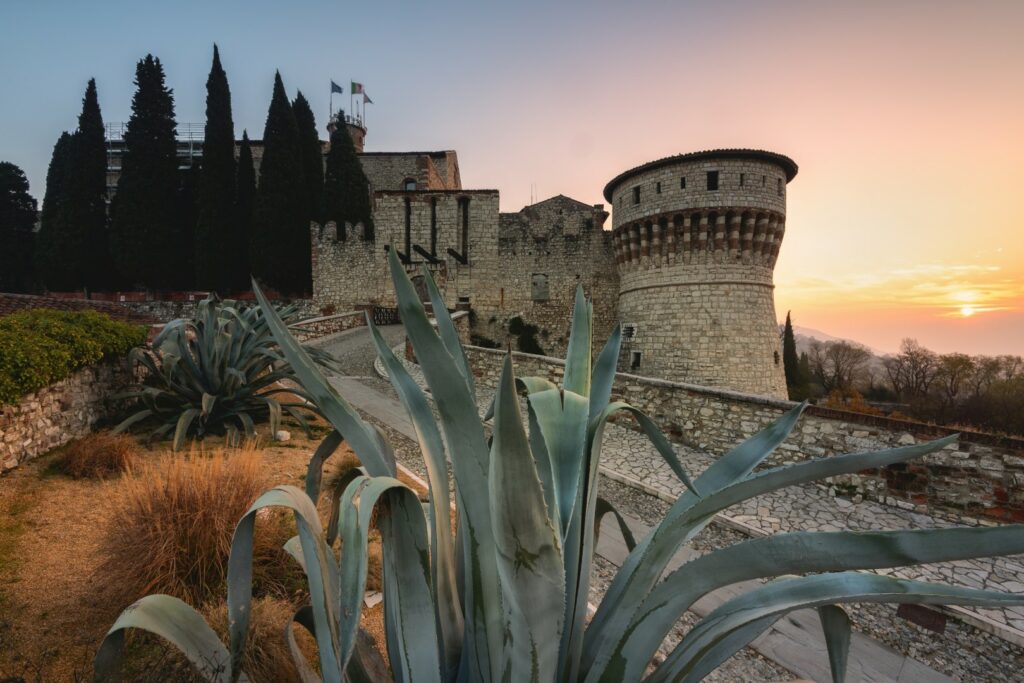
A pleasant walk from the historic centre will lead you to the Castle of Brescia, one of the largest fortified complexes in Europe. The castle offers a fascinating experience between gardens, towers, bastions and secret walks, which fascinate young and old. Visit the Museum of Ancient Arms Luigi Marzoli, one of the most important collections in Europe. From the castle bastions, enjoy a unique panoramic view of the city.
10. The Urban Vineyard of Pusterla
Near the Castle, you will find the urban vineyard of Pusterla, the largest in Europe with its 3.4 hectares. Located along the ancient medieval walls, this charming vineyard is a place of great cultural and symbolic importance for the local community.
The origins of the Urban Vineyard date back to the 13th century, when the area surrounding the Porta della Pusterla, one of the main entrances of the city, was used as a vineyard to produce high quality wines. Over the centuries, the vineyard passed through several stages, falling into disuse and then being recovered thanks to the commitment of local enthusiasts and associations who rediscovered its historical and cultural value.
Today, the Urban Vineyard of Pusterla is a lush and well-kept area, embraced by a romantic and evocative atmosphere. Here, visitors can stroll through the rows of vines, enjoying the beauty of the ripe bunches and the aroma of flowers that intertwine in the air. The panoramic view of the ancient city that extends to the foot of the vineyard makes the experience even more evocative.
Living Brescia: The City of 1000 Miglia
Brescia is internationally renowned for the legendary "1000 Miglia," a car race that sees historic cars along the Brescia-Rome route and back. The Mille Miglia Museum, located in the ancient monastic complex of Sant’Eufemia, gathers masterpieces on four wheels that marked the history of the competition. He participates in this fascinating experience, discovering the passion for motor racing and the history of Brescia.

