
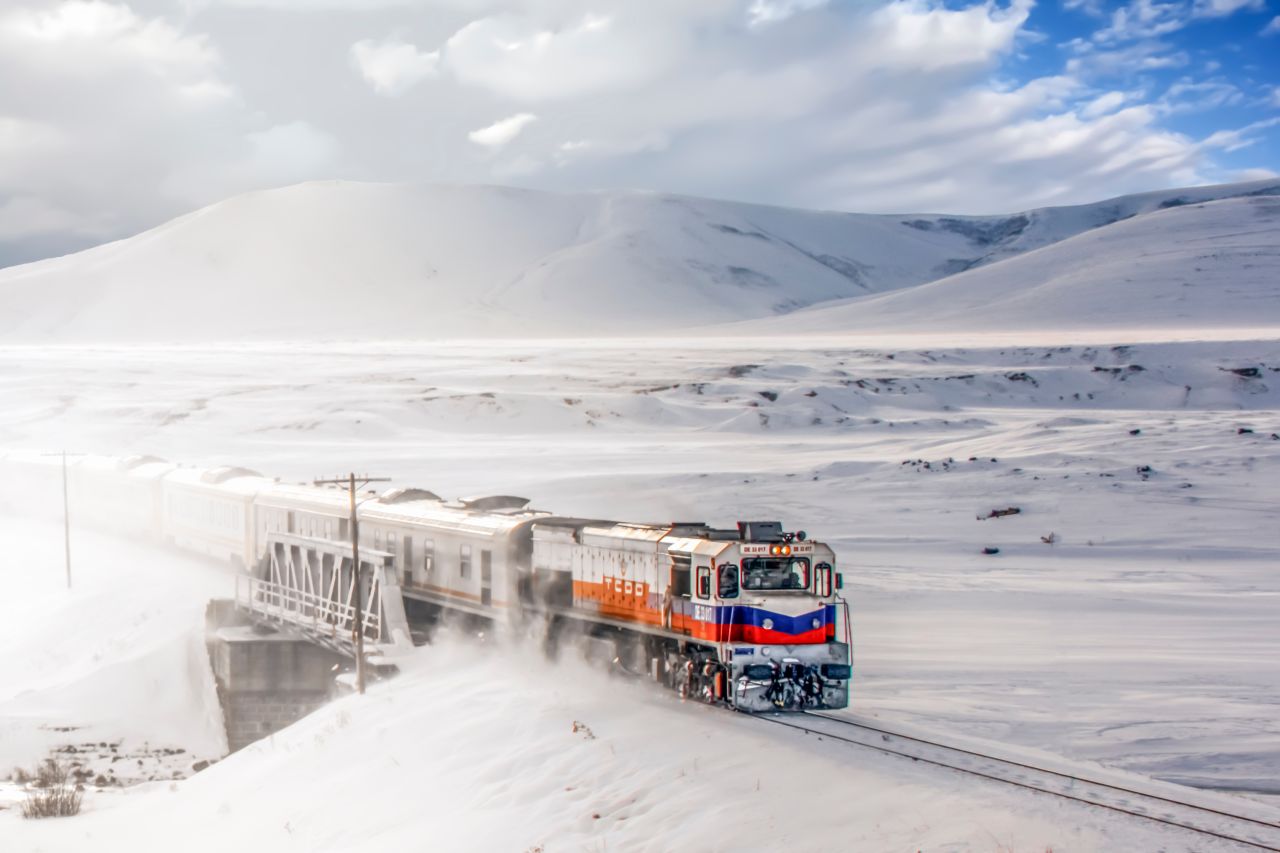
The one on board the Touristic Eastern Express, which crosses the eastern Anatolia to Kars, is one of the most fascinating train trips in Turkey. So much so that in recent years it has become a firm reference of international rail tourism for those who prefer a more sustainable and aware way of travelling.
This night train connect Ankara to Kars in a little more than twenty-four hours is not only a means of transport, but a slow travel symbol, of a different way to explore the country of the crescent: slower, more attentive, more respectful. A journey in which slowness, observation of the landscape and the value of the route take a central role, as well as the final destination.
Index of Article
By carriage on the Touristic Eastern Express
Starting from the Turkish capital, the night convoy follows a trajectory that seems to want to tell, kilometer after kilometer, the most authentic soul of the country. Its deliberately measured gait, never beyond the 80 kilometers per hour, returns to the traveler the privilege of waiting and contemplation.
Honey-colored steppes gradually leave space to severe mountains, snowy highlands, villages appearing and disappearing as mirages. In this slowness lies the deep charm of one of the projects sustainable rail tourism more emblematic of contemporary Turkey.
The train operates only three days a week and tickets run out quickly, especially in the winter months, when the landscape is dressed in white and the journey takes on an almost cinematic dimension. And then the carriages become privileged observers on a silent nature, while time seems to expand between one station and the other.
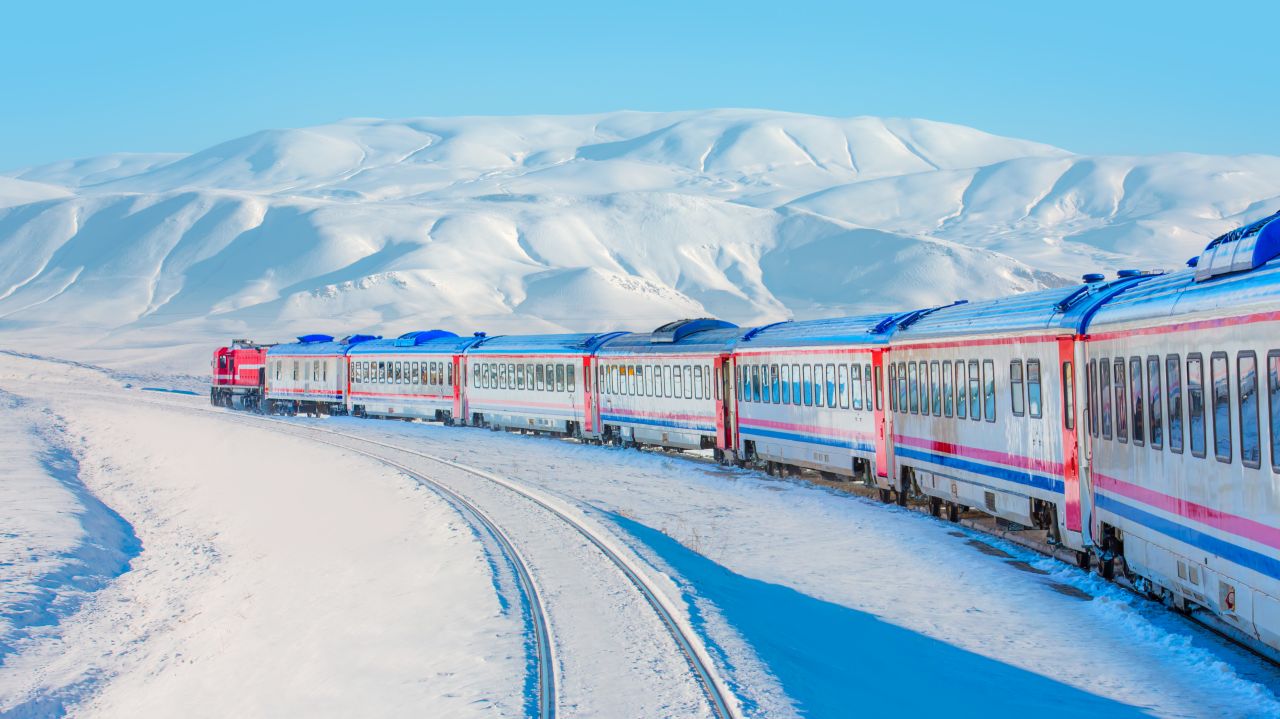
To make the experience even more precious are the planned stops along the way, which make you see the charm of remote places like Kırıkkale, Kayseri, Sivas, Erzincan and Erzurum. During the return journey, the train stops at Divriği, a small town that houses one of the masterpieces of anatolian architecture: the Great Mosque with its medieval hospital, recognized by UNESCO.
The stop is short, but enough to admire the remains of architectures that date back centuries ago, on which the weight of history falls. Then go up, and the train departs, bringing with it the echo of those places that otherwise would remain on the margins of the usual routes. It is a smart and respectful way of distributing tourist flows, bringing attention and resources in areas often excluded from large routes.
Life on board reflects the same philosophy. The beds, essential but welcoming, invite to an intimate use of space. There are those who share food prepared at home, who prefer a simple dinner in the restaurant car, who falls asleep cradled by the constant noise of the tracks. The train stops being a means and becomes a place, a temporary community moving.
Kars frontier city
The arrival at Kars marks a net change of atmosphere. We are on the eastern border of Turkey, where history is layered like snow on the highlands, displaying traces of different epochs: buildings of tsarist imprint, abandoned Armenians churches, medieval fortresses, wide streets that speak of a place of passage, crossroads of cultures more than final destination.
Forty-two kilometers from the city, beyond the river Arpaçay that marks the border with Armenia, the ruins of Ani They emerge as an interrupted dream. Ancient medieval capital known as the city from the thousand and a church, is today an extension of ruins, since 2016 World Heritage Site, but its value goes beyond official recognition.
It is a place that asks for time, to be discovered walking without haste between what remains of its churches, mosques, caravans and defensive walls of what was one of the great City of the Silk Roadcosmopolitan and prosperous, inhabited by merchants and craftsmen, before being slowly abandoned when the shopping streets took other directions.
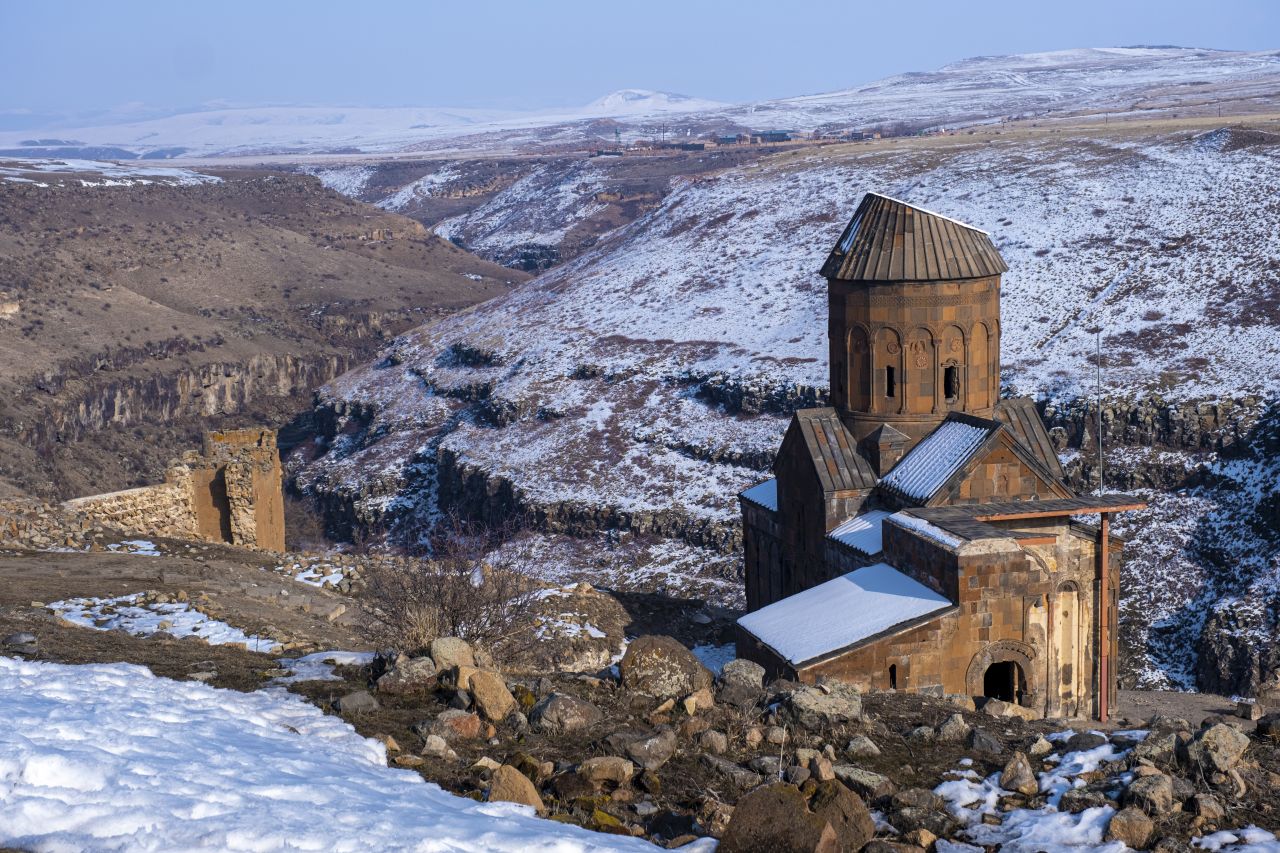
The Kars Castle, built in the 12th century and still dominating the city, instead reveals a history of borders and achievements, becoming even more spectacular at sunset, when the winter light paints the ancient walls of pink shades. From the top of the survivor ramparts, survivors of wars and reconstructions, the gaze embraces the entire valley and understands why this territory has always been strategic.
Tobogganing on the frozen lake
It is winter that defines Kars’ deep soul. When the snow comes, it is not limited to whitening, but completely redesigns the landscape, it changes its breath. A Sarıkamış, among the forests of wild pines, is one of the most particular ski resorts in the region. Not so much for the slopes, as for the quality "crystalline" of the snow, similar to that found on the Alps.
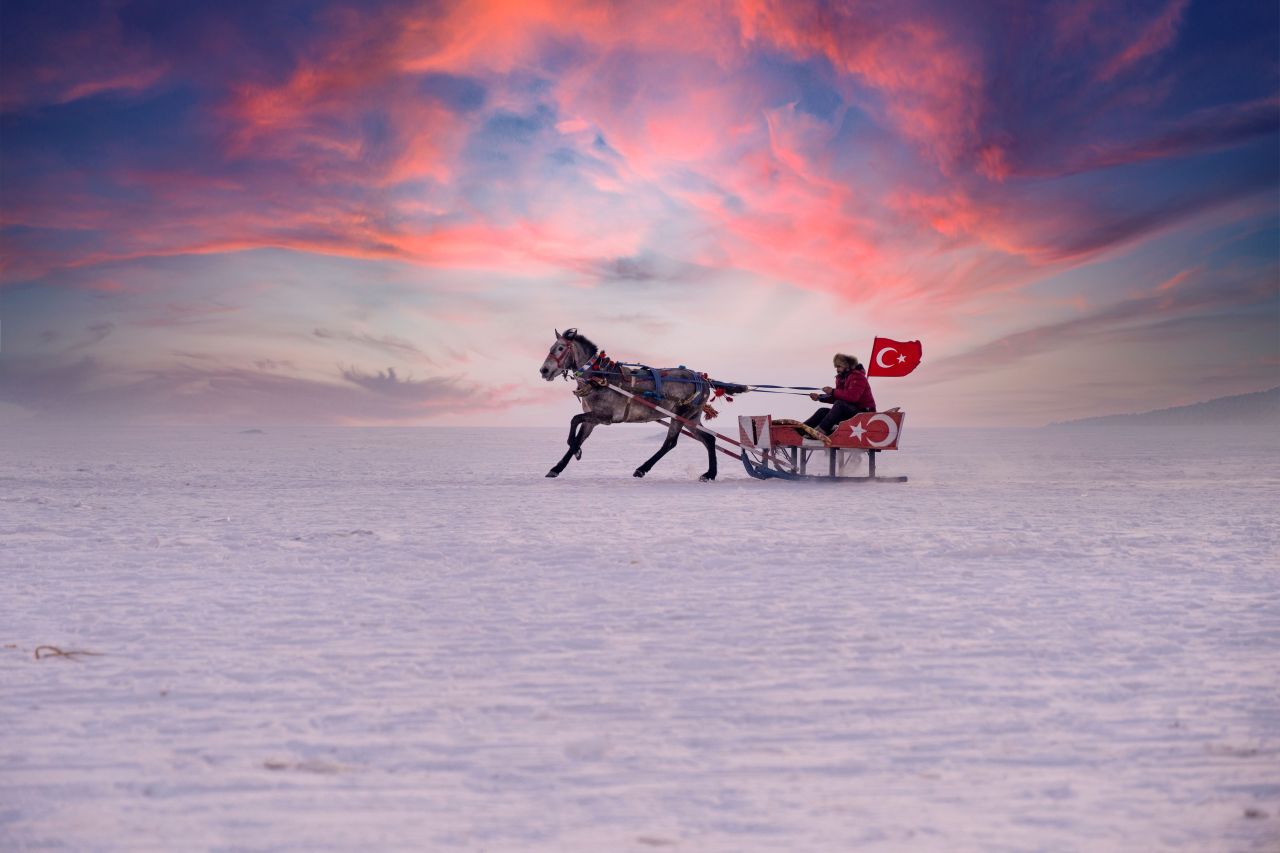
A few kilometers, when temperatures become rigid the lake Çıldır is transformed into a frozen expanse. Between December and March, the ice reaches a thickness that allows not only to walk above it, but to cross it by bicycle or on the typical horse-drawn sleds. While local fishermen still practice traditional fishing, piercing the ice with ancient tools to catch the golden carp, typical fish of these waters.
The emblematic cheese of anatolian gastronomy
If winter defines the landscape, food tells the substance, it becomes another story of sustainability and identity. Kars' cuisine is flat, linked to the territory and seasons. The goose, protagonist of the winter tables, lives with a dairy tradition among the richest in the country, and it is the cheese that constitutes the true culinary identity of the region.
One of the symbols of an ancient knowledge, the Kars Kaşarı, recognized with geographical name, is produced with cows and goats milk that graze on plateaus rich of over a thousand flowers species. A not secondary detail, because it is the botanical diversity to give milk that aromatic complexity that is then found in cheese, considered a real local heritage.
So much so that in the village of Boğatepe the first Cheese Museum of Turkey. Not a museum in the classical sense, but rather a place of active memory, where the dairy tradition becomes a live story. From here the Kars Cheese Route, the first thematic itinerary dedicated to cheese in the country that has transformed this inheritance into a model of local development, made of visits of farms, meetings with producers, and of course tasting at the table with local communities to taste true goodness as the gruyere local, the ♪ spinning, the Tuluk seasoned in skin oters.
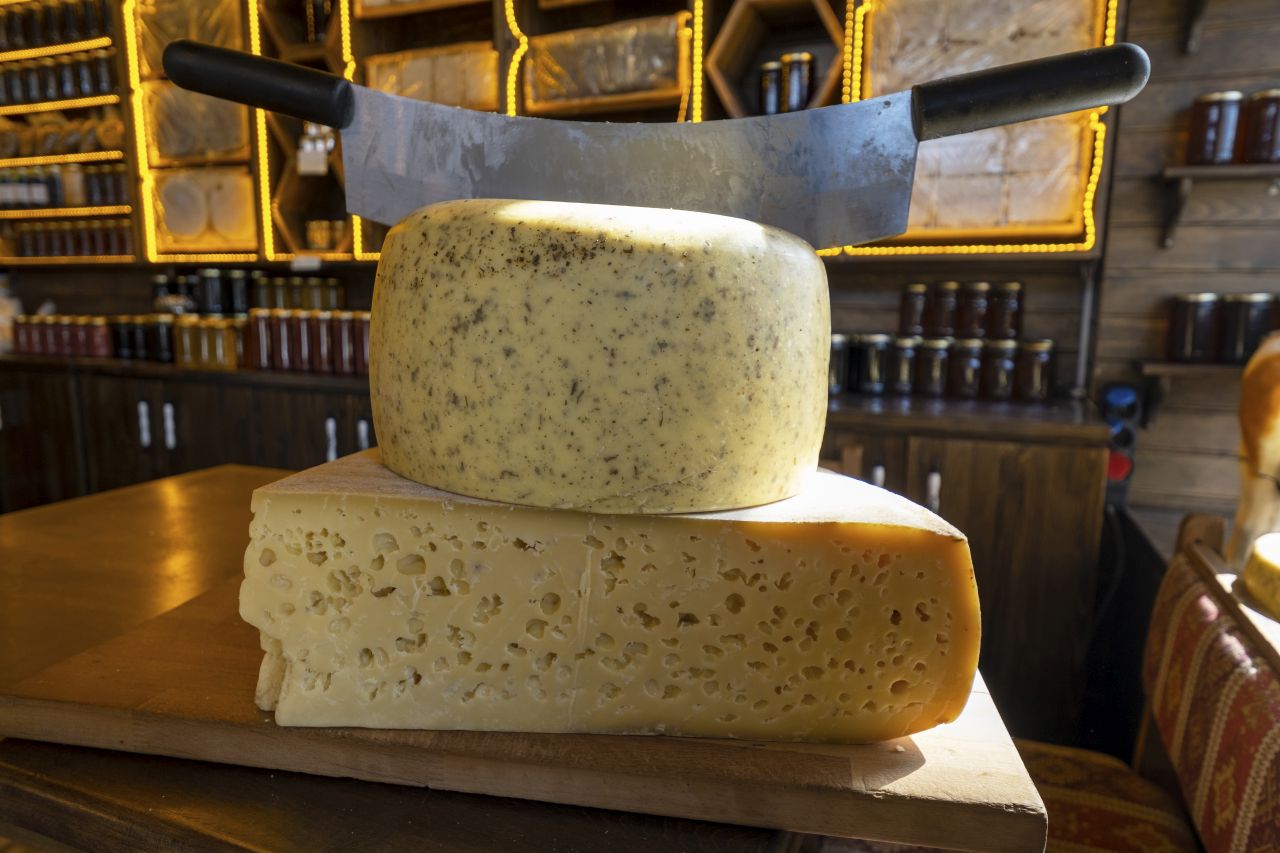
Genuine sharing moments, not events built for visitors, during which we eat together, we talk about pastures and seasoning, we hear stories of families producing cheese for generations. While on the table there are also honey, handmade, wines from Eastern Anatolia. Every taste is a towel to understand how in this region food is still linked to the earth, to seasonal rhythms, to the transmission of knowledge.
And this is also the luggage that you take away when you go up on the train of return. The landscape outside the window is the same, but the look has changed. Details are recognized that had gone unnoticed: a village clinging to the hill, a flock moving slow in the snow, the light changing angle on the mountains.
The Touristic Eastern Express and Kars share the same philosophy of conscious slowness. In an age obsessed with speed, this journey shows that slowing is not giving up anything, but gaining depth. A journey that invites to rethink the way to travel, returning to time and places their most authentic value.

