
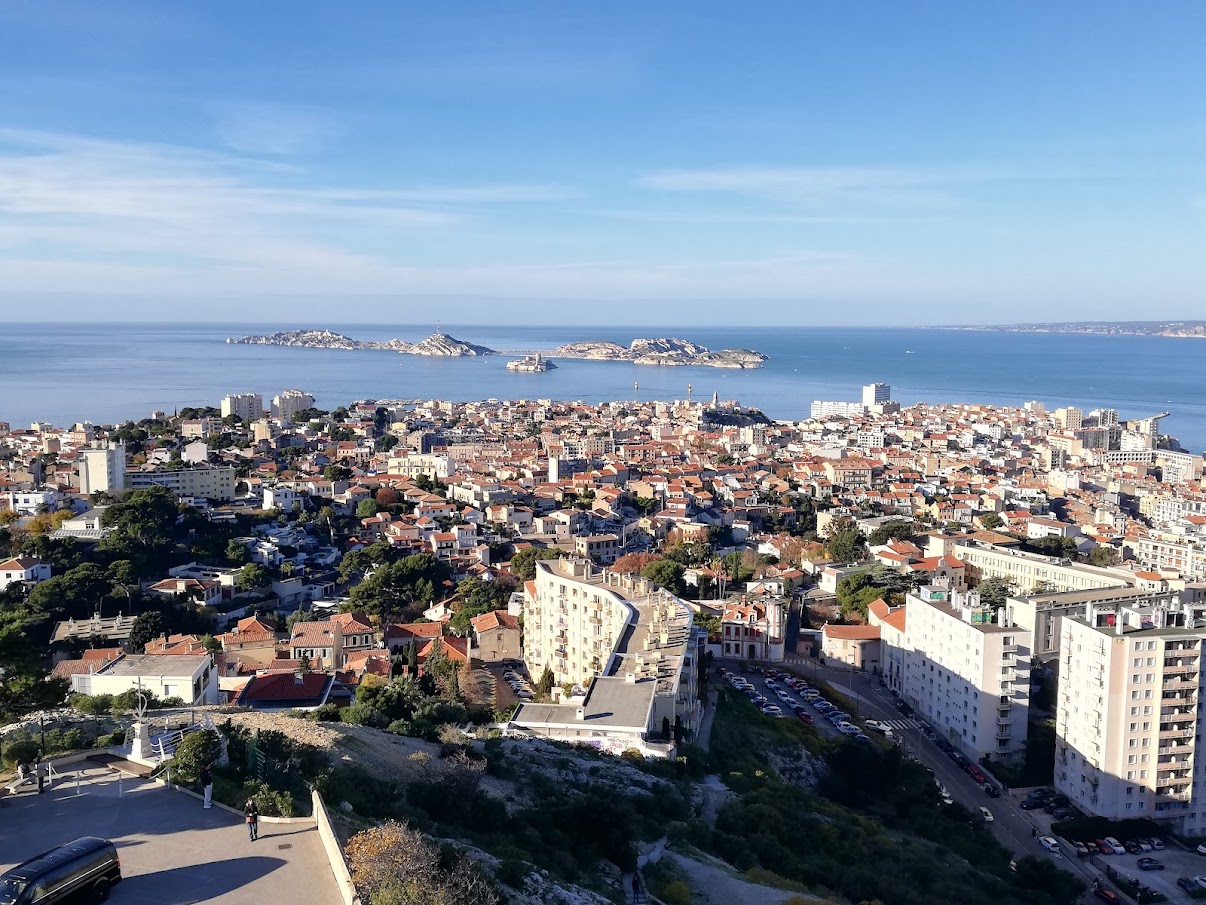
Guide to the discovery of Marseille, the Provençal city overlooking the Mediterranean, vibrant urban puzzle consisting of 111 neighborhoods.
Marseille is not content to be visited. Pretends to be lived, breathed, savored. It is a city that gives generously to those who can stop, watch, listen. Why here, among his one hundred and eleven neighbourhoods, each corner tells a different story, each square holds its own atmosphere. To really understand this Provençal metropolis you have to explore it by layers and by ravines, from the coast to the hills dear to Marcel Pagnol.
This is what we did on a bright autumn day, during a stop of a cruise in the western Mediterranean aboard Costa Smeralda. By approaching the port, from the bridge of the ship we already see the Canebière that descends towards the sea as a golden stone river, and that peculiar Provençal light that makes everything shine with an almost violent intensity is the promise of an unforgettable day.
Index of Article
The Old Port of Marseille
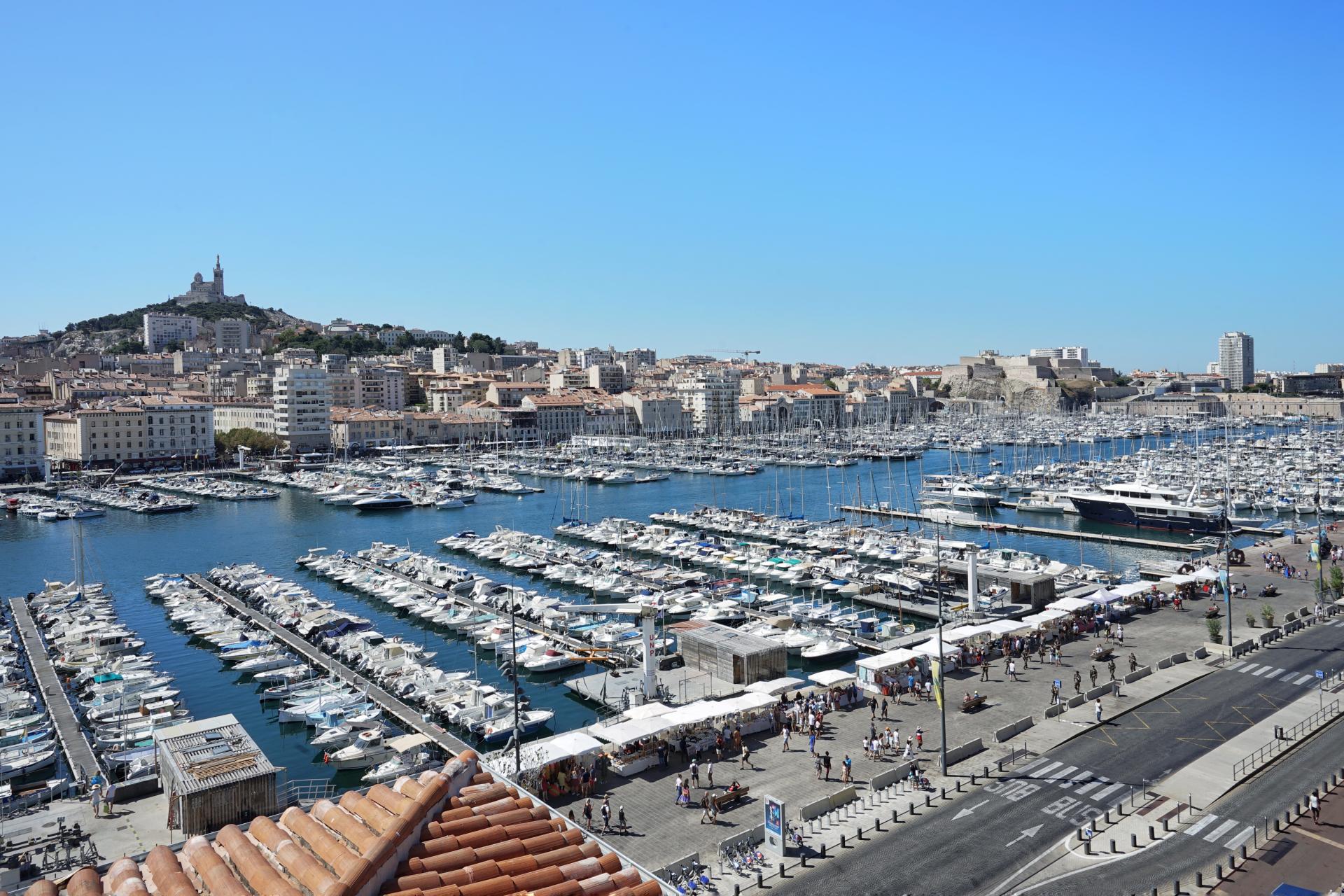
I went down from the ship, we head with our guide towards the Vieux-Port and already the Mediterranean air envelops us with that salty taste that knows about freedom and discovery. Norman Foster's Shadow appears to us as a liquid mirror suspended in the sky, reflecting the infinite ballet of boats and seagulls. While the fishermen have the day fishing on the great esplanade: silvery breams, still leaping straws, knotted arms polyps as complex thoughts.
Along the Quai de Rive-Neuve, where the eighteenth century facades still seem impregnated with the commercial secrets of the past, the Opéra stands majestic, with its discreet pride that belongs only to the buildings that have seen history pass. The Place aux Huiles, the tables of the restaurants begin to populate: a smoking coffee, a pain-au-chocolat, the look that wanders on the port. It is the morning ritual of those who know that in Marseille time has another consistency.
At the Honoré-d’Estienne-d’Orves course, we enter the Arcenaulx, where library and restaurant live in a perfect embrace between culture and gastronomy. Above our heads, the Yann Letestu gallery and the artists' ateliers: doors cut by which perfumes of trementina filter and sounds of creativity in boiling. While at the Miramar chef Christian Buffa prepares that bouillabaisse that is liquid poetry in a soup bowl.
Vallon des Auffes as a postcard
When we get to Vallon des Auffes, let us fully warn that this is one of those places that modernity has not yet been able to corrupt. The small port forms a perfect U, embracing the fishing boats as a mother protects her children. The coloured cabanons mirror themselves in the turquoise water and the viaduc frames the scene as an impressionist painting, to be admired calmly, better if with a glass of confections in hand.
The Cité Radieuse by Le Corbusier
The South of Marseille has a different rhythm, more residential, more intimate. The Cité Radieuse by Le Corbusierproclaimed UNESCO World Heritage, we discover that utopia can take shape of reinforced concrete and become home. On the roof-terrace, the view is of those that do not forget: the sea on one side, the mountains of Provence and we suspended between two infinites.
In Mazargues, the last village before the calanchi, the weather still flows at the rhythm of the seasons. At Maison Marin cheeses tell generations of cheese wisdom, from O’Douceurs Givrées Romain turns ice cream into art. Andrée de Viale, florist of the village, gives us not only bouquets but scented anecdotes that know of lavender and rosemary. And finally, here we go. Les Goudes, a true marine village remained practically intact, dotted with restaurants.
Vauban and Notre-Dame de la Garde
We climb to Vauban with a slow pace, savoring every meter of altitude difference. This village perched on the hill is the very essence of the Marseille soul: proudly independent, proudly popular, tenaciously authentic. It is worth climbing up to the top, where he troneggia Notre-Dame de la Garde, La Bonne Mère, as they call it the Marseilles, which wakes up on the city from its pedestal at 162 meters above sea level.
Much more than a simple basilica, it is the emblem itself of Marseille, the protector of sailors, fishermen, of all those who entrust their dreams to the sea and their fears. Built in the middle of the nineteenth century according to the canons of the Roman-Byzantine style wanted by Napoleon III, it stands in all its magnificence showing golden domes, sparkling mosaics, stones that dialogue in a kaleidoscope of colors.
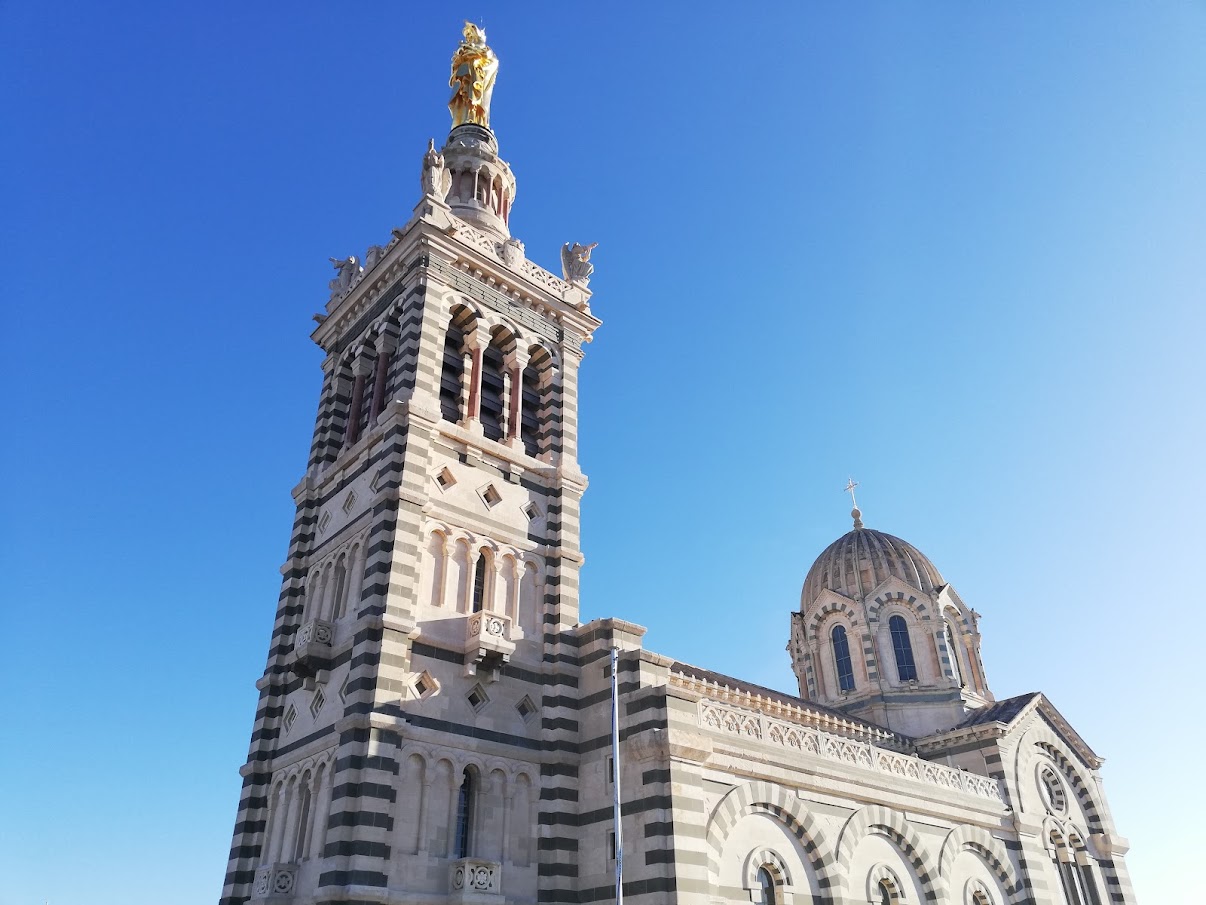
We go up to the sanctuary with the suspended breath, and when we finally reach the panoramic terrace, Marseille opens below us in all its Mediterranean splendor: a 360-degree panorama that leaves breathless. The golden statue of the Virgin, over eleven meters tall, does not look at his son but the open sea, as if he presented Christ to the world coming from the horizon. Inside, the ex-voto hanging on the walls tell centuries of devotion and hope: sailors saved from the storm, sick healed, children returned. Every tablet, every object is a solidified prayer, a grace whispered to that Mother who from up here never stops watching over her city.
Cours Julien, where art colores walls
Coming back to the centre, the Cours Julien welcomes us with an explosion of colour: every wall is a canvas, every facade is a manifesto of creative rebellion. The murals tell the city with that brutal and poetic frankness together which is the figure of street art when it becomes art.
Here, where the Conservatoire National live with underground atelier and the Église Notre-Dame du Mont watch over the creatives of the neighborhood, we breathe a different air. More free, younger, more restless. The restaurants follow each other offering kitchens from the whole world: today Bangkok, tomorrow Beirut, after tomorrow Buenos Aires. At the L’Entrepôt boutique we discover works by Brems that transform the city walls into open-air galleries.
Belsunce, where she first sunk La Marseillaise
"Everything leaves and comes back," they kidnap IAM, and they're right. Belsunce is the pulsating, chaotic, effervescent heart of the hypercentre of Marseilles. Here, where The Marseillaise for the first time in 1792, we still hear the echo of that revolution that never ended. Among the workshops of Tom the tailor’s master and the creations of Zoé la Fée, between the Église Saint-Théodore which will soon become Museum of Baroque Art and the Bibliothèque de l’Alcazar, we breathe an air of continuous metamorphosis.
Le Panier the historical district
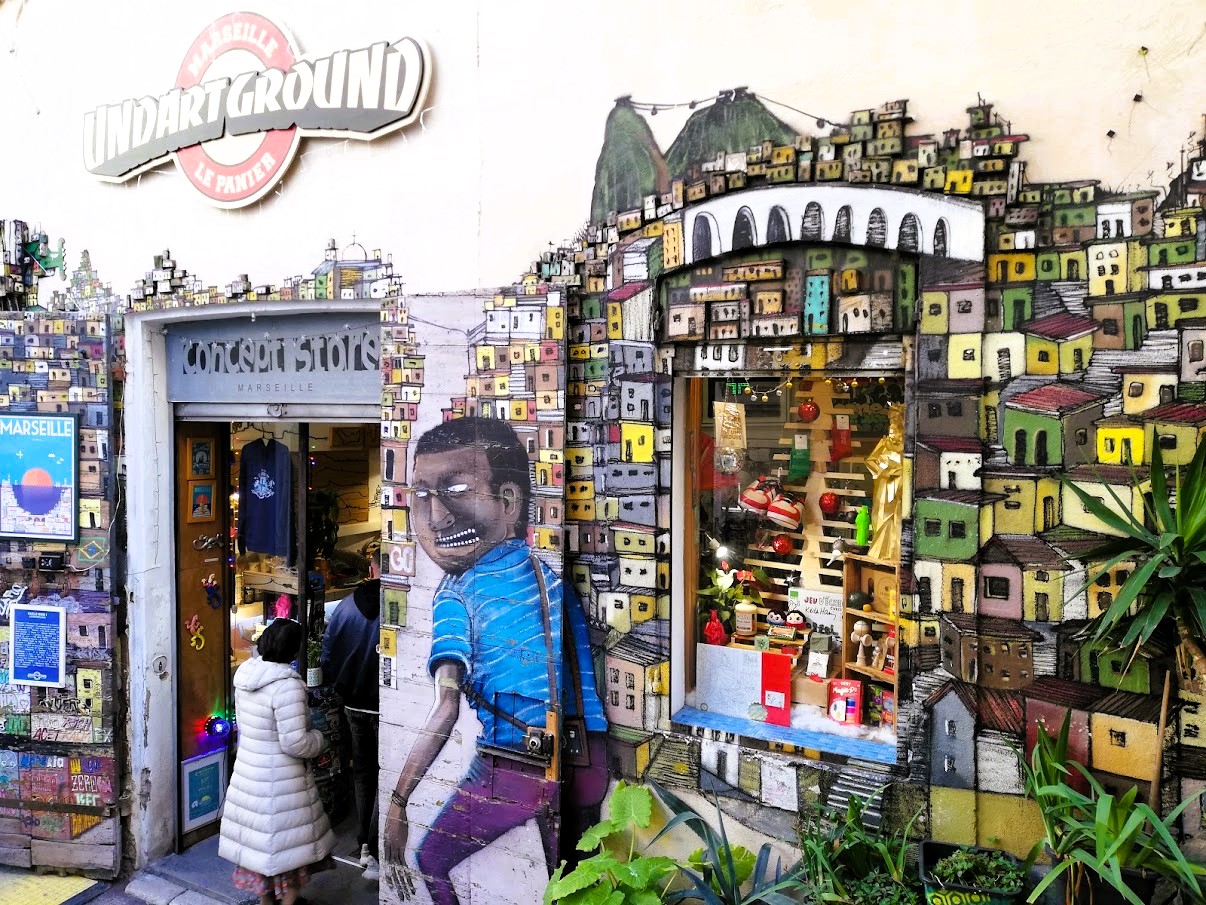
We then go up to Le Panier, where every step is a small revelation, every alley a declaration of love to the Mediterranean life. This tangle of cobbled streets and dizzying steps is the DNA itself of Marseille, its original core that still pulses with an indomitable rhythm.
And it's nice to get lost among artists' studios always open, craft shops that resist the homologation of time. José Orsoni moulds his shipttes des Accoules with the same recipe of 1781, while at the Frétillante of Dali Nouader the sablés marseillais smell of butter and almonds. Gaëlle and Jonas Lack instead work coral with that meticulous patience that is the signature of those who love their profession. And when hunger makes itself felt, Chez Étienne expects us with his legendary pizza, the one that the real T-shirts order without even looking at the menu.
La Joliette, where the future meets the sea
We descend towards La Joliette as those who descend into the future. This is the new face of Marseille, what looks forward without forgetting where it comes from. The project Euroméditerranée has transformed old harbour warehouses in a smart village where contemporary architecture and historical memory dialogue in a new language.
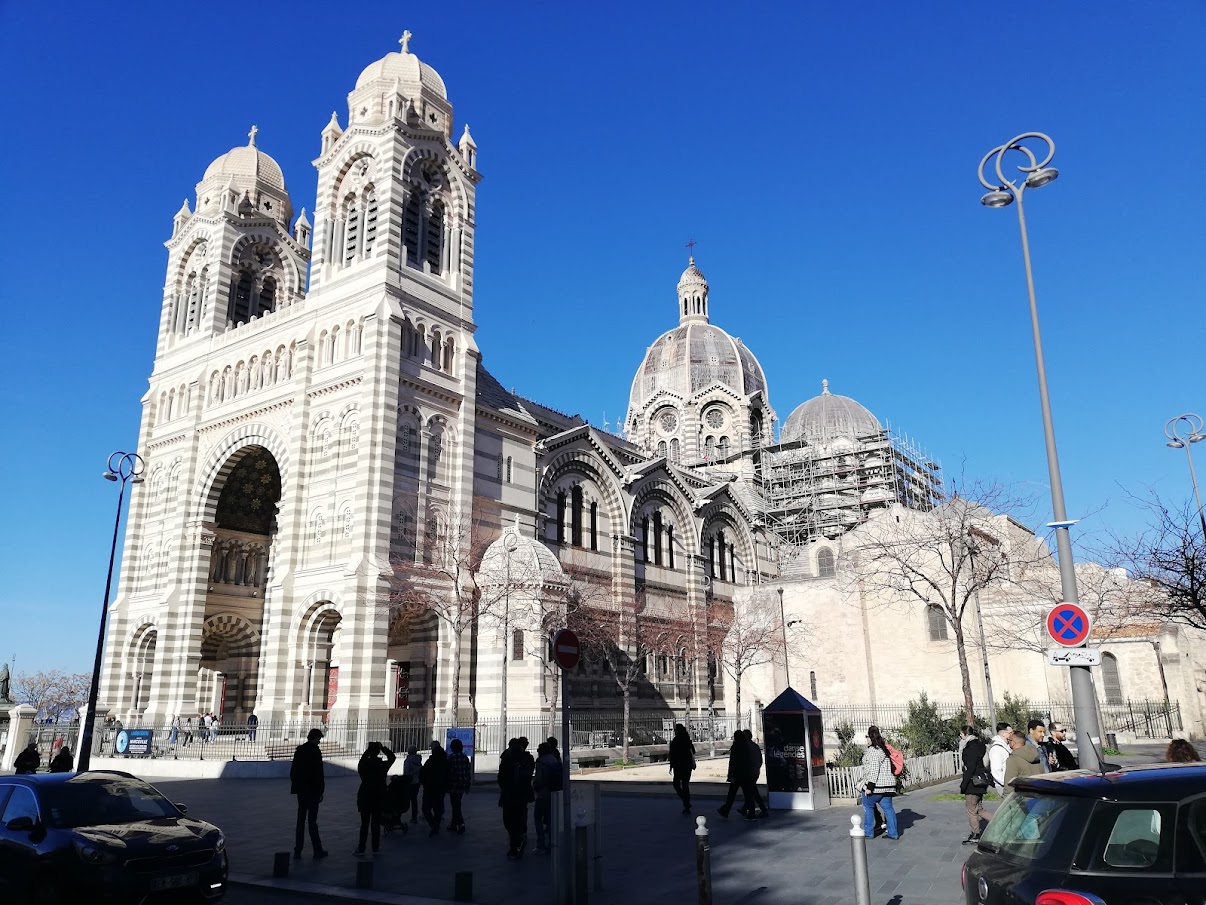
In front of the Cathédrale de La Major, striated with white and green as a Byzantine miracle beached on the coast, the Mucem stands with its perforated stone skin that captures and redesigns the light. Next, Villa Méditerranée seems to levitate on water, a challenge to the laws of physics and common sense.
At the Docks Village, the ancient warehouses breathe a new life, while over our heads the CMA-CGM towers and La Marseillaise launch their declaration of ambition to the sky. A little further, our ship is waiting for us, ready to sail towards the next destination, and we move from the city with a "a bientot"Because Marseille never says goodbye.
Where to sleep in Marseille
Tuba
Enchanting, sustainable and incredibly cool, Tuba is an eco-friendly beach club perched on the rocks, housed in a former diving club of the 1960s and in the adjacent villa. The eight design rooms offer sea views, as well as the restaurant on the terrace and the rooftop bar. A stone's throw away, the paths of the Massif des Calanques invite you to the adventure between nature and the Mediterranean.
Le Petit Nice – Passedat
An icon of Marseille hospitality where the most exclusive luxury meets an intimate and timeless atmosphere. Five stars for the hotel, three Michelin stars for restaurant: Le Petit Nice – Passedat, founded over a century ago and still managed by the Passedat family, is a place where tradition, excellence and passion have been handed down for generations.
nhow Marseille
Overlooking the sea, this contemporary hotel is designed so that all rooms enjoy a spectacular view of the bay. The large salt water pool and the bar in a container give the environment an atmosphere from urban beach club. At night we fall asleep cradled by the sound of the waves, with the city center easily reachable in a few minutes.
Hotel Le Corbusier
A stay here is a privilege for architecture lovers. Located within the legendary Cité Radieuse by Le CorbusierThe Hotel Le Corbusier is one of the building’s symbol of modernism in the 20th century. Forget the idea of a simple economic hotel: this is a cultural experience.
Mama Shelter Marseille
A bit 'defiled compared to the classic tourist itineraries, the Mama Shelter Marseille hides behind a discreet facade that does not let intuition its vibrant soul. Inside, chic and essential rooms dialogue with common spaces with eclectic design and full of personality. The bar-restaurant is animated by live music evenings and DJ sets that attract a creative and cosmopolitan clientele.

