
Gran Canaria what to see and do in the north of the island – Itinerary to discover the north of Gran Canaria, through characteristic villages, archaeological sites, dense forests, ancient caldera and lush valleys, destination of exciting trekking and excursions.
Index of Article
Gran Canaria what to see and do in the north of the island
Las Palmas de Gran Canaria
Our journey begins Las Palmas de Gran Canaria, the only true metropolis of the archipelago, named after three historical palm trees, planted by the Spanish who founded it in 1478.
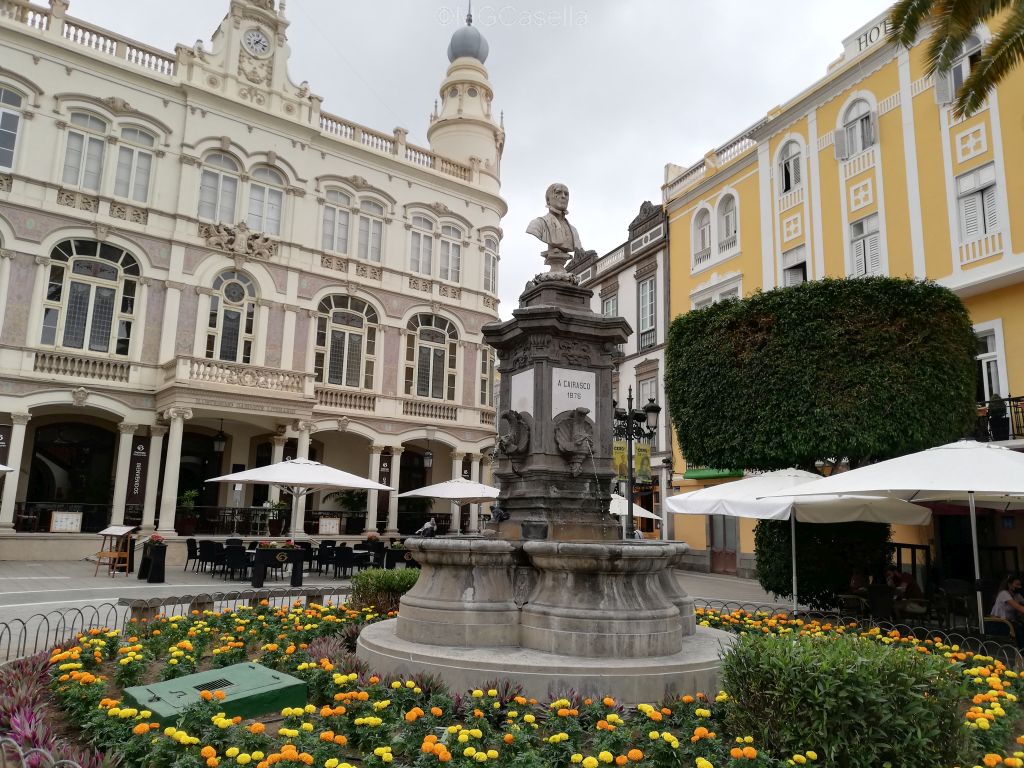
The city developed around the historic colonial district of Vegueta, whose streets and squares are lined with elegant Gothic buildings, Renaissance, neoclassical and mudéjar, echoes of an indissolubly linked past to America’s epic discovery.
Cristoforo Colombo, in fact, stopped in what is now the Casa de Colon during his first trip to the Indie, guest of the governor, witnessing the important role of the Canary Islands in the colonization of the islands.
La Cueva Pintada in Galdar
From Las Palmas we reach Gáldar, the ancient capital of the island, which welcomes us with a characteristic historical district dominated by the nineteenth-century church of Santiago de los Caballeros, a destination of the Way of Santiago in Gran Canaria.
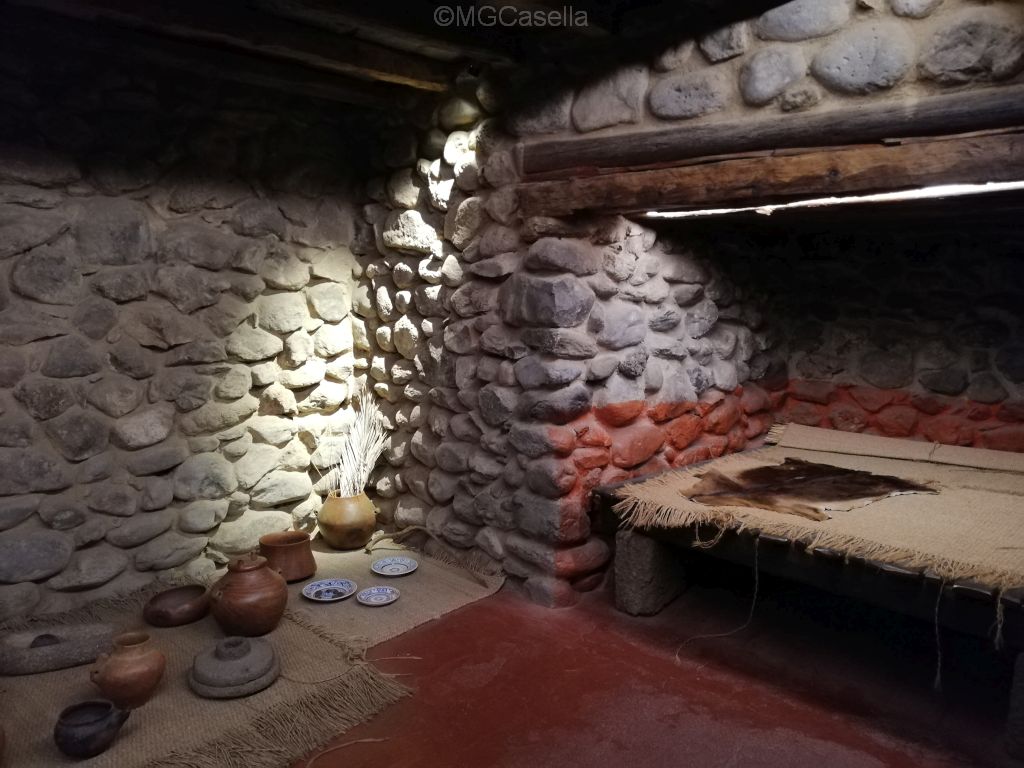
The Museum and Archaeological Park of Cueva Pintada, the main local attraction, includes the ruins of a pre-Hispanic village dating back to the 6th century. The site reveals that Gáldar has been the city of Guanartemes for centuries, the kings of indigenous peoples living on the islands before the Spanish colonization.
The museum is built around the famous Cueva Pintada (Grotta Dipinta), which has tuff walls decorated with colored geometric motifs, while all around there are remains of huts and caves.
The Cenobio de Valeron
During the visit of the Museum of Cueva Pintada we discover that the Canari were a well-organized people with a rigid social structure and a society mainly devoted to agriculture, especially barley and wheat. They kept crops in granai-fortezzes like the Cenobio de Valeron, a set of caves and silos dug into the mountain in a canyon that in ancient times was practically impenetrable, to protect them from invasions of enemies and pirates coming from the sea.
The necropolis of Maipes
At the same time there is also the necropolis of Maipes, which appears as a stretch of stones. The largest and most impressive tumulus, surmounted by a kind of turret, has always been called by the locals "Tumba del Rey". In fact, the tombs varied by size and position, but they were all placed according to the rigid social hierarchy presided over by Guanarteme, that is the sovereign, which represented the supreme political authority.
Finca La Raja
The necropolis of Maipes is located in the lush Agaete Valley, an unusually fertile area made by volcanic eruptions millions of years ago. It is covered with well-kept fields, vineyards and lush crops of fruit trees, citrus fruits and, surprisingly, also coffee. In fact, Finca La Raja hosts one of the few European coffee plantations, especially one of the Arabica Typica variety.
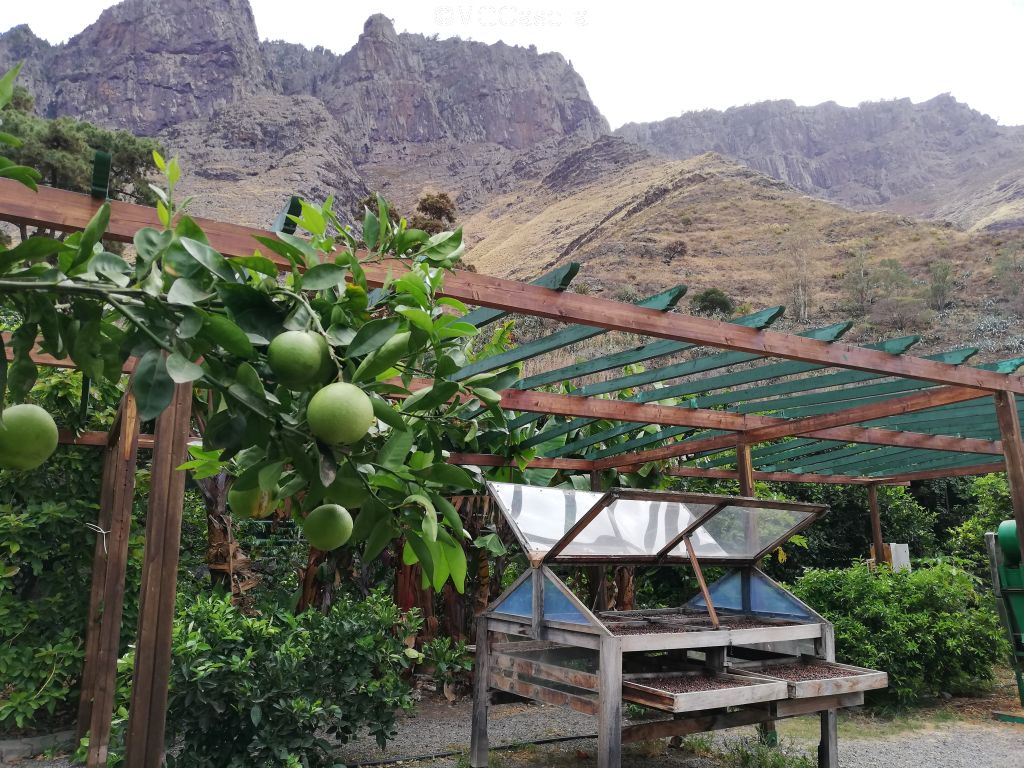
Originally from Ethiopia, this variety was brought to the island a few centuries ago, and in this valley found the ideal conditions for growth. The route, which includes the illustration of each stage of production and the tasting of coffee strictly homemade on the terrace overlooking the farm fields, is a sensory experience complete from the field to the cup.
The Arehucas Distillery
Rum is another typical production from this area in addition to coffee. To visit the oldest rum winery in Europe, the Arehucas distillery, founded in 1884, which produces approximately 3.5 million liters distilled a year.
Before being bottled, rum ages in the more than 4,000 American oak barrels of the winery, many of which are made of the signatures of famous characters, from Julio Iglesias to Cesar Manrique, who visited the factory and appreciated the products.
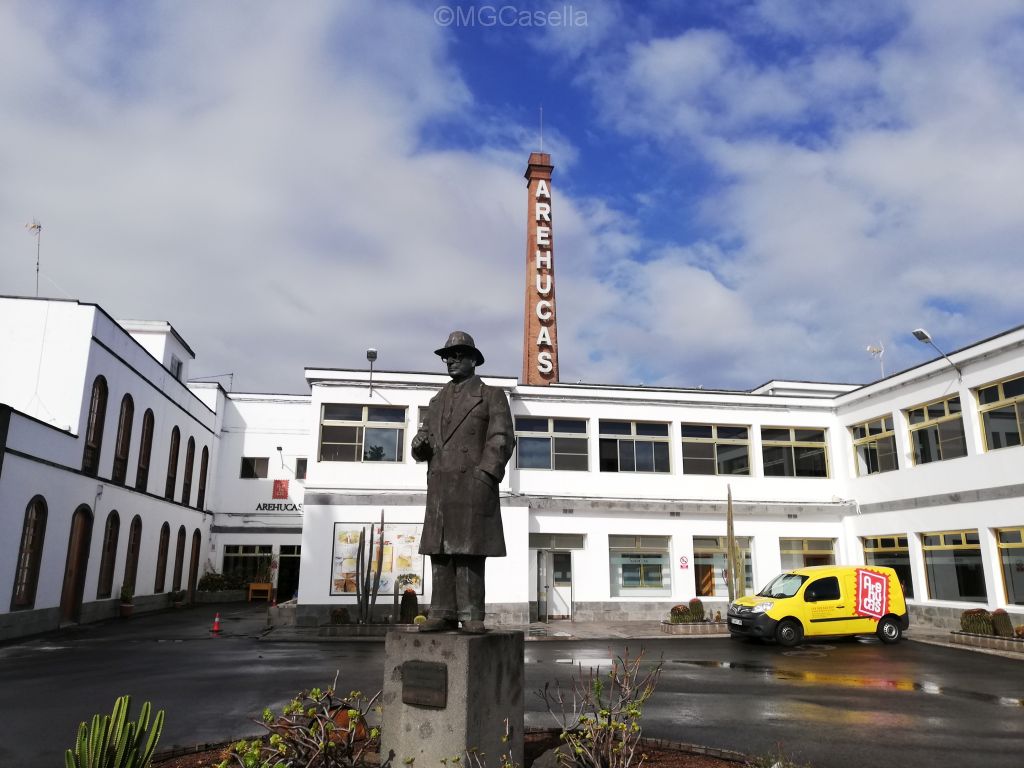
At the end of the tour, it is inevitable a tasting of the various rums of the house at the point of sale of the distillery, from which you can see the neo-Gothic spires of the monumental church of San Juan Bautista, which dominates the village of Arucas, designated of historical-artistic interest.
Teror and Tejeda
Known above all as a seaside destination, Gran Canaria actually offers the ideal conditions to practice not only all types of water sports, but also golf, hiking, climbing, cycling and mountain tourism. It deserves an enviable climate, with only all year round and an average temperature of 23°C. 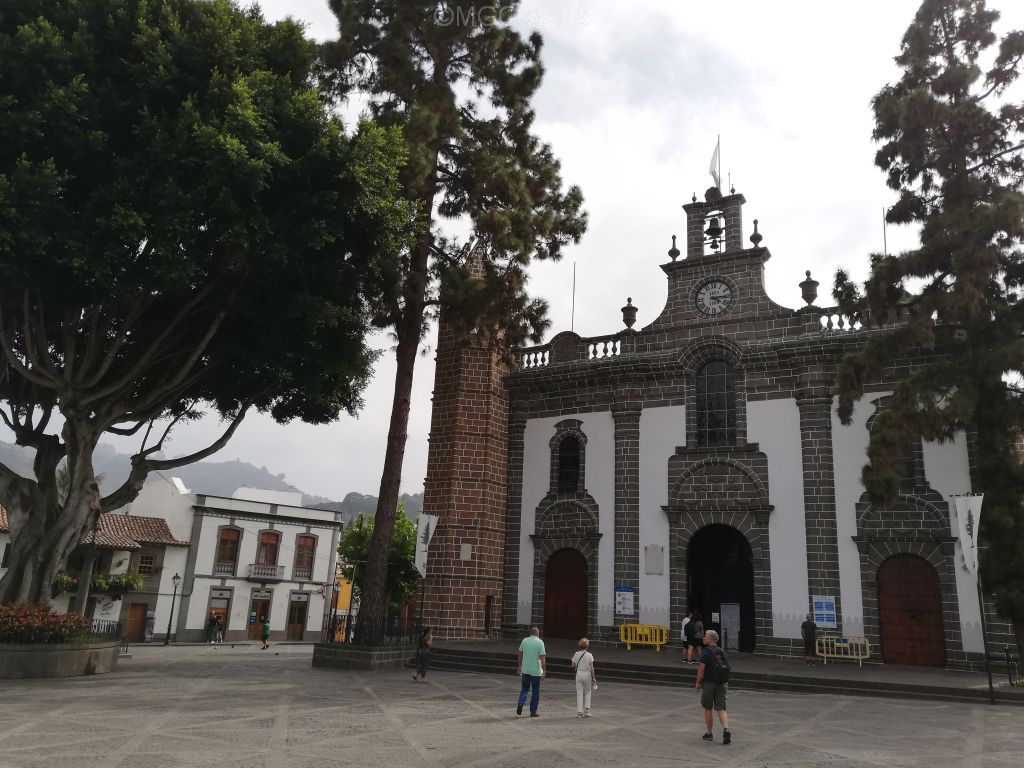
The interior, in particular, is considered a true paradise for outdoor holidays. Charming towns like Teror and Tejeda, "one of the most beautiful villages in Spain", are perfect starting points for adventurous excursions through the wildest and greenest regions of the island.
Excursion to Roque Nublo
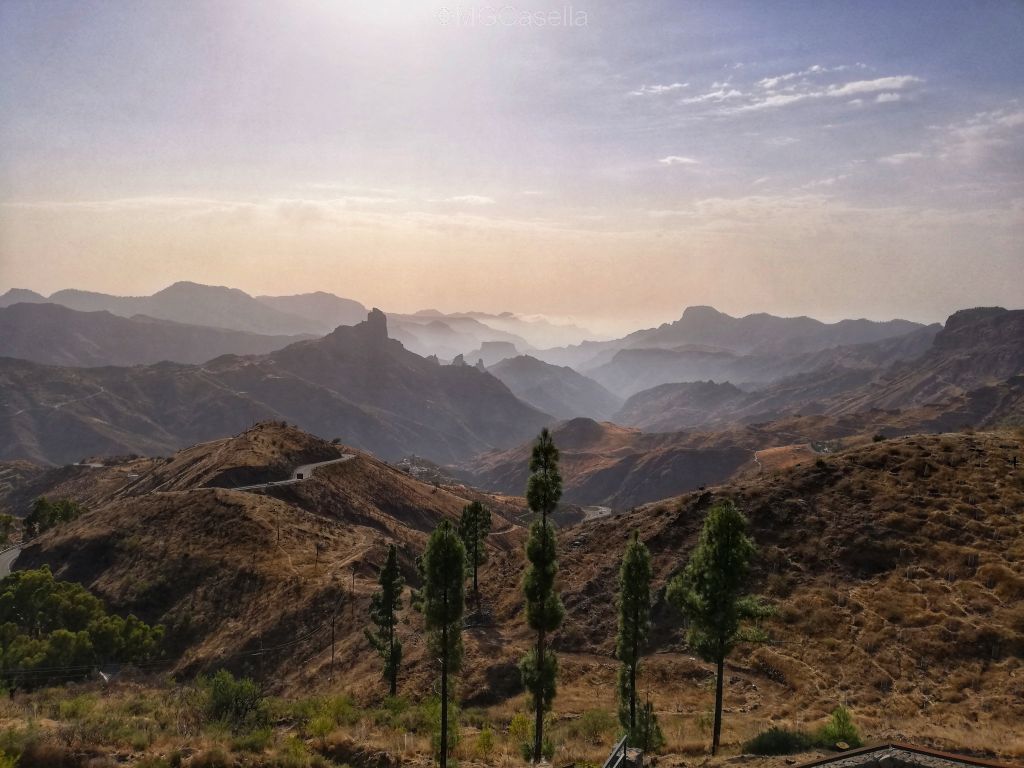
Obviously we don’t miss the opportunity and during our tour we try to climb to the sunset at Roque Nublo, the iconic volcanic monolith that stands for about 80 meters on the top of a mountain and has become one of the symbols of Gran Canaria.
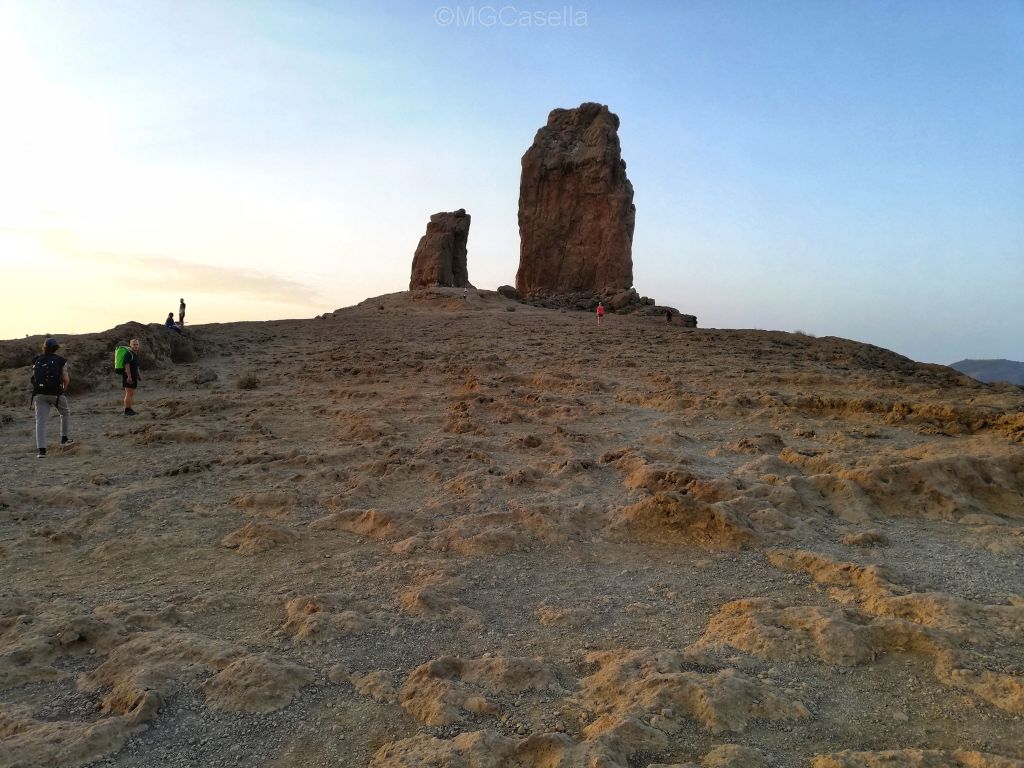
Accompanied by Lucas, hiking guide of the active tourism agency Climbo, we walk around 5 kilometers of a well-marked path that rises between bushes and pine forest, arriving at the right summit in time to admire a spectacular sunset of the sun behind the Teide, the majestic mountain that dominates the nearby island of Tenerife.

