
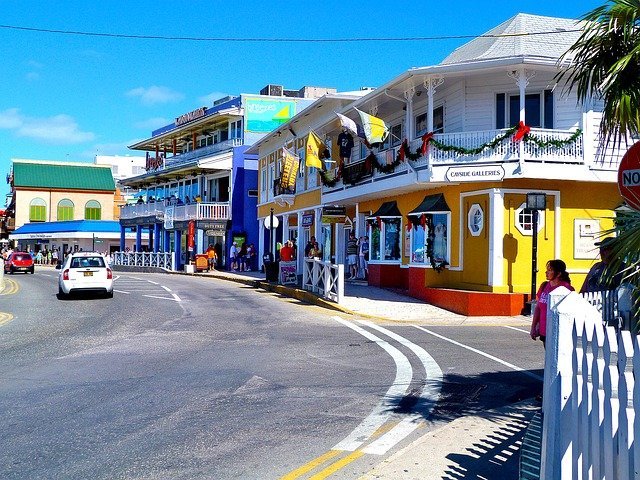
Discovered by Christopher Columbus, the Cayman Islands owe their name to Sir Francis Drake, who landed there in 1586, finding them infested with crocodiles, alligators and iguanas in abundance. A problem? Not for pirates like Barba Nera, Neal Walker and Henry Morgan, who used to take refuge in the archipelago south of Cuba between an incursion and the other, leaving the beasts to guard their fabulous shops.
Today the reptiles have disappeared (apart from the Iguan harmonics), but the pirates would still be pleased to be able to take advantage of the status of fiscal paradise enjoyed by these islands, inhabited by a multiethnic population of about 33,000 inhabitants, known for their human warmth and the spontaneous friendship with which visitors welcome.
But for those who do not mean finance, the Cayman Islands are first and foremost a diving paradise, since they face a wonderful underwater world. To magnetize the subs of half world contribute wonderful coral reefs and endless varieties of fish, shipwrecks and the famous City of Races, one of the most fascinating diving spots in the world, offering only four meters of depth (and therefore not only to divers, but also to those who dive with mask and fins) the possibility to swim and play with a hundred giant races. An emotion to experience at least once in life!
Naturally in total safety and in full respect of the environment. A theme, this, which is very close to the Government of the Cayman Islands, which in 1979 has issued a series of laws that have led to the creation of the Marine Parks that surround the three islands.
These are very restrictive regulations which, however, help preserve the seabeds and prevent the removal of corals and sponges. But above all they help maintain the integrity of the more than 200 diving points of the archipelago, where thanks to the transparency of the waters you have a perfect visibility up to a depth of 60 meters and beyond.
More 30 diving centres scattered along the coasts carefully adapt to the laws for the protection of the Marine Park, thus ensuring the natural beauty of the seabeds and the best conditions for the survival of every submerged life.
The protection of the environment is a real vocation for these islands. Not only below, but also above sea level. In fact, the Cayman Island National Trust is also dedicated to safeguarding local flora and fauna, which also includes rare species such as blue iguana and Cayman parrot.
Both can be admired in the Queen Elizabeth II Botanical Park, a green area of 65 acres which houses numerous varieties of plants and flowers and which, together with Gov. Michael Bird Santuary and the Mastice Reserve and Trail, contributes to the fame of the Cayman's "land paradise".

