
Enogastronomic itinerary in Emilia Romagna to discover the regional culinary excellence Food Valley that the world envy us.
In Emilia Romagna, ina so-called Food Valley extending from Parma to Delta del Po, winding well 2.300 km of taste itineraries. An irresistible temptation for tourist enthusiast who wants to pierce the soul of a place through its tastes, who wants to discover and not only visit, savor and not only eat, try and not only see.
And who wants live the places where you go discovering and enjoying its food and wine heritage, these provinces offer the beauty of 42 products between Dop and IGP, from Parma ham to Parmigiano Reggiano and Grana Padano, from Mortadella to the traditional balsamic vinegar, from white polesano garlic to the real clam of Polesine and dozens of wines classified Doc and Docg (from 20 Docs present only in Emilia Romagna, with the oldest white DOCG in Italy – Albana di Romagna – to the 9 DOC wines of Alto Mantovano).
Not to mention numerous other regional products whose recipes conceal never unveiled ingredients, such as Salama da Sugo Ferrarese which conquered Greta Garbo, the precious sturgeon of the Po of Rovigo, whose eggs give an exquisite caviar, the salami mantovano that tastes and quality precisely from the humid air of the Po Plain, the mantovana mustard, the only compound of apples that are fried, instead of dried in the sun.
If even you have already come the water in your mouth only to read all these delicious, we leave together for an unforgettable experience full of suggestions.
Index of Article
Food and wine itineraries in Emilia Romagna
Bologna
Starting from the province of Bologna, you can start the day visiting a dairy with tasting in the hay and continue in the afternoon with a course to taste the secrets of the gastronomic tradition, such as those organized by the prestigious Old Bolognese School by Alessandra Spisni.
Ideal for performing official recipe of Bolognese Ragù, jealously guarded at the Chamber of Commerce of Bologna together with a sample in gold of tagliatella with the official measures of the cutter (8 millimeters wide, equal to 12.270a part of the height of the Torre degli Asinelli in Bologna).
Castelbolognese
Go ahead.I'm sorry. ours tour food and wine in Emilia Romagna, with a deviation for wine connoisseurs towards Castelbolognesebetween Imola and Bologna. Here. Tenuta Masselina produces an unfiltered Trebbiano wine, aged in terracotta amphoras and bottled in 150 bottles decorated with a precious pottery medallion.
For the night the possibilities of choice range from the silent farms immersed in woods, hills and chestnut trees to the charming hotels in the historical centers of a city of art, such as the romantic B&B Tower Take part. by Bologna, one of the approximately 20 nice towers still existing in the historic center, former curia prison from which you enjoy one of the most beautiful views on the historic center of the city. 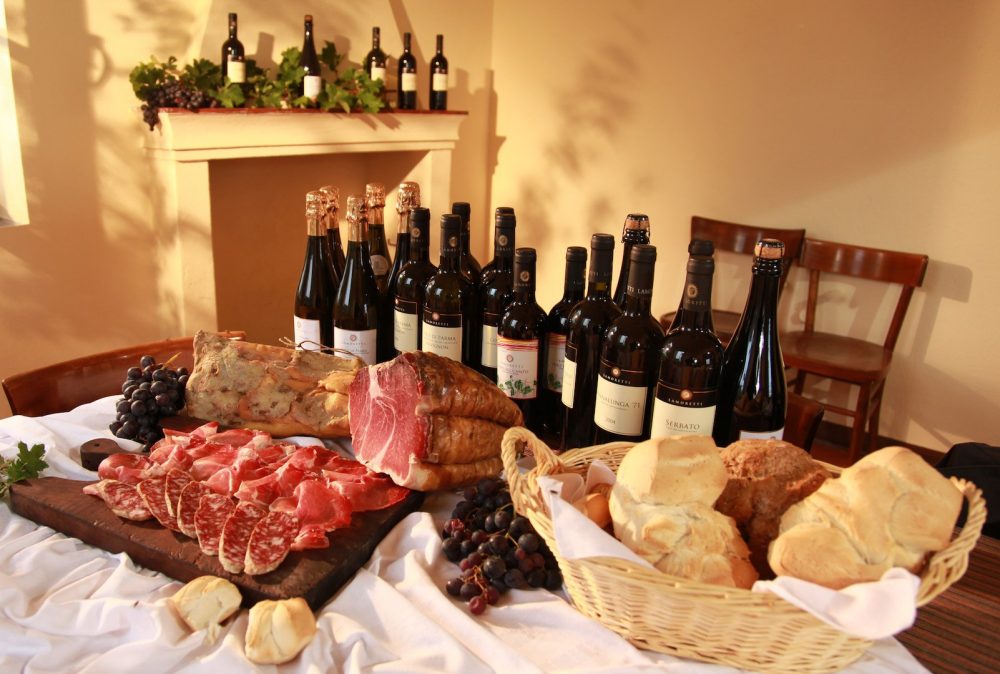
Ferrara
Ours food and wine itinerary in Emilia Romagna then continue towards Ferrara with a first stage obliged to "Brindisi, the oldest tavern in the world, quoted by Ludovico Ariosto in the play "La Lena"), right next to the Cathedral.
The ideal place to taste typical dishes of the Ferrara tradition such as Salama da Sugo, pumpkin chaplaints or the Ferrarese pair, the famous bread to which the EU has attributed the Igp recognition. And for those who want an exceptional souvenir, a package of Comacchio marinated eel, in its typical tin box.
Modena
Addition Modena, true connoisseurs cannot lose Albinelli Market: Opened in 1931, it hosts today in the elegant structure of iron and glass, retailers of the best typical products of Modena, from the Traditional Balsamic vinegar to the Parmigiano Reggiano, passing through Lambrusco, tortellini, bitters, cherry of Vignola.
Per lunch stage Gourmand a La Francescana, the renowned restaurant of Massimo Bottura, three Michelin stars. While for a more informal alternative, sempre in the center of Modena, Salumeria Giusti is the most suitable place to taste paw and cotechino, the original ones!
If you want to taste the famous Zibello culatello, just stretch a few kilometers towards the Lower parmense, where the Padana fog, molds and smells of aging cellars make the difference.
Polesin Parmense
TheAntica Corte Pallavicina by Polesine Parmense is the real kingdom of Zibello's culatello, an indispensable stage of every food and wine itinerary in Emilia Romagna. Here we are the seasoning cellars of the renowned salume oldest in the world and the Culatello and the Masalén Museum, term that indicates the norcini that handed down the art of slaughter of the pig.
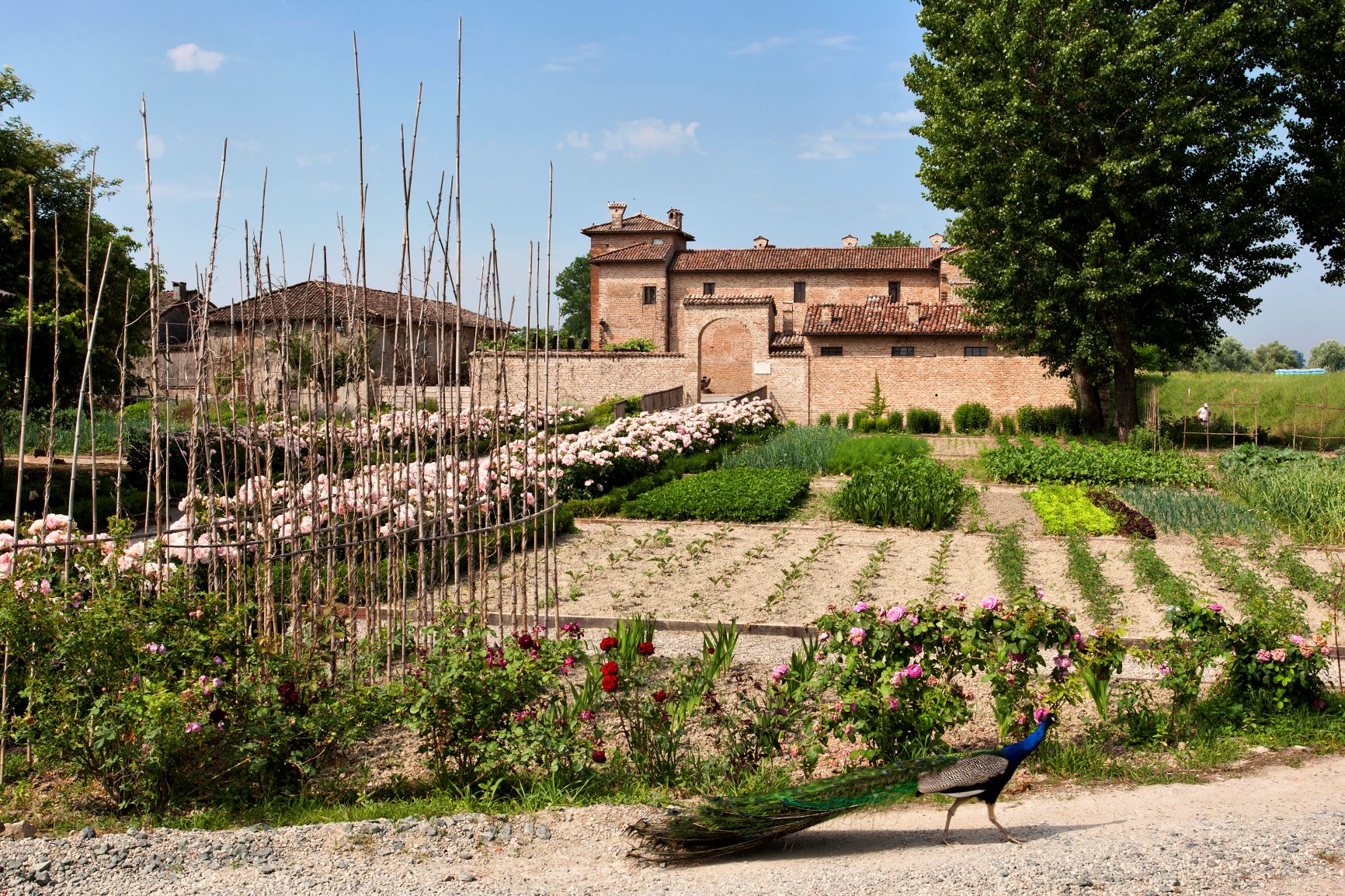
The museum route leads on a journey into the territory, among the pioppeti, the Po river, the figure of the black pig typical of the Parmense at the base of the production of the typical salami.
Then we go to a deepening of the figure of Sant’Antonio Abate, represented in the company of a pig, and of the knowledge norcino, and then immerse ourselves in a great underground space in the secret world of the culatello, its history, the iconography, the connection with characters like Giuseppe Verdi, Gabriele D’Annunzio, Giovannino Guareschi.
A 360-degree taste experience, which culminates in the table Star chef Massimo Spigaroli, author of "gastrofluvial cuisine", in which culture from gastronomy, agriculture and tradition of the territory merge in refined dishes, which arise from ingredients expression of the local identity and grow in the gardens and farms of the castle.
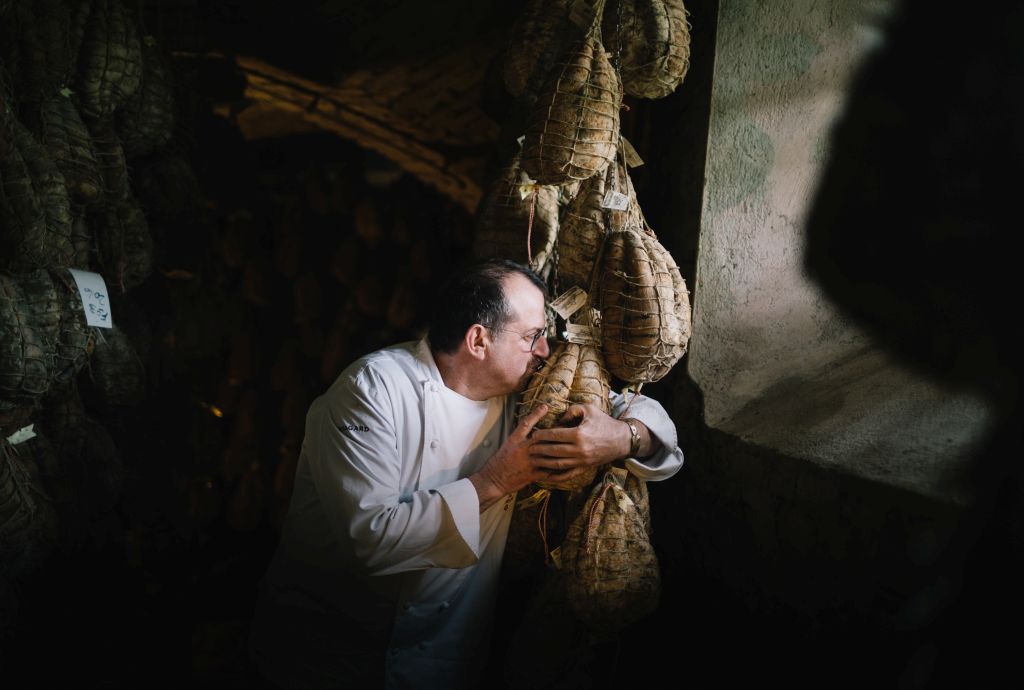
Of course, in the trionphany menus culatelli and cured meats in the ancient cellars of the castle, black pig meat of autochthonous breed, white cattle bred in the Po Valley, geese, chickens and ducks, river fish, homemade pasta, such as ducks and tortelli. The wine is watered down by the vineyards of Fortana, Fontanella and Lambrusco.
At the Antica Corte Pallavicina in Polesine Parmense also houses the Hosteria del Maiale, a place with an intimate and welcoming atmosphere where to taste the recipes of the territory cooked with high quality products: vegetables, flours, preserves, meats of Bue Bianco ( Slow Food Presidio) and Maiale Nero di Parma bred outdoor, all produced by the family farm.
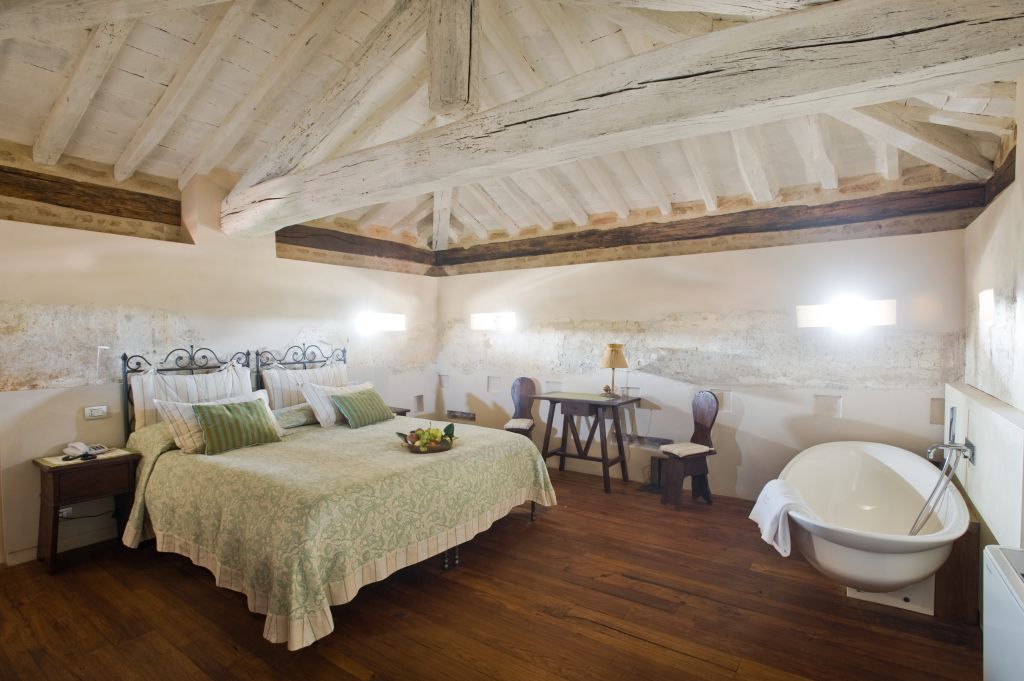
For those who would also want to sleep in the fifteenth-century castle on the banks of the Po, in the relais in the castle there are a dozen elegant rooms furnished with antique furniture, but equipped with all modern comforts.
Reggio Emilia
AlsopostingCthe way Reggio Emilia, there are so many places along the food and wine route where the palates in search of the most genuine flavors can find great satisfactions. In Rubiera the "Arnaldo Clinica Gastronomica" in a building of 1400, it sums up in the name the attitude to "sanare" every sadness of the body and the spirit with an opulent eaten according to the localities: from the first dishes in broth to the cart of the boiled with all the sauces of the tradition.
And for dessert, who would like to try famous Spongata (the favorite dessert by Giuseppe Verdi, with frill, dried fruit, biscuits, spices and honey) can make a jump in Brescello, always in the province of Reggio Emilia, where the Awarded Factory Luigi Benelli it produces artisanally from 1863.
Parma
Once in Parma, it seems to you to perceive a certain Parisian atmosphere? It is due tothe unforgettable Maria Luigia of Habsburg Lorraine, Duchess of Parma, Empress of the French and wife of Napoleon.
The his memory also echoes in some local specialties such as Sweet Maria Luigia, a combination of chocolate and black cherry, whose recipe, ancient, was found inside the library of the Castle Meli Lupi of Soragna. Or again, the Duchess cake, perfumed with chocolate and zabaione, proposed both as dessert from end meal and in version mignon.
At the door of Parma begins the food and wine itinerary in Emilia Romagna of the places where the Parmigiano Reggiano, the star of the Food Valley that the whole world tries to imitate. Many companies belonging to Parma City of Gastronomy open their doors to visitors to combine tastings, menus, insights and meetings with producers. 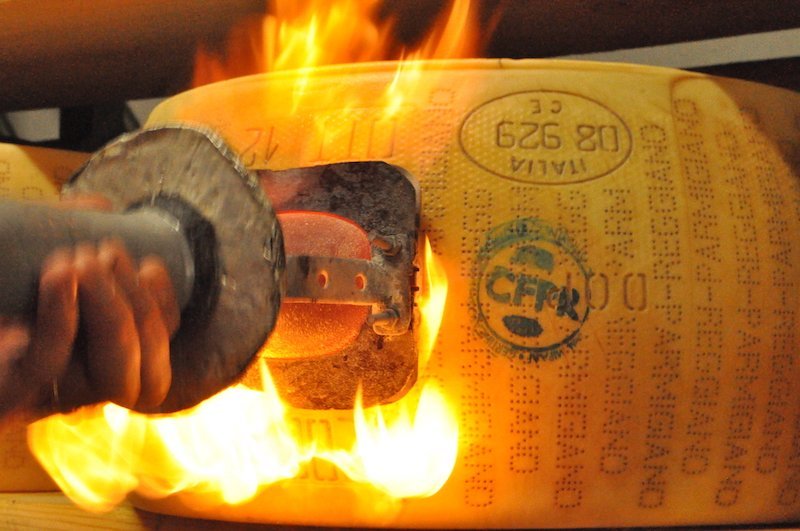
The unmistakable aroma of Parmigiano Reggiano, sweet but wise, with character, is the secret of master housers that in the most delicate phases of the preparation tastano, prepare, beat, control, as an industrial machinery would not be able to do.
A well preserved art in their expert hands, practiced every day of the year, without interruptions, using raw milk, transformed without addition of additives and preservatives, because, as the Consortium says, the Parmigiano Reggiano "is not manufactured, is made".
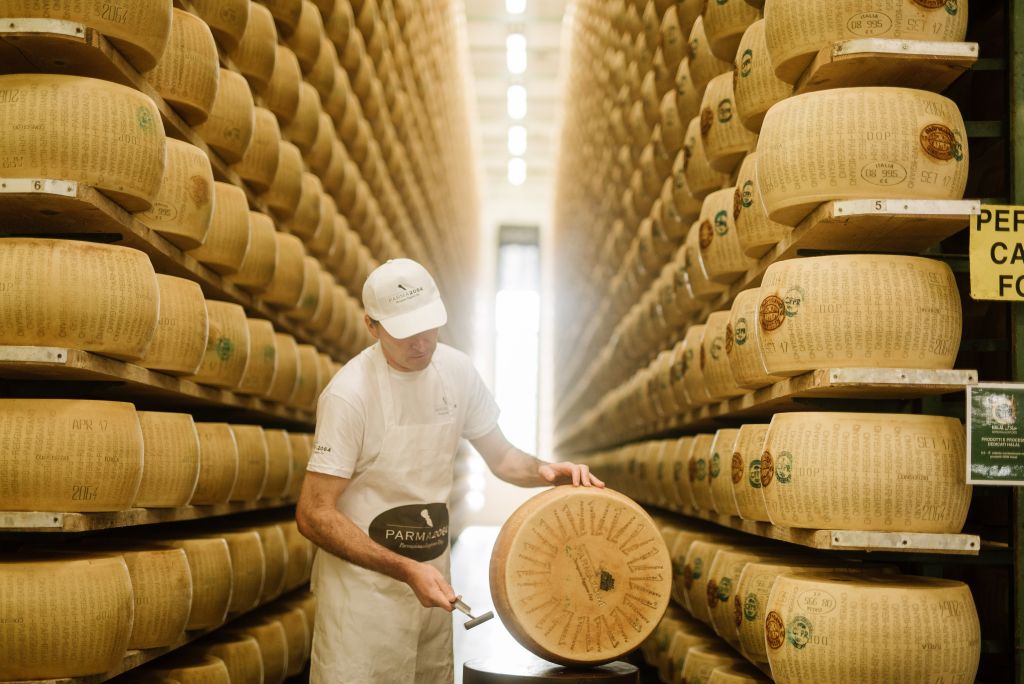
Carpet in San Prospero, where for more than 50 years la San Pieri Damiani produces fine shapes in the various seasonings, 18, 22 and 30 months. Going down, we meet CPL, class ’33, one of the oldest cooperatives in the province, which before producing Parmigiano Reggiano provided milk the city. Continuing and arriving to Roccabianca we meet in the dairy farm Earners, which produces Parmigiano with the milk of its cows, born and raised on site.
To Fidenza, Cooperative Casearia Agrinascente was able instead to select a Parmigiano Reggiano by author, that thanks to a careful process of maturation that exceeds the 28 months (until passing even 48 months) brings to the table the taste of a prestigious house art.
It is the Parma2064 Long Life, variant from the long seasoning of Parmigiano Reggiano, produced without additives and preservatives, working milk exclusively from family farms located in a radius of 10 km from the two dairies from which it is shaped. An ideal evolution of Agrinascente cheeses – Parma2064, which with Parmigiano Reggiano aged over 24 months has won the gold medal at the World Cheese Awards.
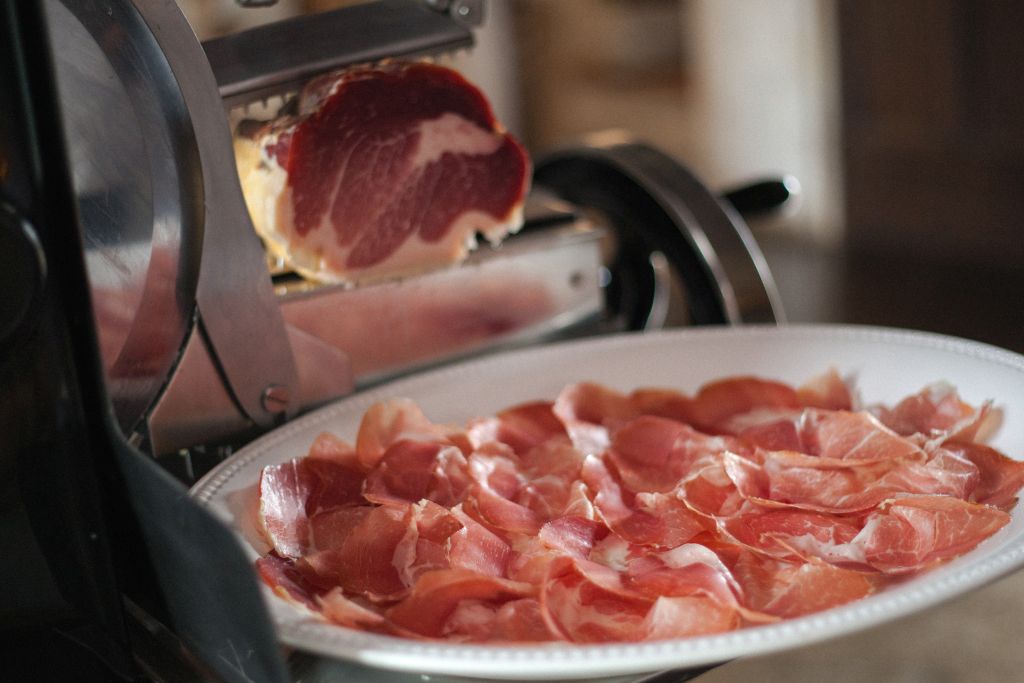
Who says Parma, says especially Prosciutto, a delicacy also appreciated by Napoleon, who after having tasted it He was obliged to grant Parmesans the right to export it, opening the doors of international success to the future DOP. More than 200 years later, a visit to the lands of Prosciutto di Parma is an opportunity for a delicious discovery, visiting the companies, talking with the norcini and tasting slices.
Langhirano
The food and wine itinerary in Emilia Romagna in search of the secret of Parma ham passes through Langhirano and the nearby municipalities. We are south of via Emilia, between the river Enza and the stream Stirone, where between more than 150 hams belonging to the consortium of the PDO, there are also some members of the Parma City of Gastronomy product club.
The first stop is however at Parma ham museum, a mine of curious information, where we resume the thread of Napoleon's history. With his hand strung in the bench – his classical pose – the French conduit sought relief from a chronic gastritis, and the delicacy of the Parma Ham, without annoying side effects, immediately conquered it.
This is how the emperor met the farmer Medardo dal nès dóls, Medardo with a sweet nose in Parmesan, who showed him the quick and experienced gesture with which, thanks to a strange needle, he punctured his thigh to assess maturation and quality of the product, without needing to slice.
This is the tool still used today to probe every Parma ham: the Fibula, the horse bone that has the property to retain the aroma of the ham for a few seconds, then return as new, and be usable on the next ham. Only those who pass this test can bear the symbol of the ducal crown.
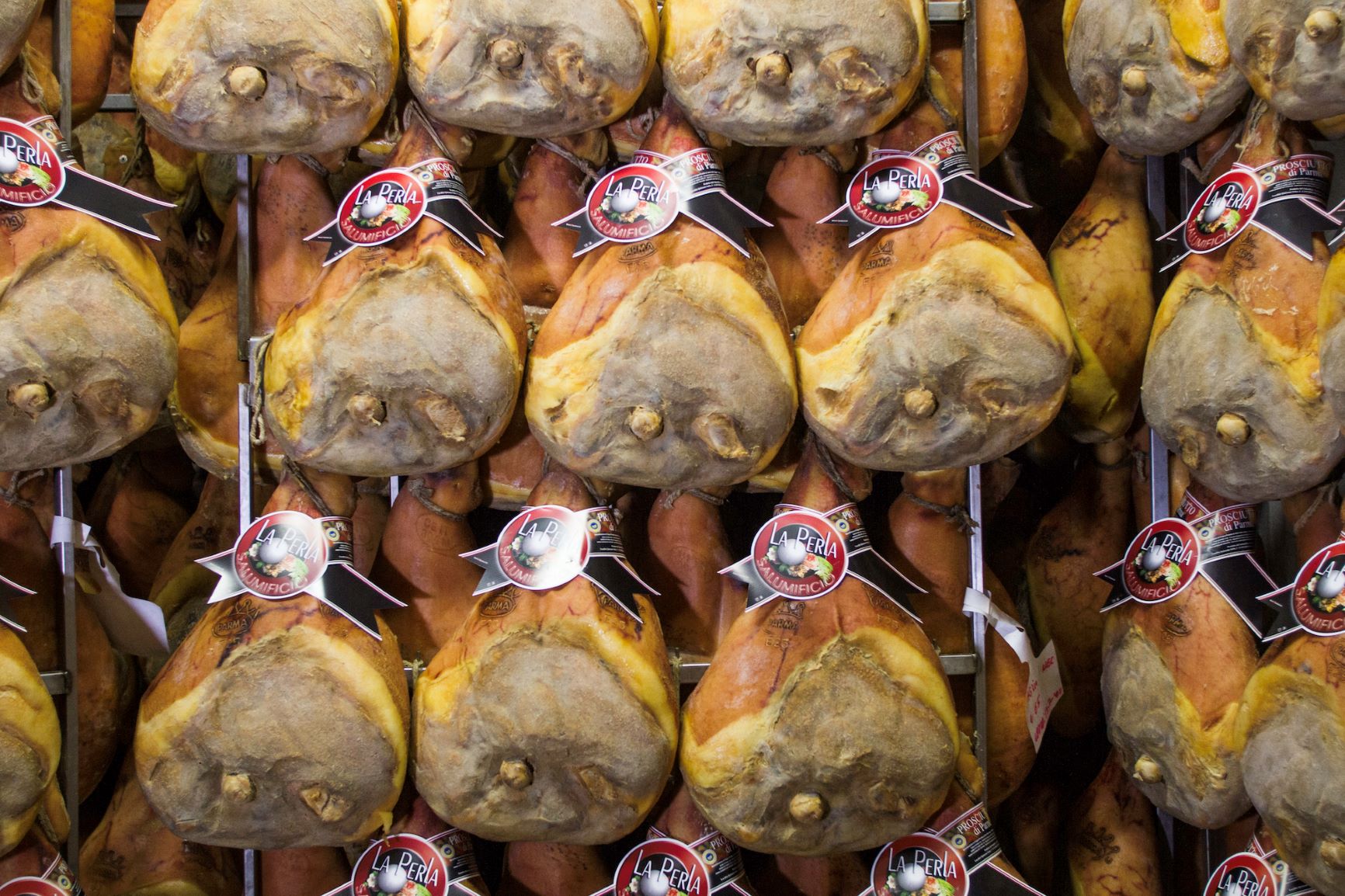
Let's go then to the discovery of best producers of Parma ham in the area.
In Castrignano there is Accounts, family-run company has a real reality?or a small museum to tell its first 50 years of activity. The opportunity to observe how technology has made huge strides forward, and how, however, the heart of production is still entrusted to ancient gestures, passion and deep knowledge of raw material.
In a small hamlet of Tizzano Val Parma here Casa Graziano, named after the founder. It manages a family in which you cultivate the sense of patient waiting, of wise dexterity, of the pleasure of good things. The result is a selection of products that fully reflect these values.
In Riano di Langhirano there is Ruliano, the home of Crudo Perex Suctum, the most important product of the company, but not the only one. In their recently refurbished historical site, tastings and themed workshops can be done, linked to food and wine, even in English.
It is worth knowing also The Pearl, salamiificio di Langhirano that produces and seasons the Parma ham, but also many other products: guided tours, tours by reservation and tastings are interesting ways through which the company comes in contact with fans.

