
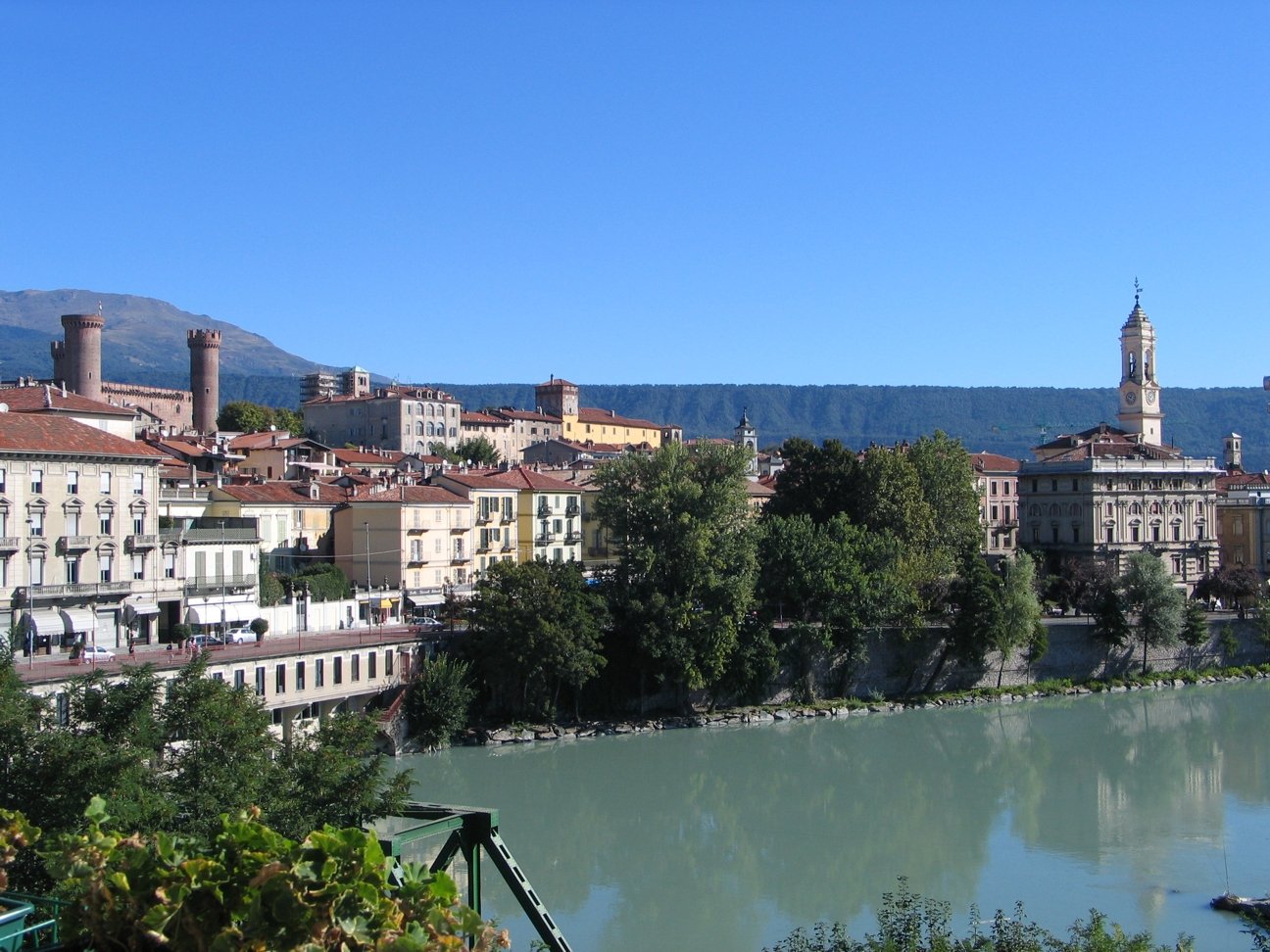
What to see in 2 days, we discover the capital of Canavese from the double soul, ancient and industrial, UNESCO heritage with the "Industrial City of the 20th Century".
Index of Article
Guess what to see in 2 days
The Industrial City of the 20th century
Registered on the list UNESCO World Heritage in 2018, the 20th century Industrial City is a real open-air museum of modern architecture, to which the major Italian designers of the 20th century contributed. It is the cultural and social heritage of Olivetti industrial project, which from the factory extended to the Community, with its social policies, and to spatial and urban planning.
An urban route of a couple of km in total, that develops along the axis of Jervis course and touches twenty buildings, architectures and residences with productive, social and housing functions, which form the fabric of the great industrial and socio-cultural project of Adriano Olivetti.
Visitor Centre Unesco
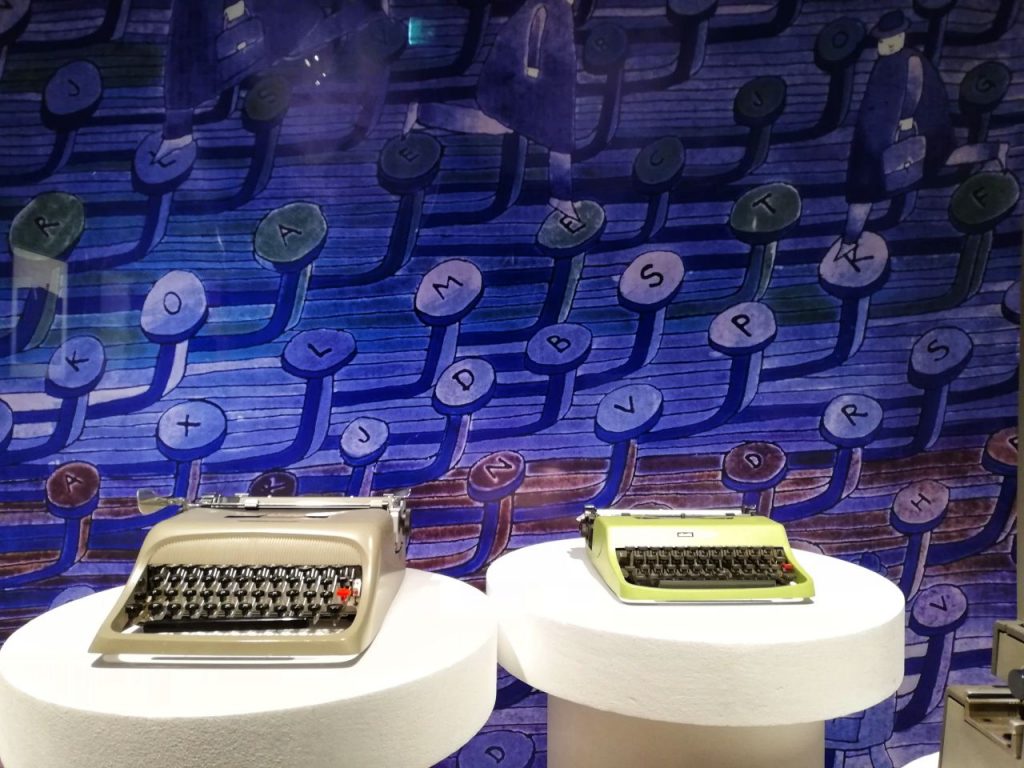
Start from here the visit of the 20th century Industrial City, from Unesco Visitor Centre of course Jervis, obtained in the environments of what was the seat of the factory council of Officine ICO (acronym of Ingegner Camillo Olivetti). In the rooms that have maintained original furnishings and floors, through photos, documents and antique objects, including the first writing machines and calculators, you can get an idea of the industrial and architectural project of the Olivettian Industrial City and the philosophy of the community and the social policies underlying it.
Officine ICO e Fabbrica dei Mattoni Rossi
Along course Jervis develops the core of the olivettian project, which became an emblematic complex of the industrial architecture of the twentieth century. It includes ICO workshop, with the large pavilion flooded with light thanks to the glass walls that make the work place transparent and open to the city, and the palace Matt RossiProduction headquarters until 1955. 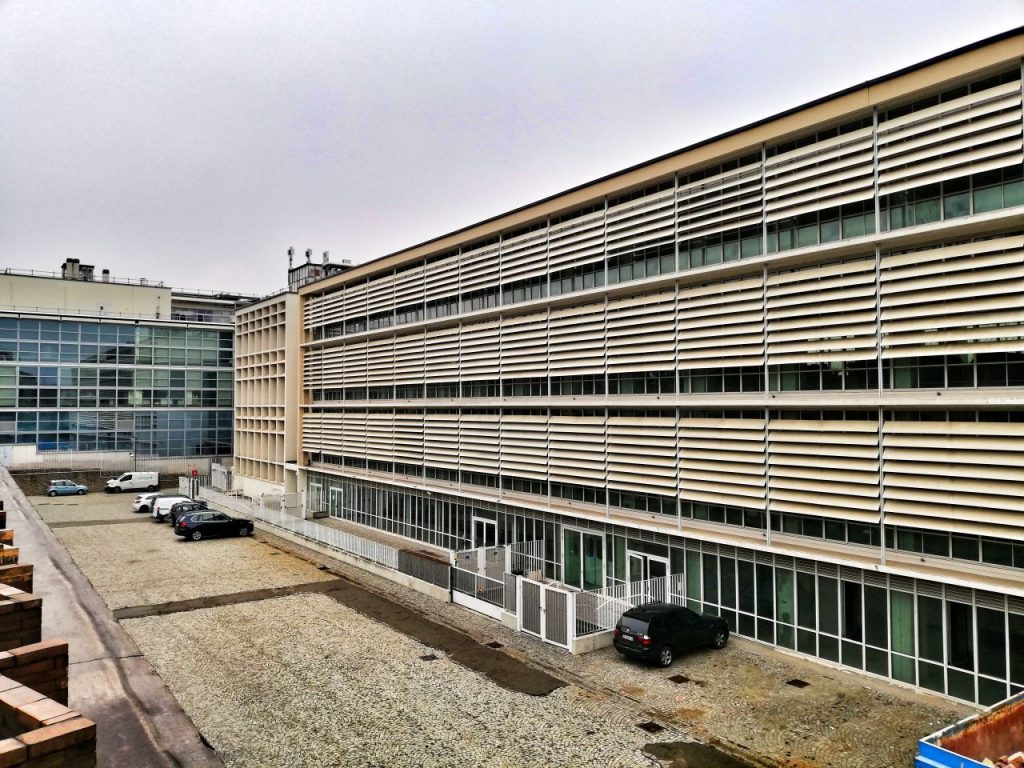
Social Services Centre
Cross the road and, right in front of the ICO workshop complex, at the 26th Jervis course, enter into what was the Olivetti Social Services Centre. The rationalist matrix building designed by Luigi Figini and Gino Pollini between 1954 and 1959 was the seat of the library, the infirmary, the social and welfare services and those of the Olivetti colonies, the summer holiday centers reserved for the children of the employees.
Behind the building is the Asylum Nido, always the work of Figini and Pollini, where the workers could leave their children in custody before working hours, one of the first enlightened examples of corporate welfare in Italy. Surrounded by greenery, the donkey still retains the original furnishings, designed by the internal technical office of Olivetti.
Church of San Bernardino
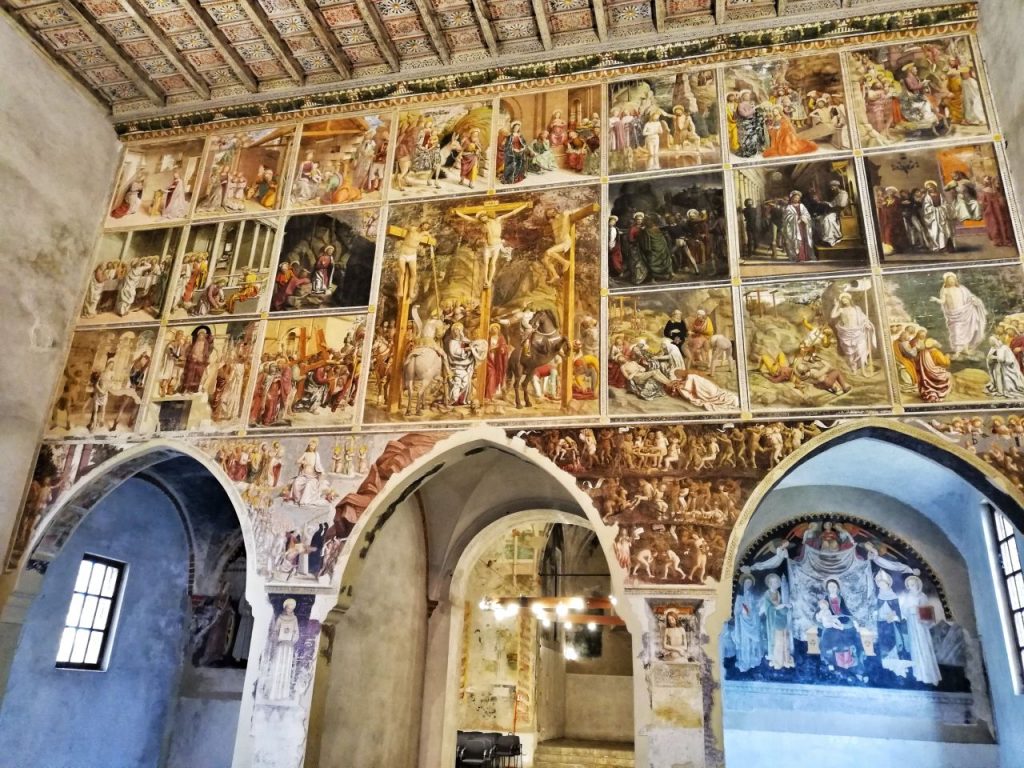
In the large park behind the industrial complex, the church is part of the fifteenth century Convent of San Bernardino, purchased by Camillo Olivetti at the beginning of the 1900s to make it his residence and then develop the company on the surrounding lands. Externally it appears as a simple country chapel, but entering it remains tangled by the magnificent cycle of Renaissance frescoes that narrate the "Life and Passion of Christ", by Gian Martino Spanzotti.
Corporate menu and Recreation Circle
Also in the park, in the shade of hundred-year-old trees is the Mensa Aziendale and Circolo Ricreativo, a meeting place after work for workers and employees of the Olivetti factory. Designed by Ignazio Gardella with Roberto Guiducci and UPECC in the mid-1950s, with its original hexagonal plant is one of the most iconic buildings in the industrial city and recalls in the lines the architectures of F. L. Wright.
Not far, on the side of the hill, stands the Olivetti Study Centre and Experiences, from the unmistakable coating of blue tiles of klinker.
Talponia
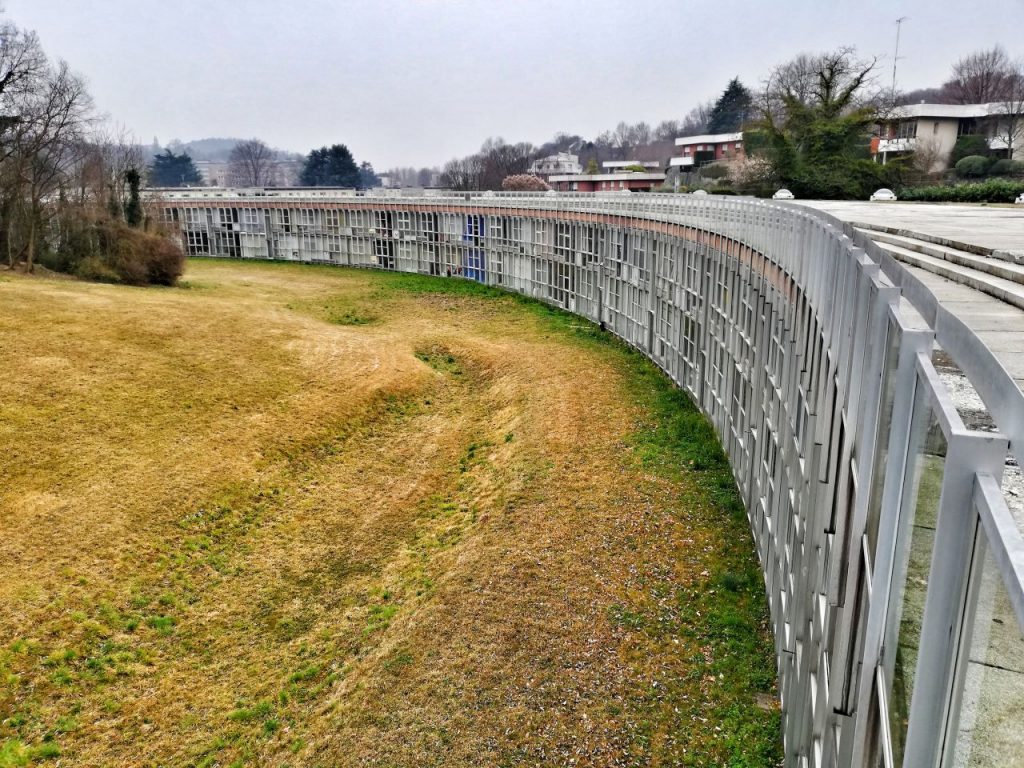
Leaving the park, reach via Carandini 6 to admire what is undoubtedly one of the most original residential complexes in the world, and not only for the name. Architects Gabetti and Isola conceived at the beginning of the 1970s theWest Residential Unit, more known as Talponia, like a "patch lying" of 82 simplex and duplex apartments, arranged to amphitheatre under the road level, overlooking a common meadow and the hill overlooking.
Garda Museum
In the heart of the historic center, overlooking a beautiful portico on the large Piazza Ottinetti, the Museo Civico Pier Alessandro Garda exhibits permanent collections of archaeology, oriental art and paintings from the private collection – including masterpieces by Carracci, De Chirico and Annigoni – belonging to the powerful family of Croff entrepreneurs, donated to the city by the last heir.
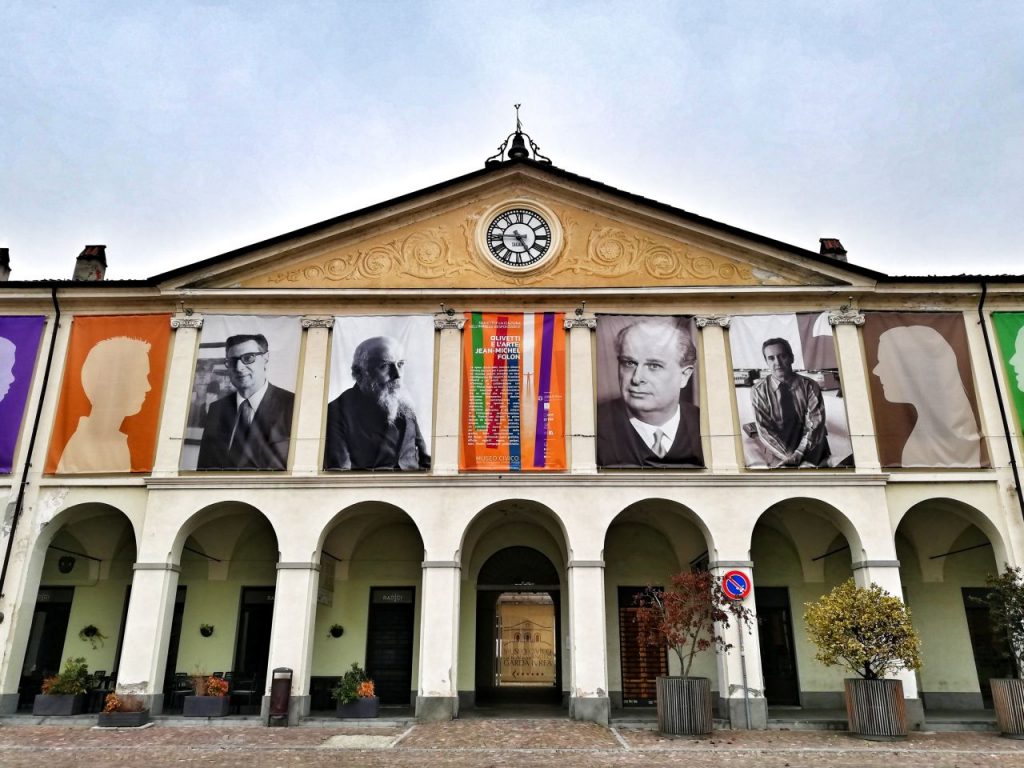
Particularly interesting for those who want to deepen the history of the territory of Eporedi, is the section of archaeological finds that collects artefacts dating back to the Neolithic age and medieval documents.
The Garda Museum regularly hosts temporary exhibitions, such as the one on "Olivetti and art. Jean-Michel Folon", scheduled until June 2022, which traces the long artistic collaboration between Folon and Olivetti, lasting about thirty years, through calendars, calendars, calendars, graphic works and various gadgets.
Castle of Ivrea
The castle of Ivrea dominates with its "rosse towers" the upper part of the city, since the Middle Ages place of command, with the Town Hall, the Cathedral and the Bishop's Palace. The construction of this palace-fortress by Count Amedeo VI of Savoy, called the Country, dates back to the second half of the '300 with defensive function, but often hosted nobles and members of the Savoy house on the occasion of real celebrations.
Over the centuries he underwent several transformations and was long used as a prison, and then remained unused.
The large inner courtyard, enclosed on three sides with four-storey high sleeves, with the walk of round that runs along the perimeter of the walls, welcomes you with a suggestive atmosphere, which brings back to the time of the Green Count. Soon the complex will be restored to host events and events.
Where to sleep
White space
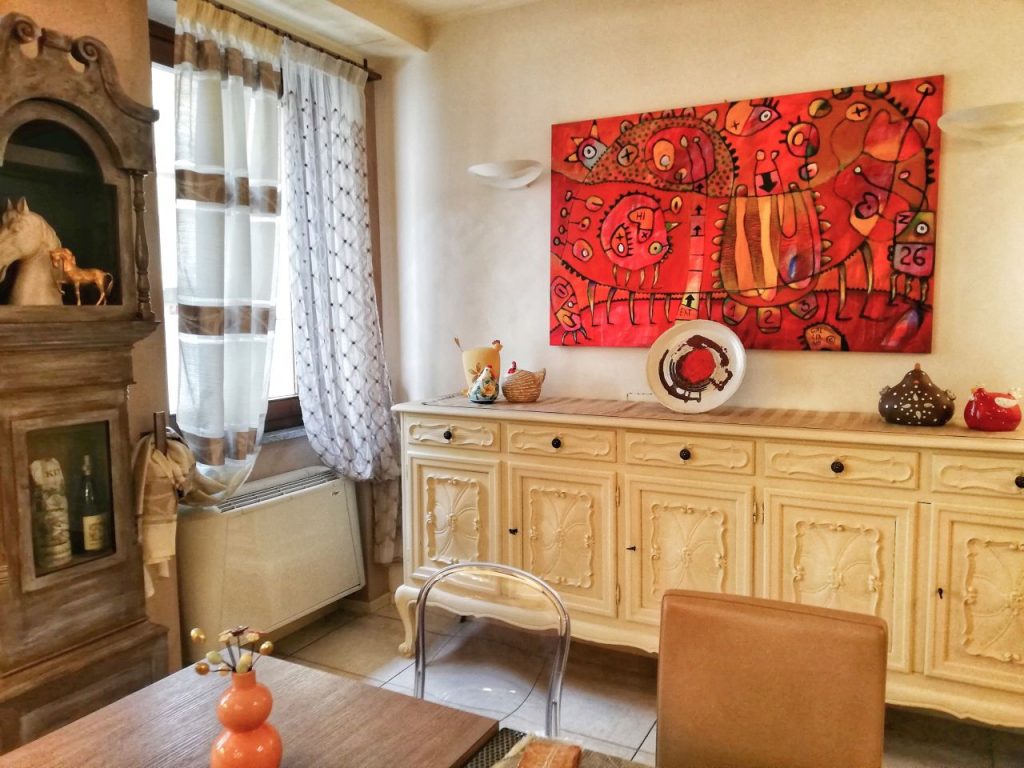
Not a simple hotel, but "camere con cultura": so the owners of White space they love to define the small charming hotel in a railing house in the historic center, a step from Piazza Ottinetti. The rooms are different from the other, inspired by typically Canavesan themes, such as Carnival of Ivrea, the industrial history of Olivetti, the medieval castles, the Moorish Serra and the vineyards of the Erbaluce of Caluso. The breakfast, sweet and salty, is served in the interior room decorated with ceramics and artistic objects, on the outdoor terrace in the beautiful season.
Where to eat
Restaurant Radici
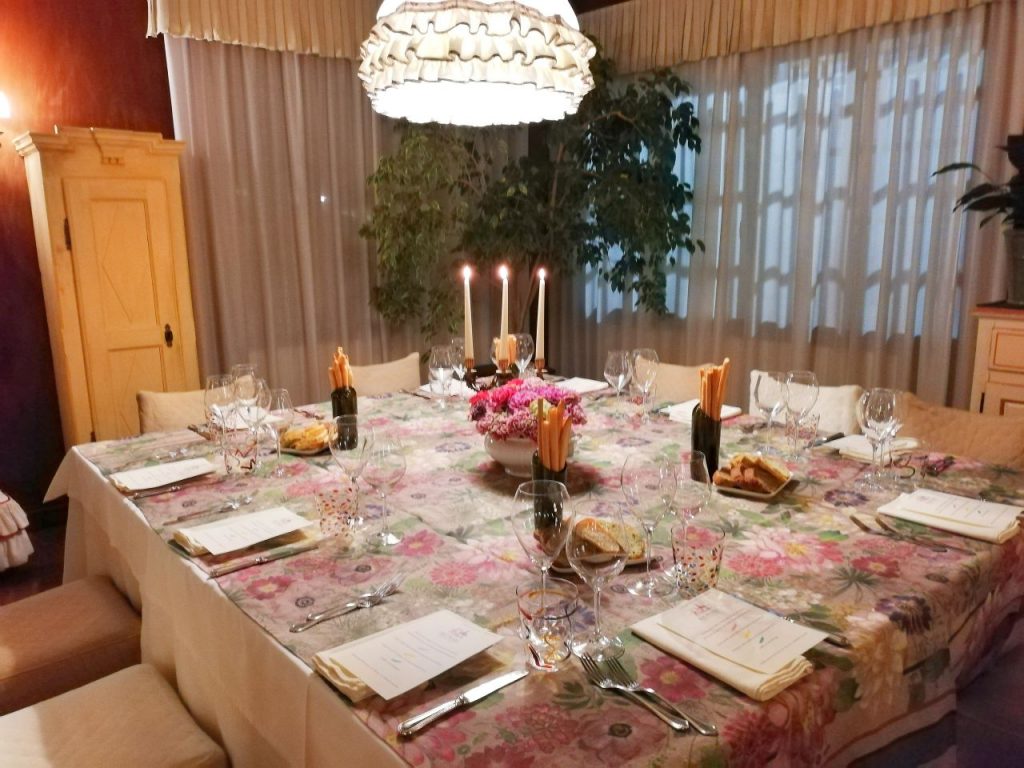
In the heart of the historic center, under the arcades of Piazza Ottinetti, a young and full of colour managed by a team all feminine, where you can taste typical dishes such as the Fassona joke and the classic agnolotto from the plin.
Monte di Luca Berolatti Restaurant
A handful of kilometers from Ivrea, Collector Giacosa, the Restaurant del Monte di Luca Berolatti, a talented young chef with a great experience behind him, committed to handing down and spreading the traditional Canavesan cuisine. The right place to taste the typical dishes based on genuine products and fresh vegetables of the private garden, from the tartare of vitella Canavesana to the delicious fried mixed to Piedmontese.
Pastry Ball
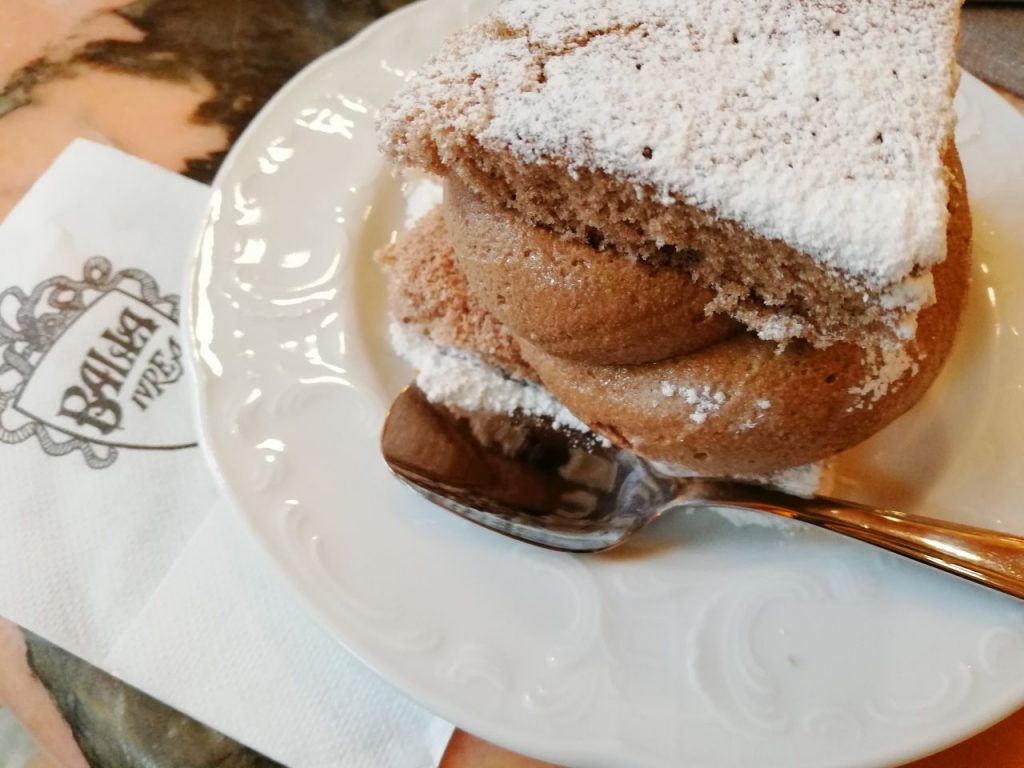
For a delicious stop between a visit and the other, nothing better than a slice of the mythical Torta 900 of the historic Ball Pastry: a delight consisting of two discs of overlapping Spanish simil-pan, stuffed with a soft chocolate pastry cream. A dessert that boasts countless imitations, so much so that the secret recipe is protected with a patented brand.
Bar Gelateria Ivrea
If you turn for Ivrea you feel like something good, but it's not the usual treat, jump to the Bar Gelateria Ivrea di Via Strusiglia 24, where you can delight with creations by Alessandro Gaido. From cheerful and coloured pralines in 8 different tastes, with fillings of apricot jelly or hazelnut cream, to the innovative 250 gr pant in vasocottura that you eat all year round, not only at Christmas.

