
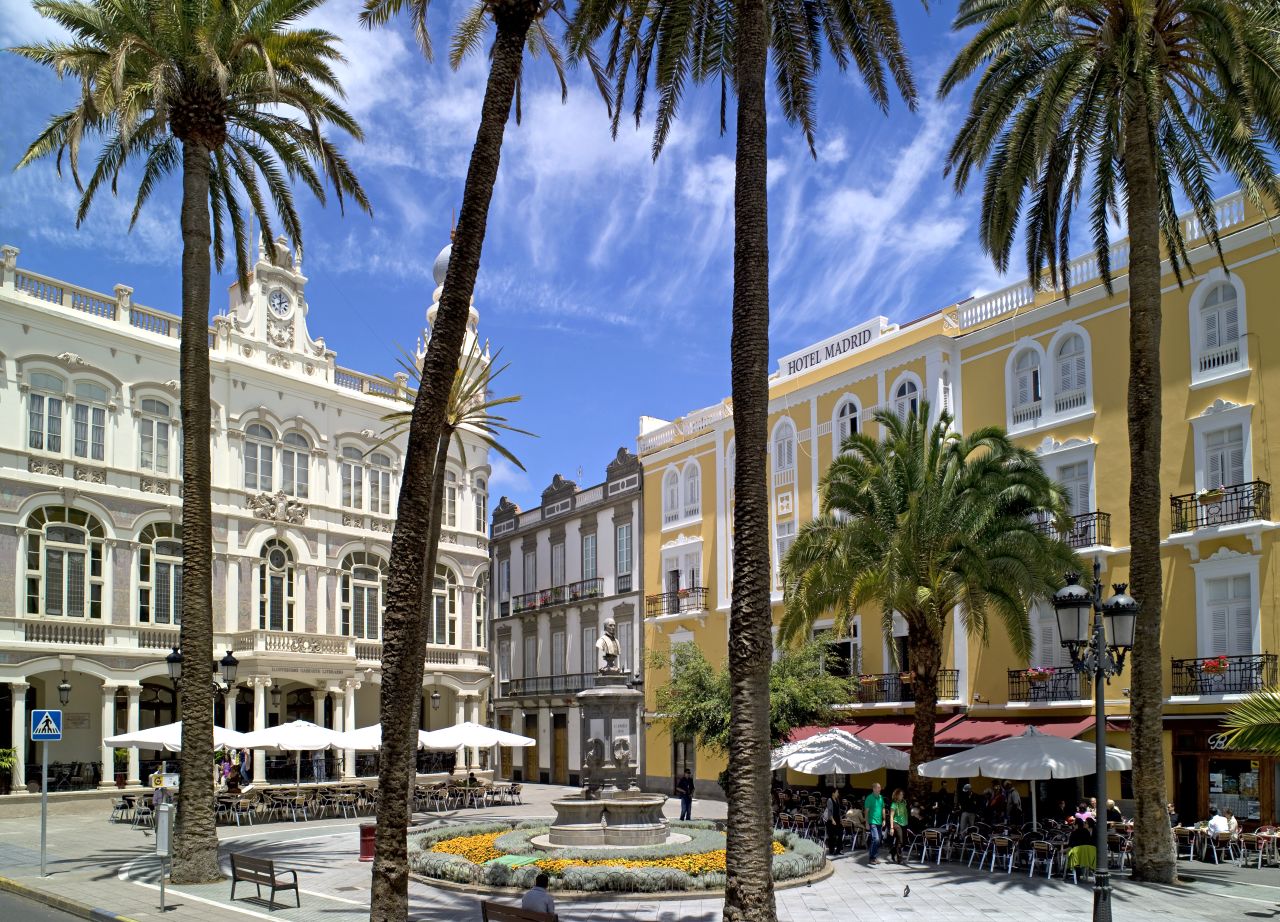
Las Palmas what to see in the capital of Gran Canaria, one of the most vibrant and cosmopolitan cities in Spain, which boasts a charming old town dating back to the 16th century, sandy beaches and a lively nightlife. If we add sun all year round, average temperatures of 22°C and direct flights from the main airports, here is the ideal destination in every season for a weekend, a holiday or even a long stay of remote working.
Index of Article
Las Palmas what to see
Vegueta
Start your visit from Vegueta, the historic center of the capital of Gran Canaria. The original nucleus of the city preserves beautiful buildings of the past centuries and it is a real pleasure to walk through the cobbled streets flanked by Renaissance, Baroque and neoclassical buildings that today house important institutions and museums.
Casa de Colon
The ancient residence of the governors of Las Palmas de Gran Canaria, where Christopher Columbus was a guest in 1492 during a stop to repair La Pinta and then, later, on at least three other occasions, is today a museum dedicated to the epoeia of the discovery of the Americas and the close ties of the Canary Islands with the New World.
In reality it is four buildings dating back to the 16th – 18th century that have maintained the typical architecture of the Canary Islands, articulated around two large patios on which the exhibition halls of what is one of the most visited cultural centers of the islands.
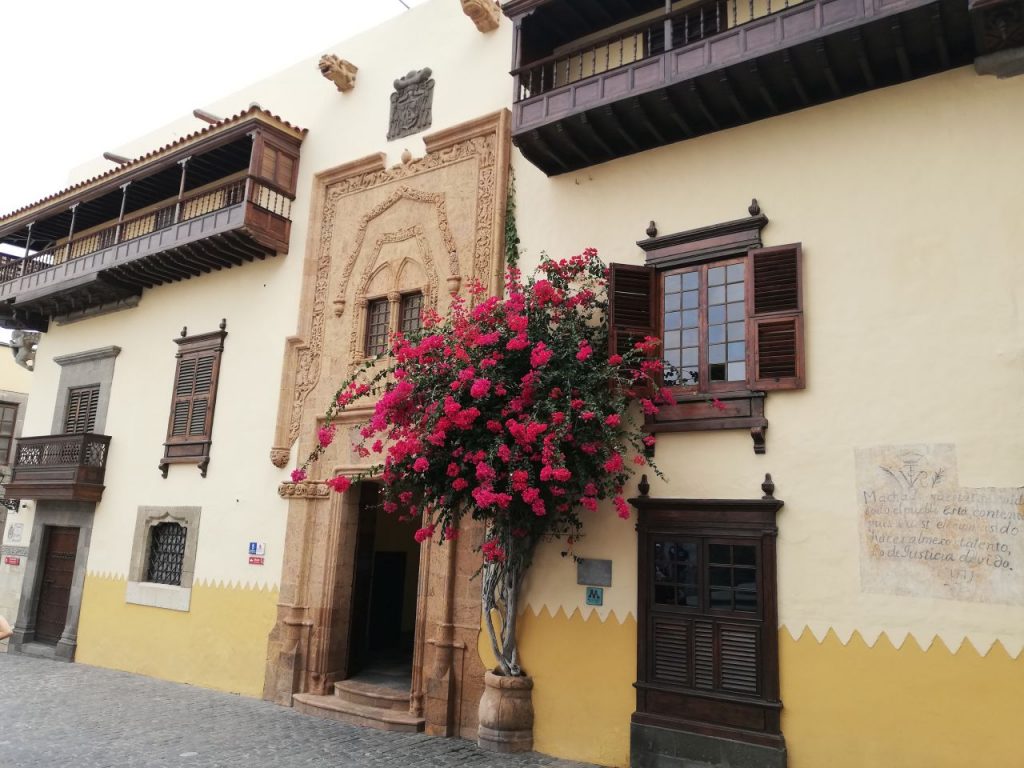
The entrance is from Plaza de San Antonio Abad where rises the oldest chapel in the city where even Colombo stopped to pray before continuing his journey to America.
In addition to the museum, where you can admire the perfect reconstruction of Commander's cabin on board the Pinta and paintings and engravings by Spanish and Flemish artists, there are also a library with 25,000 volumes on the Colombian era and a study centre dedicated to the relations of the Canary Islands with America.
Catedral de Santa Ana
Also known as the "Catedral de Canarias", since until the 19th century it was the only cathedral in the whole archipelago, it is an imposing building in the Atlantic Gothic style, the result of an architectural mix of neoclassical, Gothic and Renaissance. The construction of the Catedral de Santa Ana began in 1497 but was completed only in the 20th century.
It dates back to the 17th century the patio de los Naranjos, a cloister with wooden balconies among the few remaining of this type in Spain, which was the home of the local clergy. You can climb one of the towers to admire a stunning view across the neighborhood and discover that one of the bells of the Catedral de Santa Ana was donated in 1999 to Las Palmas de Gran Canaria by the Dutch colony living on the island to compensate the city for the destruction and fire suffered by the Dutch pirate Pieter Van der Does in 1599.
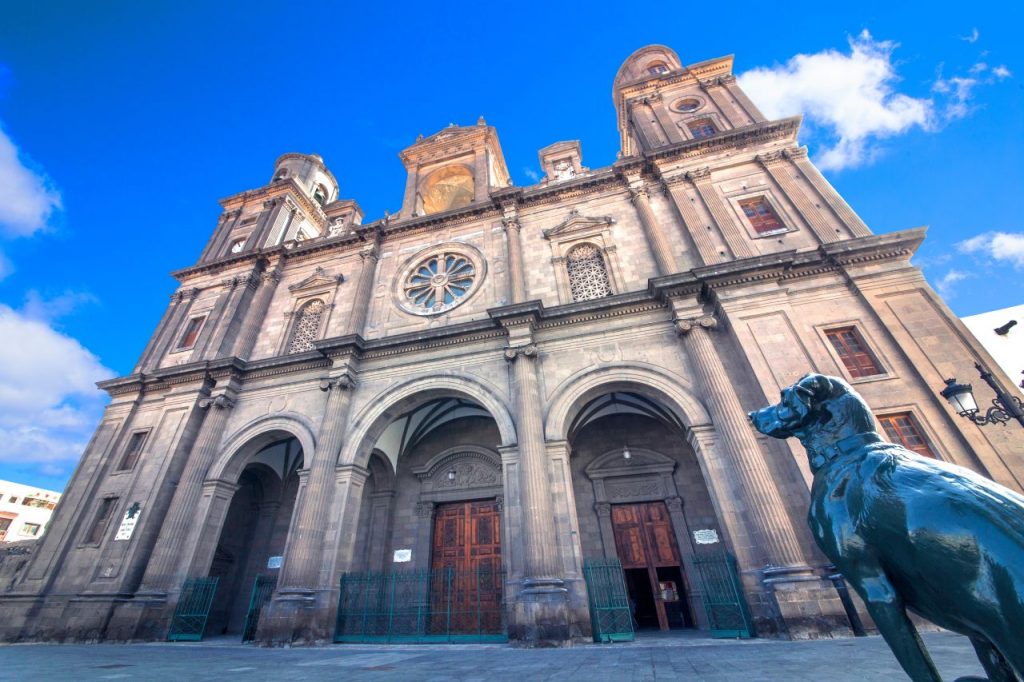
Plaza de Santa Ana
The cathedral overlooks Plaza de Santa Ana surrounded by other important buildings including the Town Hall, the Historical Archives, the Regental House and the Episcopal Palace. Eight mysterious cast iron dogs of unknown origin are undoubtedly the most curious feature of the square.
According to the most credited popular theory, mayor Felipe Massieu would be given a French captain as a thank you for the good treatment he received, along with his crew, during a stay on the island.
Museo Canario
A few minutes walk from the cathedral, the Canario Museum is dedicated to the pre-Columbian history of the island and deserves a stop if you are interested in getting to know the island from close to the city. Canari, the Aboriginal population of the island.
This museum is part of a wider scientific and cultural society that was founded in district Vegueta in 1879 with the aim of recovering much of the pre-hyspanic history of the island that had long been forgotten.
Through a rich collection of ceramic vases, terracotta figurines and pintaderas (rodimental seals made of clay or wood), the exhibition reveals the lifestyle of the Aboriginal peoples of Gran Canaria.
Triana
Another historic district of Las Palmas, Triana was originally an area inhabited by emigrants fromAndalusia that here had recreated a sort of "small Seville". In time it became a elegant bourgeois neighborhood characterized by beautiful buildings with modernist architecture, which you can admire above all along the Calle Mayor de Triana, the main commercial artery of the city.
Make a stop in the beautiful Plaza Cairasco, dominated by the Art Nouveau facade of the Literary Cabinets, opened in 1844, one of the largest cultural institutions on the island, dedicated to the organization and promotion of artistic and cultural events. The building also houses a good restaurant with terrace.
Poem of the Sea
One of the most recent attractions in Gran Canaria, Poem of the Sea is a huge aquarium of over 12,500 square meters dedicated to the conservation of marine biodiversity. It houses more than 350 animal species and more than 2,000 floral species from different parts of the planet, in three different areas: surface ecosystems, marine depths and freshwater environments.
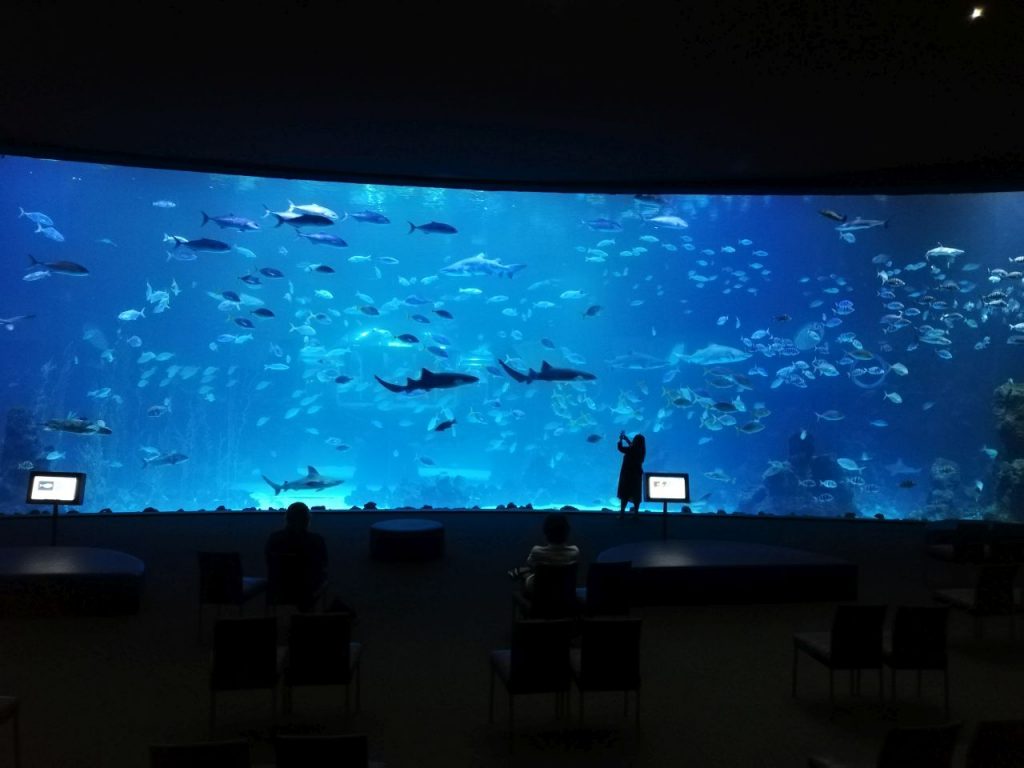
Truly spectacular is the "Reef", a transparent cylindrical tank that contains 400,000 liters of water and houses a wide range of colorful tropical fishes, as well as corals, jellyfish, marine dragons, seahorses and turtles.
But the wow effect is guaranteed especially to "Deep Ocean": the world's largest curved window, 36 meters long and 7 meters high, through which you can observe an incredible amount of pelagic species, along with sharks and mantas.
Playa Las Canteras
And after the visits, what do you say about a little relaxing on the beach? In Las Palmas you only have the embarrassment of choice, although the most popular beach is Playa Las Canteras. Considered one of best urban beaches of Spain, it is situated right in the heart of the city and extends for about 3 km, bordered by a long walk with excellent bars and restaurants.
In its calm and peaceful waters, protected by the peninsula of La Isleta, you can bathe in every season, and also want snorkelling on seabeds that preserve a unique ecosystem.

