
Mahon what to see in the town on the island of Menorca, the greenest of Balearic Islands, which boasts the largest natural port in the Mediterranean.
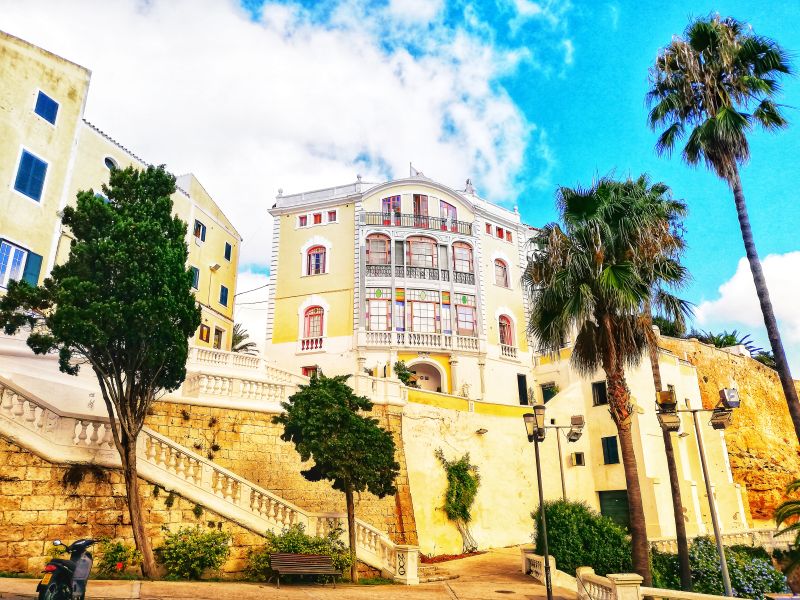
During my recent weekend in Minorca to follow the annual convention of a tour operator, I did not miss the opportunity of a walk Nothe capital of the island. Here is my itinerary to Mahon what to see in delicious Mediterranean town, lying on a plateau overlooking the second largest natural port in the world, Fascinated by the facades of the oldest houses, in which architectural elements of clear English and French influence are mixed, combined with the characteristic Spanish style.
Index of Article
Mahon What to See in Old Town
As I did, I recommend you visit Mahon on foot because only so you can appreciate the most hidden and picturesque corners.
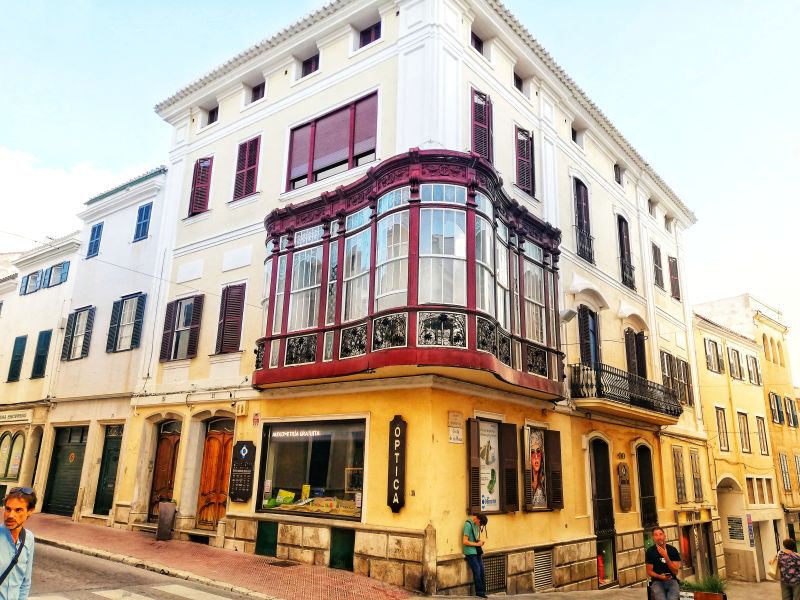
My visit begins from the Arch of San Roque, which is all that remains of the ancient walls that once surrounded the city and from which the old road passed to Alaior. Along the narrow streets lined with typical buildings and stately residences characterized by glyllotine windows and bowindows, which date back to the period of the English expansion of the 17th century, you reach Placa de la Constituciò, considered the heart of the city.
Plaça de la ConstituciÃ
Here is the Church of Santa Maria, characterized by a late Gothic interior, built in 1722 by Lord Johnston on the basis of a pre-existing Christian basilica intended by King Alfonso III in 1287, at the time of the Spanish reconquest of the city. Inside it is preserved a valuable monumental organ, considered the best of all Spain and perhaps of the world. The valuable instrument was commissioned in 1906 by Alenar to Johann Kiburz, an expert German musical instrument maker, who delivered it within four years.
The large neoclassical building on the other side of the square is the Town Hall, built in the 18th by Fernandez de Angulo on the basis of a primitive structure attributed to the Castle of Mahon. Overlooks the main entrance a watch imported from England by Governor Richard Kane.
Immancabile, at this point, a stop in Sa Gelateria for a pomada, the typical alcoholic beverage minor based on gin and lemonade.
The Main Theatre
Before continuing towards the port of Mahon, we make a detour to see the small but delicious opera house, the Main Theatre, located in Carrer d’en Deià, built in the last century by the Florentine architect Giovanni Palagi. At the time of the opening the passion of the Mahonesi for Bel Canto was very strong and the long opera season often included representations of the most important Italian companies, which gladly included Mahon in their tours. The theatre, which has an audience and four rows of poles, today hosts only sporadic performances and an annual fixed appointment with the Opera Week. For the rest of the year, however, it is generally used as a cinematographer.
Chiostro Market
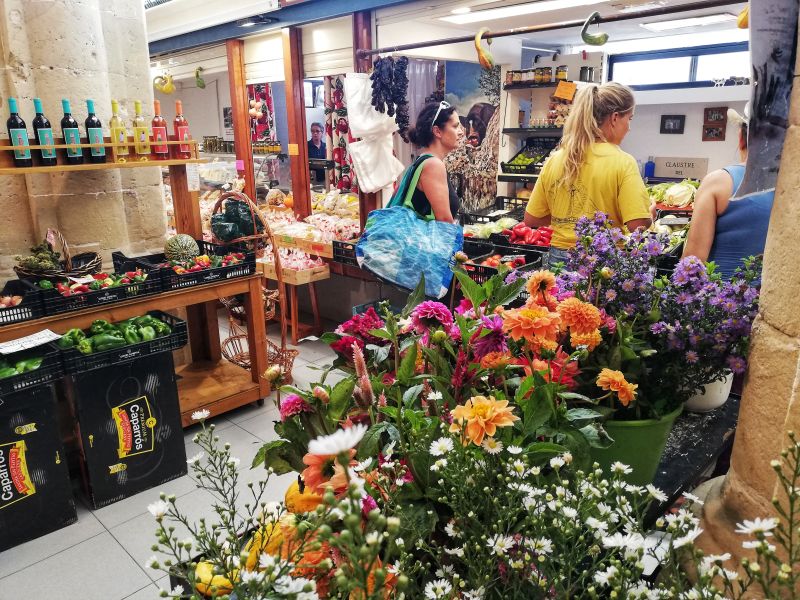
Then we continue our tour towards Plaça del Carme, which overlooks the Church of Carme with the adjoining convent of Carmelites. The complex dates back to the 18th century, having begun construction in 1748, at the time of English domination. The church is by extension the largest in the city and the cloister for many years now houses the picturesque daily market, to which a stop is absolutely dedicated.
The cells have been transformed into workshops and butchers, while a loud crowd animates the portico under which, leaning against the ancient columns, the stalls are settled. Take advantage of it to buy the characteristic Queso Mahon exclusively produced in Menorca, but also tasty meats and aromatic herbs.
Belvedere de Plaça Miranda
Behind the cloister opens Plaça Miranda, a real panoramic terrace on the port. Nearby is the Church of Concepciò, also dating back to the mid-18th century. Initially it was a Greek-Orthodox temple, erected by the members of the large Greek community, who came to Mahon attracted by the good gains offered by the flourishing trade. A few centuries later the building was converted into a Catholic church and the original structure it was later restored with the addition of the current portal and side towers, while the interior still retains the Greek cross plan.
Mahon Port Tour
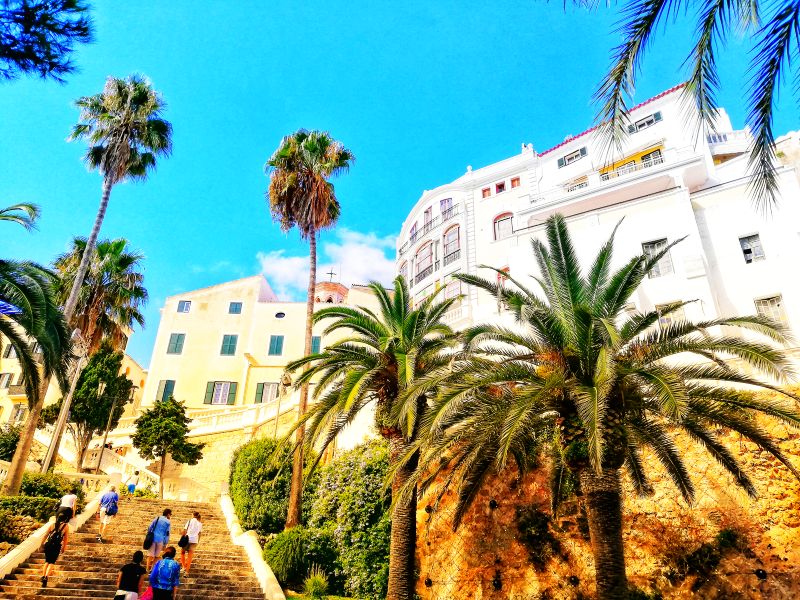
At this point, descending along the majestic Abundancia stairway, we head towards the port of Mahon. Following the Moll de Llevant we reach at the bay of Cala Figuera, seat of the Club Maritimo de Mahon, where they are docked yachts and sailboats. This is one of the most lively areas of Mahon, with a high concentration of bars, cafes and restaurants with beautiful views of the port and the avenue of boats.
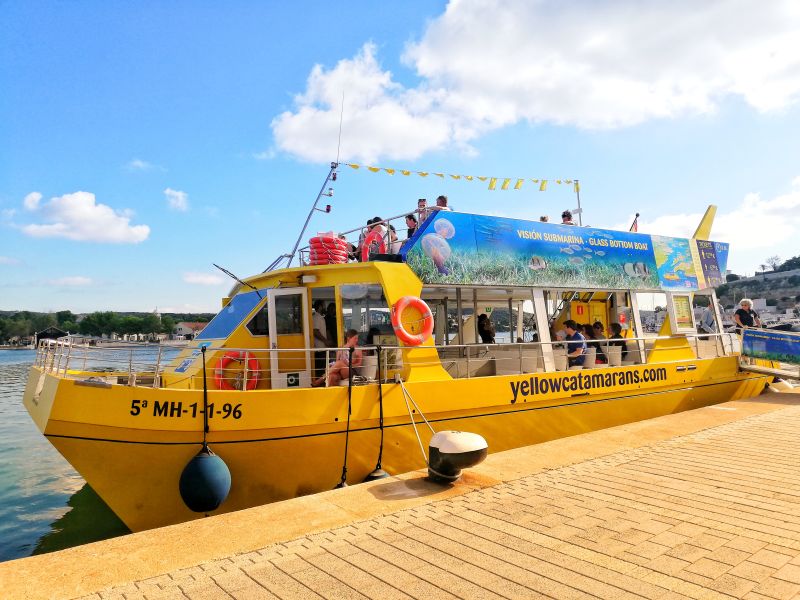
One in particular draws our attention: a yellow catamaran that tour the port of Mahon. We do not think twice and decide to jump on board for this short cruise to discover this port of records that has a total length of about 6 kilometers and a maximum width of 350 meters and has played over the centuries an important role in the development of the city and, in reflection, of the whole island.
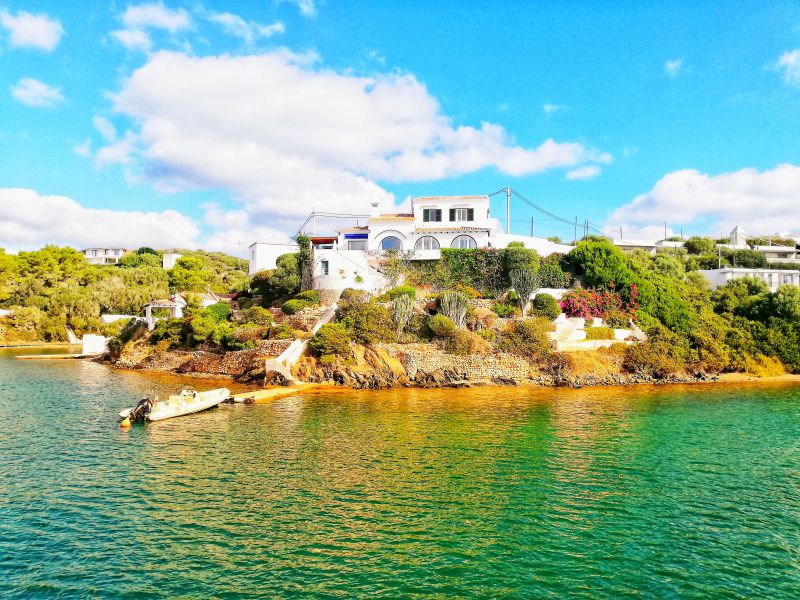
We sail and the boat immediately heads towards "S’altraband", "the other side", which traditionally has always been the place of holiday of the inhabitants of Mahon and still today houses the luxurious villas and holiday homes of famous characters.
Fortress of the Mola
A little further we see the English cemetery, where the non-Catholic American sailors died in the port in the mid-18th century, when the island was the naval base of the North American fleet in the Mediterranean. We then take the San Jordi Canal built in 1900 to facilitate access to La Mola and the Isabella II fortress built in the middle of the 19th century to protect the entrance of the port.
The catamaran has the glass keel, through which during a stop in a secluded cove we can observe the seabed covered by prairies of posidonia in which gills of fish.
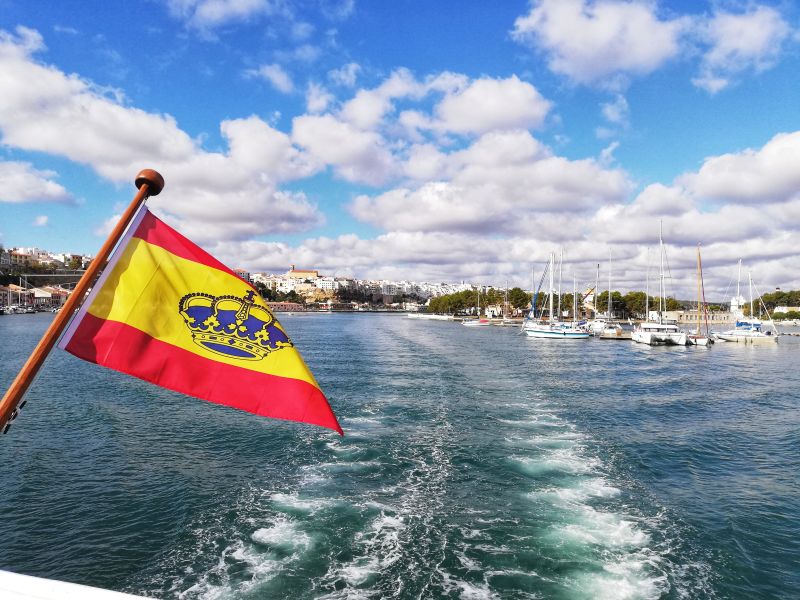
We repeat the navigation and reach the entrance of the port delimited by the harsh promontory of Capo de la Mola, which is on the right side, overstated by the imposing fortress; while on the left side stands instead Punta de Sant Carles, on whose top are the ruins of the Fort of San Felipe.
Fort of San Felipe
The fort was built by the Spanish in the second half of the 16th century in order to protect the port from repeated pirate attacks. When, about a century later, the island fell into the hands of the British, the fort became the residence of the British governor who built it to become one of the safest fortresses of the time.
The Castle of San Felipe, as it is popularly known, was also the last stronghold of the English government on the island, falling in 1782 under an exhausting siege led by the Hispanic troops. French. Unsustainable symbol of English power on the island, the fort was later razed to the ground by the Spanish government and the defensive position was transferred to the new fortress of La Mola.
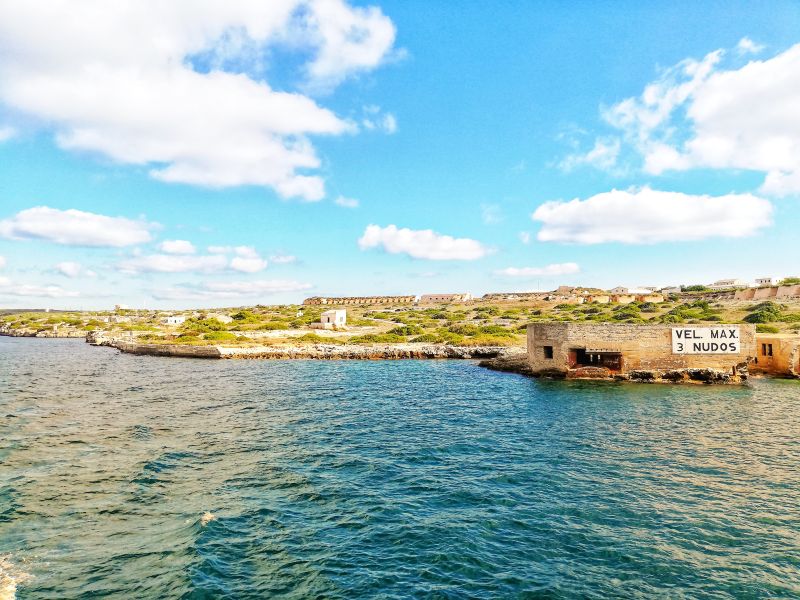
Of the mighty fortification today only remains piles of ruins covered with weeds, but on the site was set up a Military Museum that traces the history of the Fort of San Felipe through a collection of historical documents.
The Lazzaretto
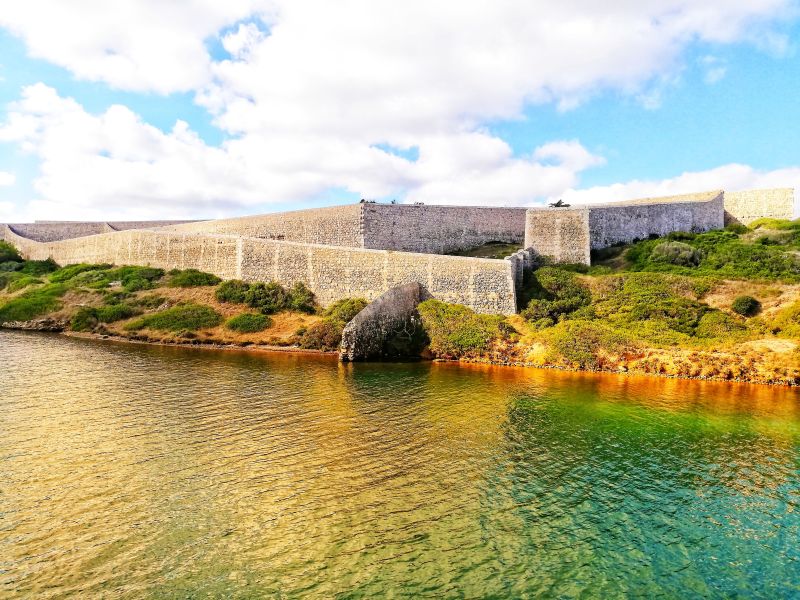
Coming back to the city along at the islet of El Llatzaret, where at the end of the eighteenth century a lazzaretto was built for the shelter of the travellers and crews of the ships directed towards the Spanish ports, which were subjected to a period of quarantine. The complex, which included a military hospital and a civilian, housing districts and a chapel, is still preserved in good condition and has a significant historical and architectural interest. Visits to El Llatzaret are organized almost daily in the summer months with departures from the landing of Cala Fonts.
Island of the King
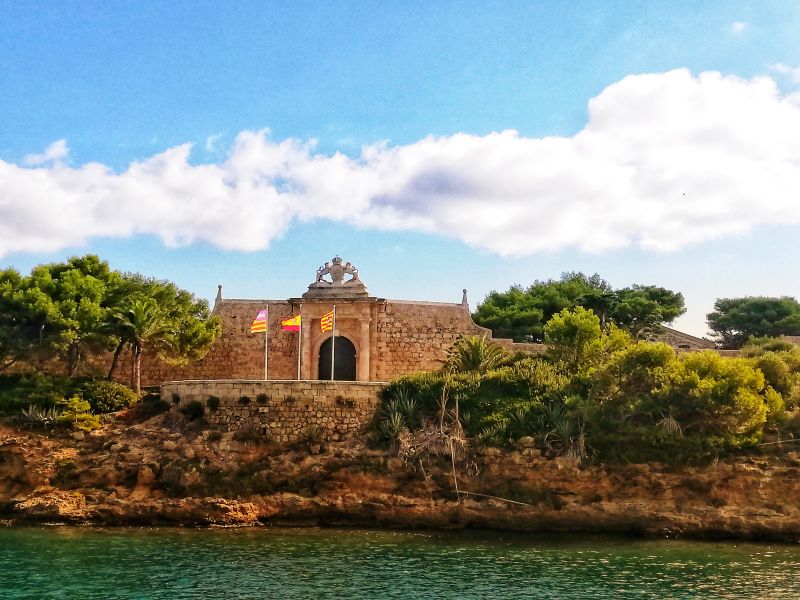
A little further we forget theIsland of the King, home to the ancient naval hospital characterized by an imposing architecture and a set of buildings built in the eighteenth century. A great restoration by the work of famous Swiss contemporary art gallery Hauser & Wirth is transforming the complex into an art center that will host temporary exhibitions, exhibitions and educational activities that can also involve the local population. The work also aims to preserve and maintain the ecosystem of the area thanks to the creation of gardens designed by the famous landscape designer Oudolf.
Es Castells
Almost at the end of our tour of the Port of Mahon, here is our left Es Castells, the oldest and most characteristic part of the town, built by the British in 1771 as a complementary area of the Castle of San Felipe, from which its name comes. This is the easternmost point of all Spain, the first to see the sun rise.

