
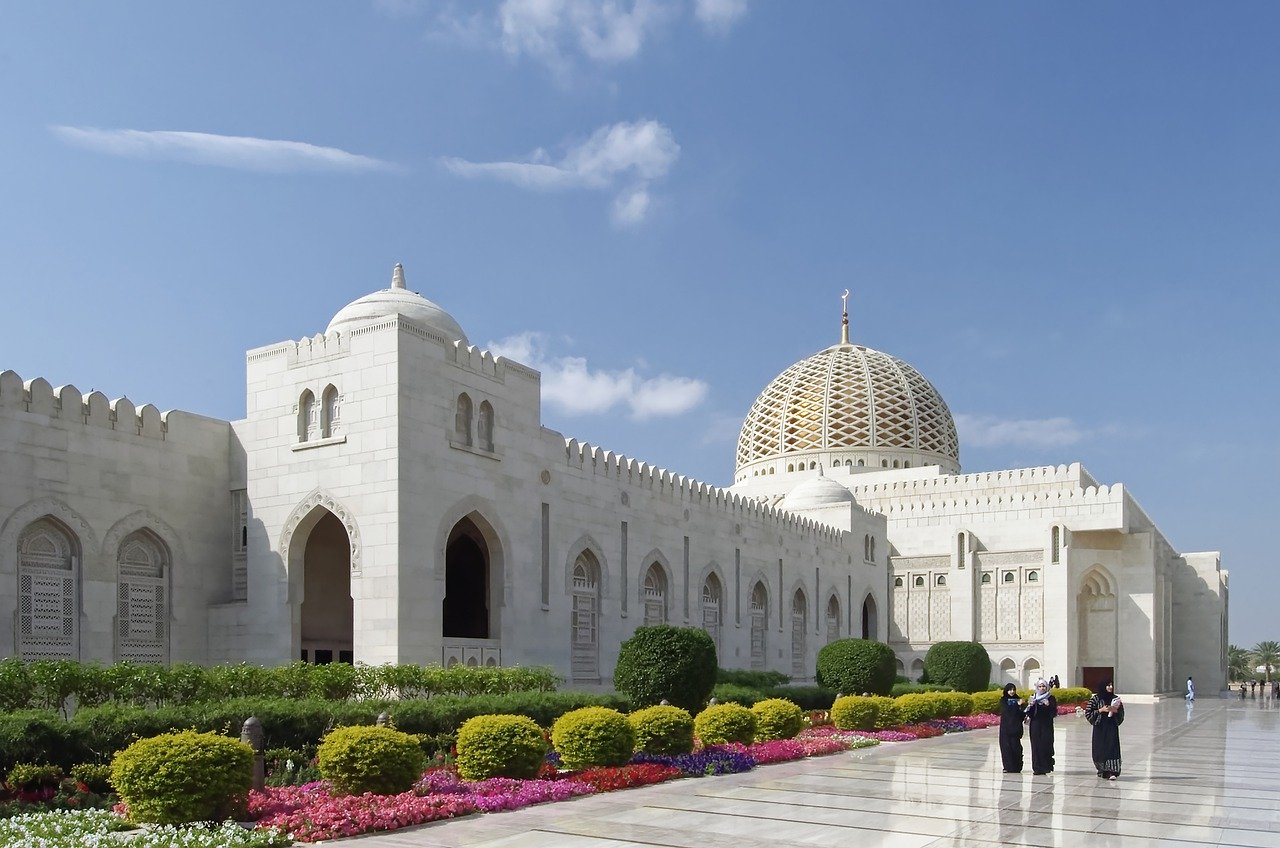
Oman what to see and do, places not to be missed between sea, desert and mountain, where to sleep: the best resorts and tented camps for a journey from a thousand and one night.
A meeting point between Asia and Africa, the Sultanate of Oman is a country that enchants with its ancient traditions and wonders of its natural beauties.
Index of Article
Oman what to see
Surrounded by deserts, it overlooks the Indian Ocean and the Arabian Sea and borders north with the United Arab Emirates: it is a land of contrasts, where nature offers an incredible diversity of environments.
In Oman there are mountains, wadi, fjords, canyons, deserts and beaches that make the Sultanate the ideal destination for hikers and adventure lovers but also for those who simply love to travel outside the usual routes.
The geology in Oman has created an unexpected variety of landscapes: the high peaks of the mountains of Jebel Hajar and Jebel Al Akhdar, the ocher of the dunes of the Wahiba desert, up to the coasts of the Indian Ocean.
All offer spectacular landscapes to admire, for example during excursions to Wadi Shab or Wadi Bani Auf, where it strikes the strong contrast between fresh water sources and wadi (rock formation typical of the area) that surrounds them, or between the palms of the oasis and the dry mountains of Jebel Shams with their amazing "Grand Canyon".
When are you going to Oman?
The village is characterized by 3 different climates, temperate, desert and tropical, so the best time when to go to Oman is between October and April when temperatures are moderately cooler than the rest of the year.
Winter is also the ideal season for outdoor activities, hiking and relaxing on the beautiful beaches. The climate in Oman is still relatively warm all year round, but in the summer months it can reach very high temperatures, often above 40 degrees.
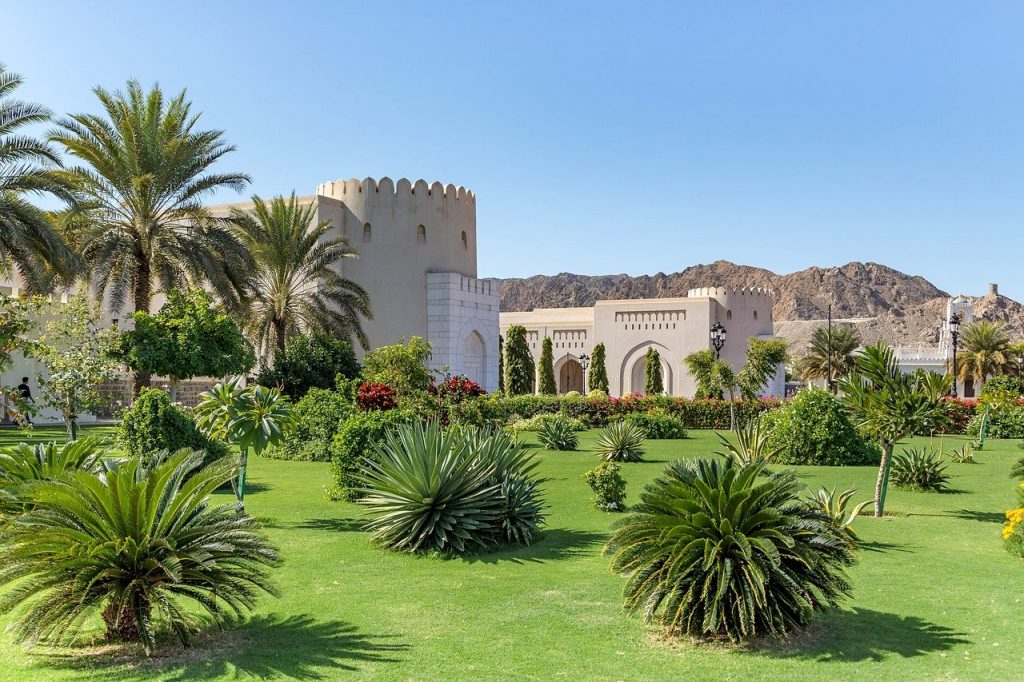
Mascate, the attraction of capital
Mascate, the capital that extends to the foot of the Jebel Hajar, on the Gulf of Oman, is typically the starting point of every itinerary in the Arab country. It is one of the smallest capitals in the world with its 3 sq km, strictly in accordance with the traditions of Arabic architecture: no building is higher than the Muezzin tower, no tilted roof, sand and white as predominant colors in buildings.
Mascate is the starting point for excursions in the valleys and the strong interiors, or to travel the coast to Sohar, north, or to the town of Sur and the dunes of Wahiba, south of Oman. Spectacular beaches follow the capital, including the famous Al Qurm and the bay of Qantab.
National Museum of Oman
Located near Alam Palace in the heart of Mascate, the Oman National Museum houses 14 permanent galleries organized in chronological and thematic order that preserve over 5 thousand artifacts, from prehistory to the Renaissance.
Do not miss the section dedicated to irrigation systems Aflaj, UNESCO heritage since 2006, the maritime section and that dedicated to intangible culture. To these is added a gallery of almost 400 square meters reserved for temporary exhibitions.
Inside the complex, which extends over an area of over 13 thousand square meters, is the first Learning Center of the Sultanate and an area dedicated to the restoration that has so far led to the restoration of over 5 thousand artifacts.
Matrah
The economic heart of the village is located in Matrah, famous for its promenade with the ancient Indian-style dwellings, the small fishing port with the fish market and above all the souq certainly more supplied than the whole Arabian peninsula.
Here there are traditional clothes, handcrafted jewelry and antiquity, Bedouin carpets but also workshops of handcrafted manufacture of khanjar, wonderful daggers carved in silver and ivory.
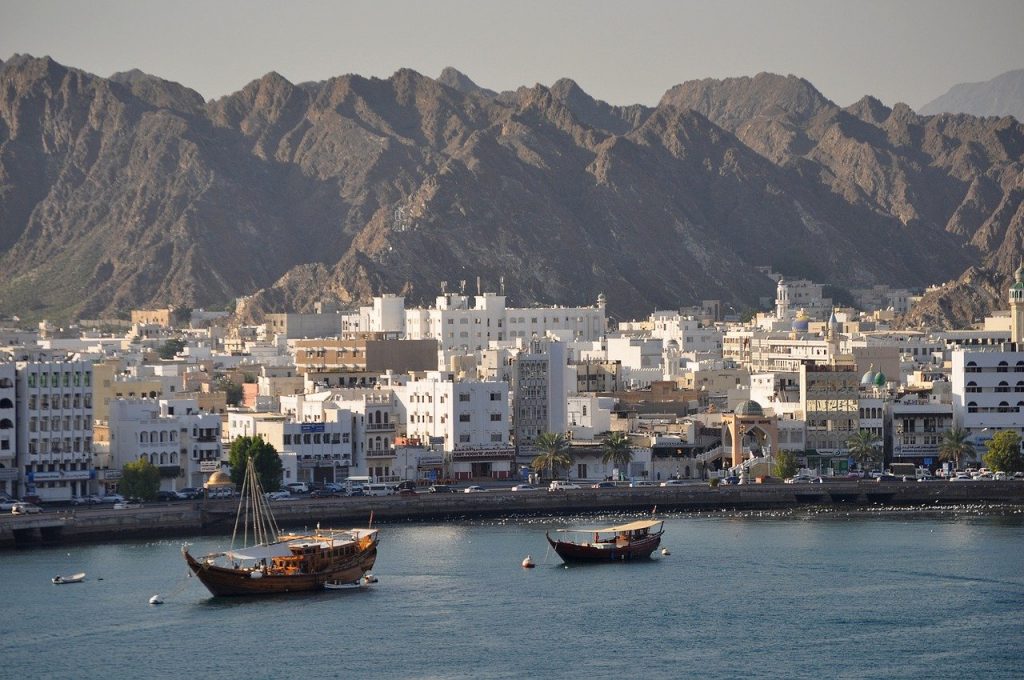
The beaches of Mascate
The fascinating capital Mascate is located in a stretch of sandy coast bathed by a quiet sea suitable for bathing. The most popular beach, a stone's throw from the city's shopping center, is Qurm. It is the perfect place to relax after a day of visits or to discover the liveliness of local life.
Equally beautiful and not far from the center the beach of Qantab, with its clear lagoon and sand dotted with multicoloured rocks. From the marina of Sidab, along the stretch of coast to the east of the old Mascate or the new Al Mouj, early in the morning tour dedicated to dolphin sighting.
Daymaniyat Archipelago
The Oman is an increasingly popular destination for lovers of water sports: snorkeling, diving, dolphin watching, sea fishing, windsurfing and kitesurfing are among the most popular activities.
The most famous diving resort is the nature reserve of the Daymaniyat Islands, located north of Mascate, which with its nine islands covers an area of 100 hectares. Surrounded partly by the coral reef, this protected marine park includes nine uninhabited islands and is also a great spot for birdwatching as well as an important nesting site for turtles.
Dives at Daymaniyat can be made all year round, but the best period is from February, when visibility can reach 20 meters. In these months we organize daily snorkeling excursions that touch 17 strategic points, in the company of skippers and sub professionals.
This area is one of the richest from the point of view of marine flora and fauna and during the snorkeling session you can admire immense coral gardens that host over 85 coral species and over 900 species of fish (including parrot fish, unicorn, trigons, murene, races, tuna and sharks).
The reserve is located about 18 km from the north-eastern coast in front of the city of Barka, an hour drive by boat and about an hour by boat from the Marina The Wave of Mascate.
Book the best marine excursions from Mascate:
The hypnotic charm of the desert
The desert is perhaps the most mysterious among the landscapes of Oman: embraced by the mountains or, perhaps, millennial guardian of the same, intrigues and fascinates also the most disenchanted traveler.
The Sultanate is 80% deserted: the main stretches of sand are Rub’al-Khali and Sharqiyah Sands.
Sharqiyah Sands
The heart of the Oman consists of the large sandy stretch of Sharqiyah Sands, also known as Wahiba Sands by the name of the Bedouin tribe that lives there. Three hours from Mascate, it is easily accessible on day with 4×4 excursions.
You can also organize several days of excursions: in two days you can cross the desert, from north to south. The night can be spent in traditional tents or in modern and luxurious camps with all the comforts: hot water, wifi and many activities proposed: walks on the dunes, quads, and dune bashing exits with dromedari that manage to go there where the cars can not reach.
At 2 hours drive from Muscat, the sleepy village of Al Mintirib marks the entrance into the Wahiba desert: a sea of high sand dunes that dies in the heart of the Arabian Sea. Wahiba Sands was once crossed by camel caravans connecting the Bedouin shepherds of the desert and Bedouin fishermen of the coast.
The magic of the desert is an invitation to rediscover the charm of the time flowing slow, savor the hospitality omanita under a typical Bedouin tent, in the name of ancient traditions. Riding a camel accompanied by a guide, coming to Nizwa and making a tour of the souk, tasting the dates (if they produce more than 100 varieties in Oman) is perhaps the best way to live the Oman atmosphere.
Sleep in the desert of Oman: the best tented fields
To live instead a real experience from Mille and Una Notte, nothing better than a stay in one of the luxurious eco-friendly tented fields in the desert, in the curtains embellished with decorations in the arabeggiante style and equipped with every comfort.
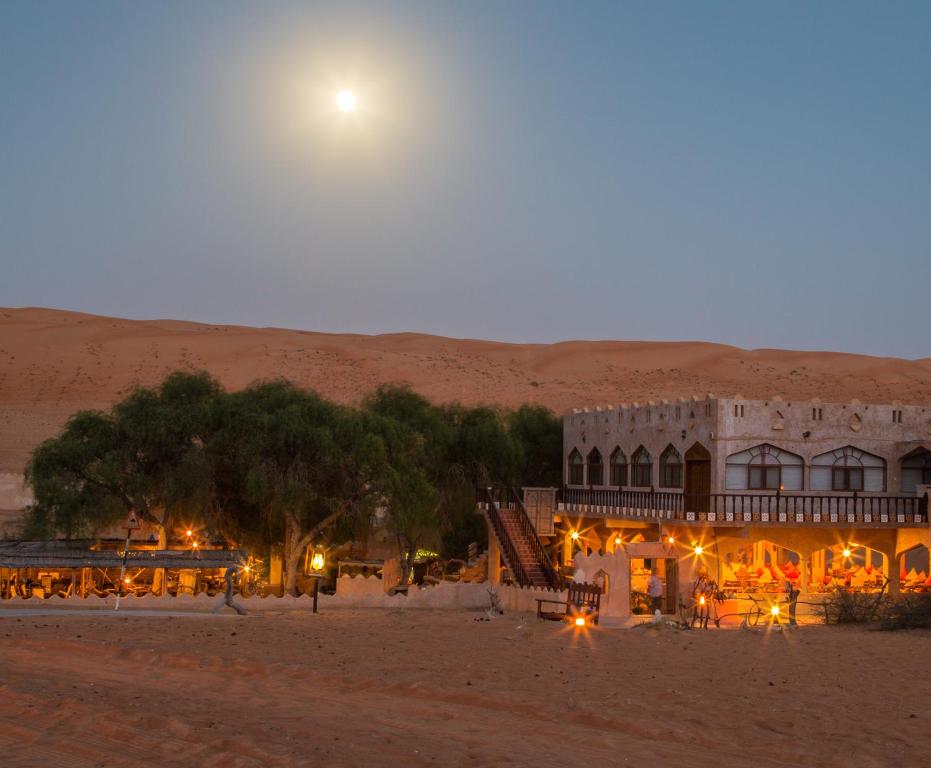
Thousand Nights Camp is located in Shāhiq. Some rooms come with air conditioning and a seating area with a flat-screen TV. The tented camp offers an outdoor pool. There is a playground for children. No WiFi Internet is available. A rich buffet breakfast is served daily.
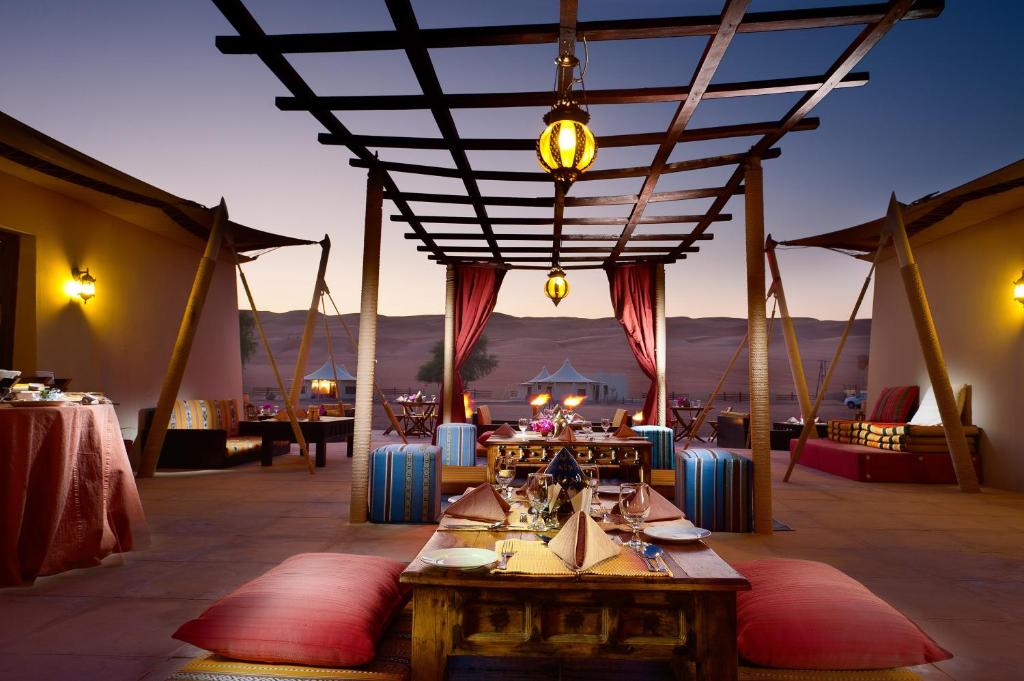
Among the seventy dunes of the Oman Desert, the 5-star Desert Nights Camp offers 39 luxurious Bedouin style tents and 14 standard rooms without tent for those looking for an original adventure holiday in the desert. The Desert Nights Camp is located on Wahiba / Sharqiya sands, a 2-hour drive from Muscat. This secluded area covers 11 km of beautiful desert landscape.
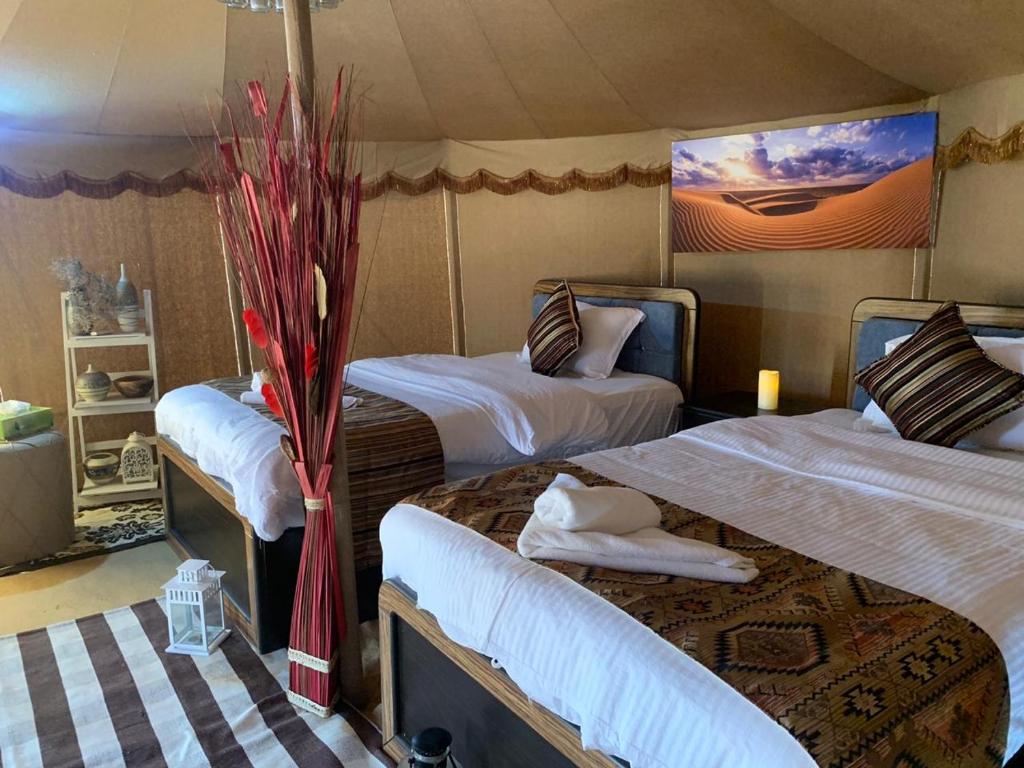
Located in Shāhiq, Al Sharqiyah region, Alsarmadi Desert Camp offers free private parking. A hot tub is also available. The property provides bike rental service, ideal for exploring the surrounding area.
Nizwa
Located at the meeting point of the slopes of the caravans of the North and South and ancient capital of the Country, Nizwa is composed of ancient buildings, including the great Portuguese fortress that dominates the city and houses a museum of history and handicrafts.
Very fascinating is also the suk with the traditional Bedouin handicraft, typical of the nomad tribes, very hospitable populations that preserve their traditions and dedicate themselves to the seasonal work of the cultivation of the dattered palm, to the collection of cereals, to the breeding of cattle.
Men belonging to different tribes are distinguished by the color of the turban and by the way of wearing it. Women also wear extremely colorful dresses, with embroidered trousers and shawls to Indian or African motifs, which allow to identify their tribal membership.
Jabel Shams
With its more than 3,000 meters high Jabel Shams is awarded the highest peak primacy of the Arabian Peninsula. Its name literally means "mountain of the sun", not only because it is the first point in the country to admire the sunrise, but also because it offers unparalleled sunsets.
To reach the "Grand Canyon" of the Middle East (as well as Jabel Shams), put yourself in good will because the road from Nizwa is steep and windy. Fortunately along the way there are stalls of local weavers and stop points where to sip a good omanita coffee. Once you have arrived, take a look at the panorama and take a wonderful picture.
Jabal Al Akhdar
The most famous mountain of Oman is undoubtedly Jabal Al Akhdar (2980m), also known as "green mountain". This appellation comes from the fact that most of its surface is covered by lush vegetation, which includes fruit trees and magnificent roses. The plateau of Jebel Akhdar is in fact the realm of cultivation of the damascene rose, which with its flowering from March to late May, offers a spectacle for eyes and smell without comparison. Cultivated in the villages of the area, the rose is a very important plant for the omanita people: besides forming the basis of many perfumes, its buds are used for the production of attars, the water of roses omanita.
A zigzag road will lead you through the terraces on which apples, figs, melograns and almonds emerge, which will make you want to set up a picnic with a view. Remember to wear a jacket because here the temperatures are around 12 °C in the evening, about a third of those of Mascate, from which the relief is two and a half hours. In addition, you need a 4×4 to go up: only so you can pass the controls provided at the base.
Where to sleep in Jabal Al Akhdar
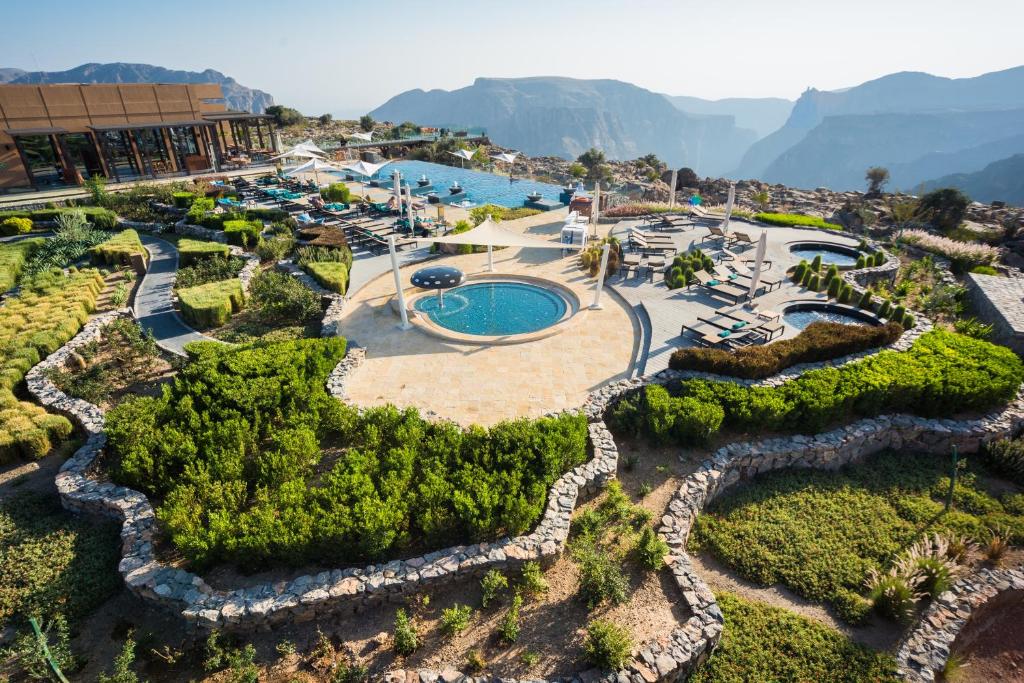
Anantara Al Jabal Al Akhdar 5-star resort, the highest in the Middle East, is located on the curvilinear edge of a large canyon, 21 km from Nizwa. Luxury villas offer intimate accommodation with personal facilities and a private infinity pool. 6 dining points, including the refined Al Qalaa.
Anantara Al Jabal Al Akhdar, a five-star resort at 2,000 meters above the Hajar massif in the Sultanate of Oman, offers the quintessential Middle Eastern welcome.
Since arrival, it has been immersed in a natural setting of rare beauty. The resort reflects the style and architecture typical of the Omanita region and welcomes its guests in 115 rooms and villas overlooking the majestic canyon or a quiet garden. Those wishing to discover this extraordinary view of the Oman can request a private excursion to the Hajar Mountain, an area full of hiking trails, traditional villages and wadi.
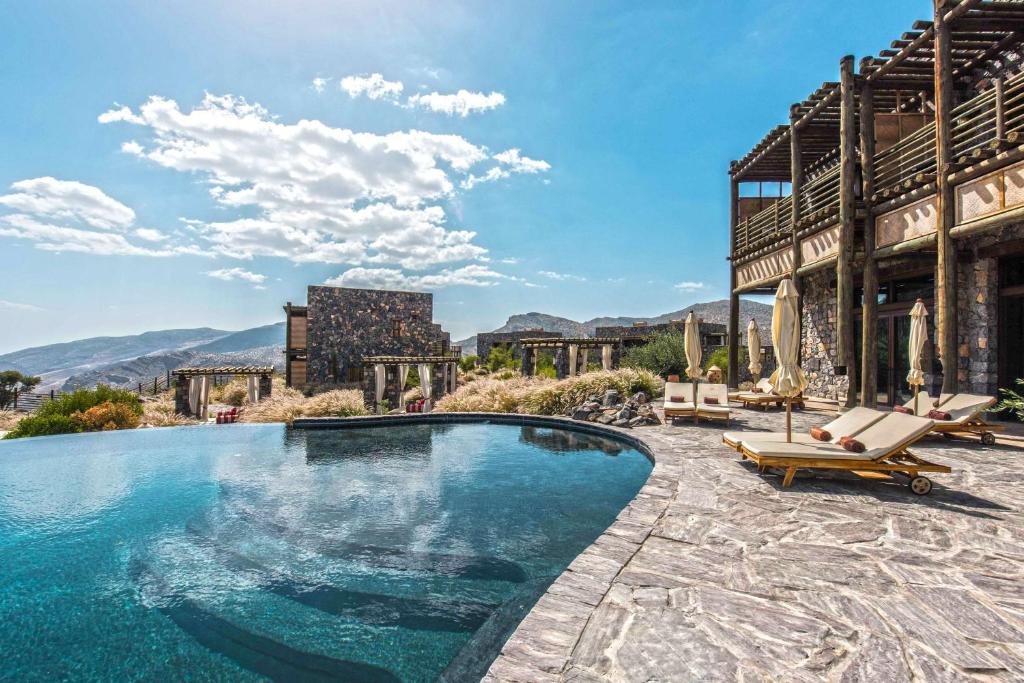
At an altitude of 2000 meters, an ultra-luxurious resort overlooking the Al Hajar mountains. It is housed in luxury villas with private pools or suites with balcony and panoramic mountain views. The property is accessible only by 4x4 vehicles
Mixing the old with the new, the Alila Jabal Akhdar in Oman is a high quality ecological stay. The hotel was designed according to LEED principles (Leader in Energy & Environmental Design) and perfectly combines the local materials with contemporary interiors.

