
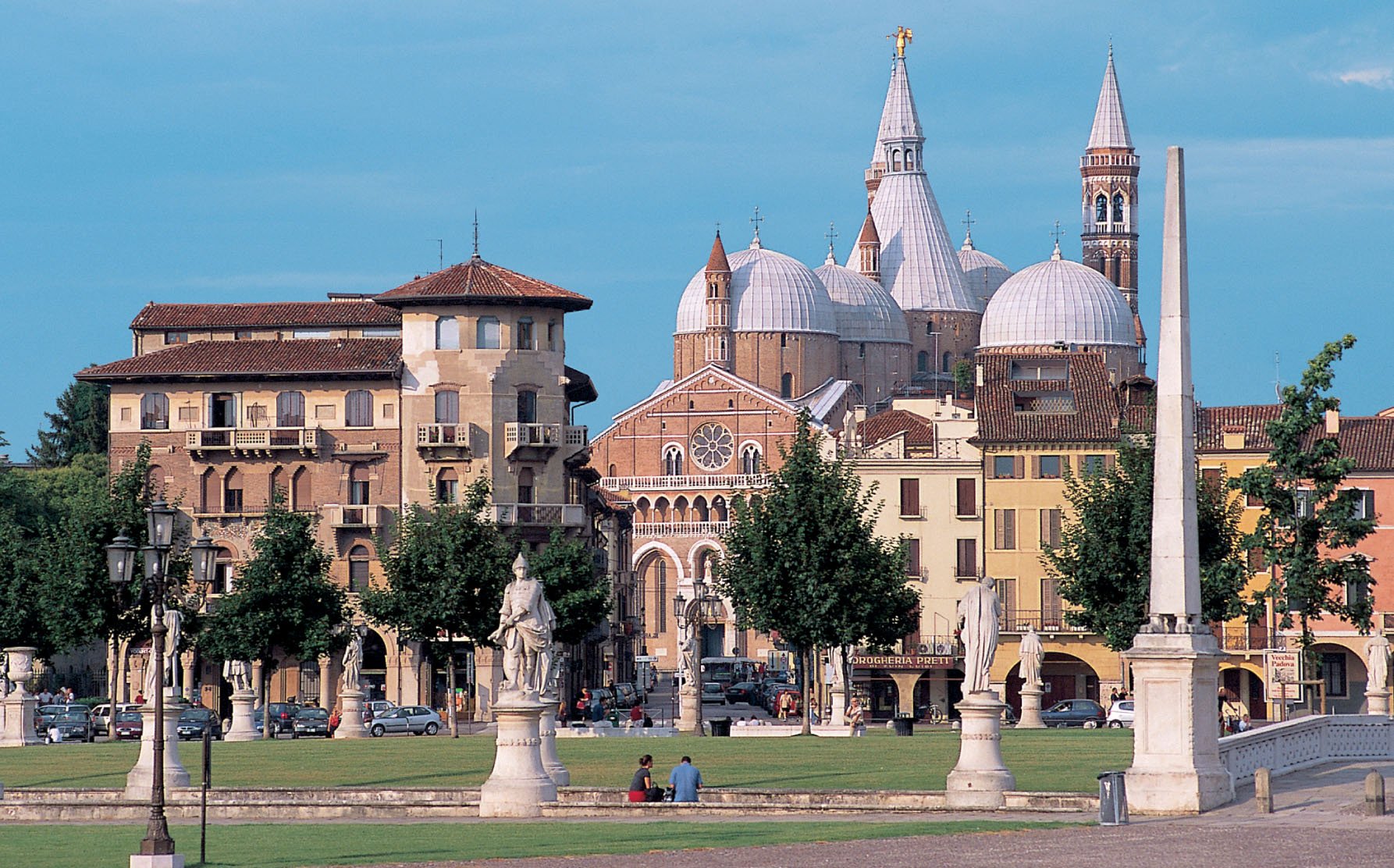
Padua what to see in the city of Santo, 10 places not to be missed from the Botanical Garden to the extraordinary frescoes of Padua Urbs Picta, a UNESCO World Heritage Site.
Few cities in the world can boast of the double seal of UNESCO and Padua is one of these!
The oldest Botanical Garden in the world and a number of unique places, such as the Scrovegni Chapel, which preserve extraordinary medieval pictorial cycles, recognized byUNESCO World Heritage Site.
And it does not end here, because this city will amaze you with its charm, its cultural treasures and a traditional cuisine to taste. Here. What to see in Padua, 10 places not to be missed if you are planning a trip to the city of Santo.
Index of Article
Padua what to see
1. Basilica of the Saint
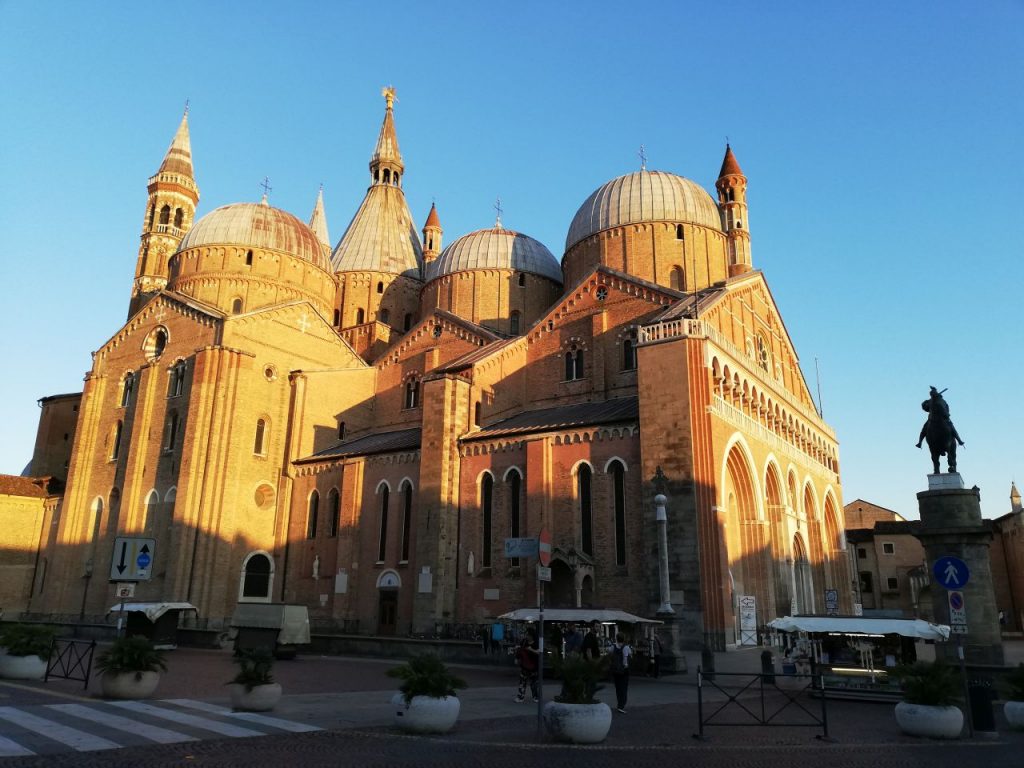
The magnificence of Basilica of the Saint is the expression of the immense devotion of the Paduans for St. Anthony, who is buried in the sumptuous Chapel of the Holy, between marble inlays and ex-voto, incessant destination of pilgrimages since his death in the 13th century.
If you arrive from the historic center, the eye blow on the complex, which merges Romanesque, Gothic and Byzantine elements and culminates in the eight domes and two slender towers reminiscent of oriental minarets, it is not spectacular.
The interior is no less: a tripod of works of art, frescoes, sculptures and chapels beautifully decorated. After visiting the Holy One, go to chapel of Madonna Mora to admire the fourteenth century frescoes, partly attributed to Giotto, while those of the adjacent Chapel of Blessed Luca Belludi are instead the work of Giusto de’ Menabuoi.
Then look for the Chapel of the Relics, where there are valuable examples of jewellery that preserve fragments of the body of the Saint, including the uncorrupted language of St. Anthony.
The most valuable artistic masterpiece of the Basilica del Santo is theAltar Major of Donatello, who worked for 9 years, creating sculptures, bas-reliefs and the great crucifix, bringing the Renaissance to Padua.
Where to eat: A stone's throw from the Basilica del Santo, Fragments Bacaro is a typical Venetian cicchetteria that deserves a stop. Excellent fish fry, fresh and light, to try!
2. Scrovegni Chapel
The small dimensions, the sober exterior, almost dismissed, do not make sure that the Chapel of what was the palace of the powerful Scrovegni family is the scribe of one of art treasures more priceless than the world.
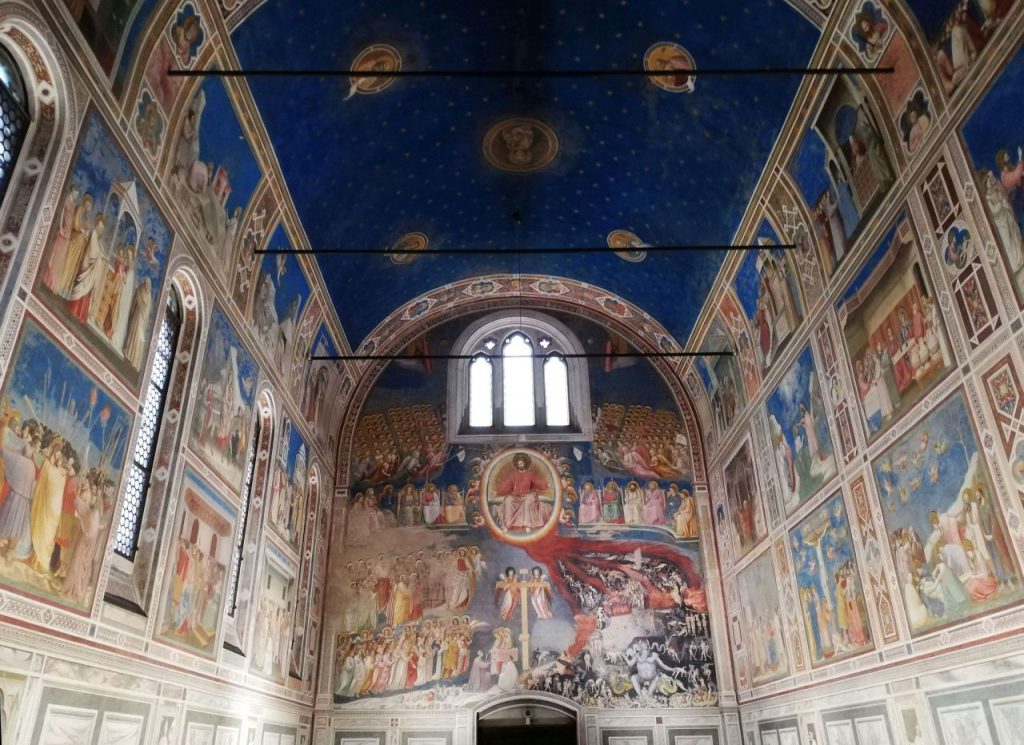
After watching a short introductory video, enter and stay open. The walls are entirely covered with sublime frescoes painted by ♪ at the beginning of the fourteenth century, with stories of the Bible, the vices and virtues of man, scenes of the life of the Virgin and of Christ, which culminate in the paintings of the Passion, represented with strong drama and exceptionally vivid colors, in sharp contrast to the aesthetic canons of the time.
All under the starry blue sky of the time, which guides the gaze towards the counter-sided on which the majestic Universal Judgement.
Entrances to Scrovegni Chapel are distinguished, both for security reasons and for not damaging the paintings, and the fourth hour allowed visitors for the visit is not enough to admire in detail a complex work. My advice is therefore to visit the Chapel of Scrovegni with a guide that helps you in identifying and interpreting the most significant passages, such as the Kiss of Juda or the one exchanged between St Augustine and St Anne, become true icons of the history of art.
Leaving the Scrovegni Chapel, do not miss to visit the Civic Museums, which you can access with the same ticket. In addition to a precious Crucifix painted by Giotto, you can admire the largest collection of works by Venetian artists from the 14th to the 19th century, including paintings by Giorgione, Tiziano, Tiepolo, Veronese and Tintoretto.
3. Church of the Eremitani
A few steps from the Chapel of the Scrovegni, the former Augustinian church of the Hermitians of the 13th century reveals the damage suffered during the Second World War, which destroyed its decorations. But fortunately, thanks to a meticulous restoration, not everything has been lost! Restrictions frescoes by the Mantegna you can see in the Ovetari Chapel, while the chapel of Sant’Antonio preserves traces of frescoes of the Guariento, which was a pupil of Giotto.
4. Piazza dei Signori
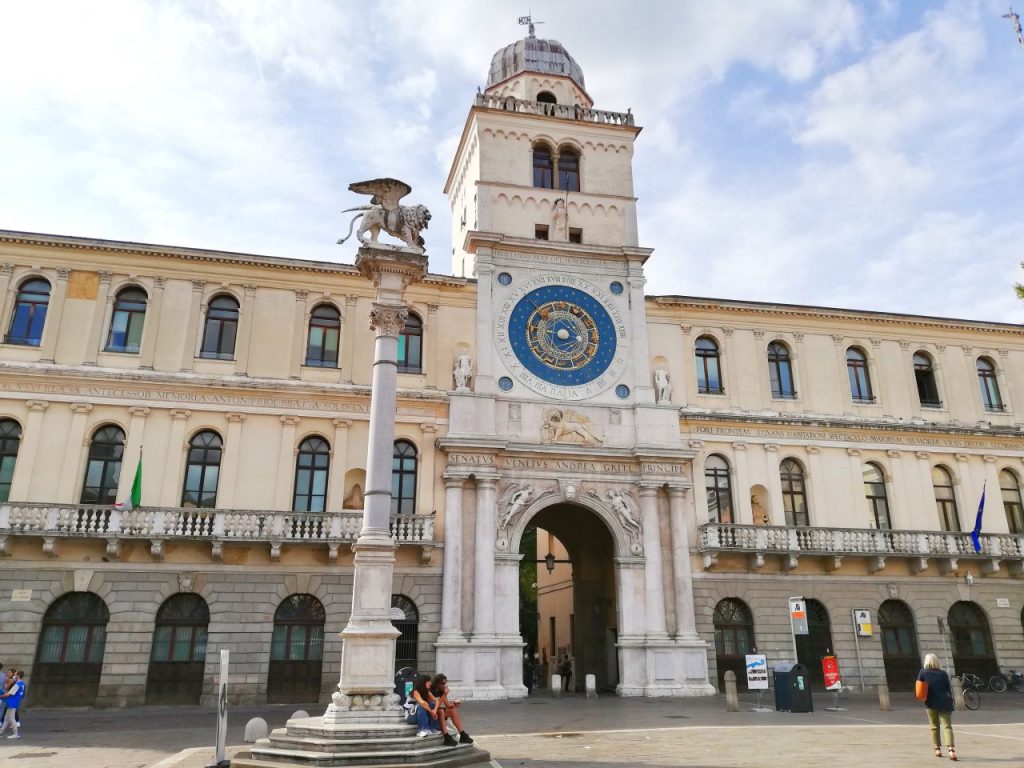
Always a meeting place for the "Signori" Paduans and traditionally a stage of events, festivals and carnivals, Piazza dei Signori hosts in the morning a rhonal market, while from the afternoon onwards, in the beautiful season, it fills with tables of bars and coffee. Choose what you prefer, sit down, order a Spritz, which looks randomly invented right here in Padua, and enjoy the view of this beautiful square surrounded by ancient palaces and arcades.
Among the buildings and monuments that will attract your attention there are certainly the Church of San Clemente, the Renaissance Grand Guard Lodge which was the seat of the Most Council, the Colonna Marciana with the Lion of St Mark and the Palazzo del Capitanio with the imposing Clock Tower astronomical of the XIV, one of the oldest in the world of this genre.
If you look well, you will notice that curiously missing the zodiac sign of the Libra. It is not a question of forgetfulness, but of the fact that the pre-Roman zodiac system was adopted, which combines the constellations of Scorpio and Libra in a single zodiac sign.
5. Palace of Reason
In the centre of the squares of Fruit and Grasses, where the daily markets are held, the Palace of Reason is the largest medieval hall in Europe that still exists. Covered by the unmistakable canopy in the shape of an overthrown ship, it dates back to the '200 and was originally a court.
Its walls are covered by hundreds of gypsum-oriented panels, with astronomical, mythological and zodiac, but also linked to the theme of divine and earthly justice, which was administered in this place "in the light of reason", from which the name. It is a very impressive work, to admire without haste, so take all the time you need, because it is definitely worth it.
Also inside the vast hall, rebuilt in 1430, there is a large wooden horse of the fifteenth century, copy of the horse of the Gattamelata, the famous statue of Donatello located in Piazza dello Spirito next to the Church of the Holy.
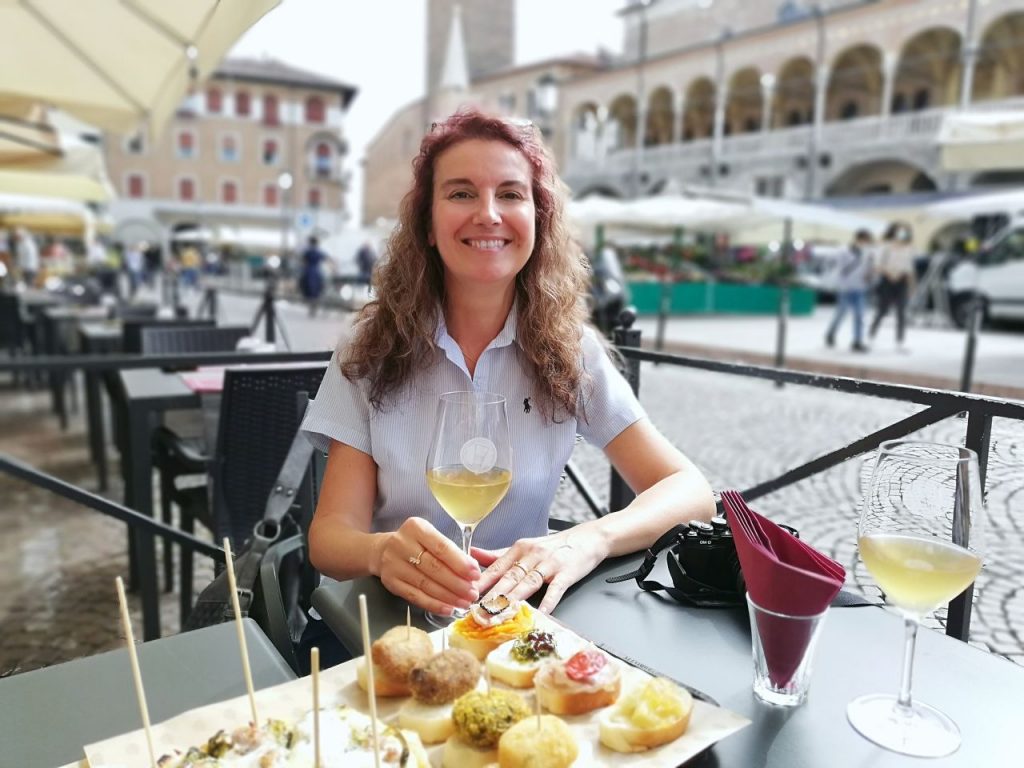
Where to eat: For a quick snack in the squares you only have the embarrassment of choice. The whole area is full of bars and crowded rooms at all hours. We stopped "In the shadow of the square" for a memorable peel of cicchetti, meatballs and pizzas, worthyly accompanied by a glass of Prosecco.
6. Coffee
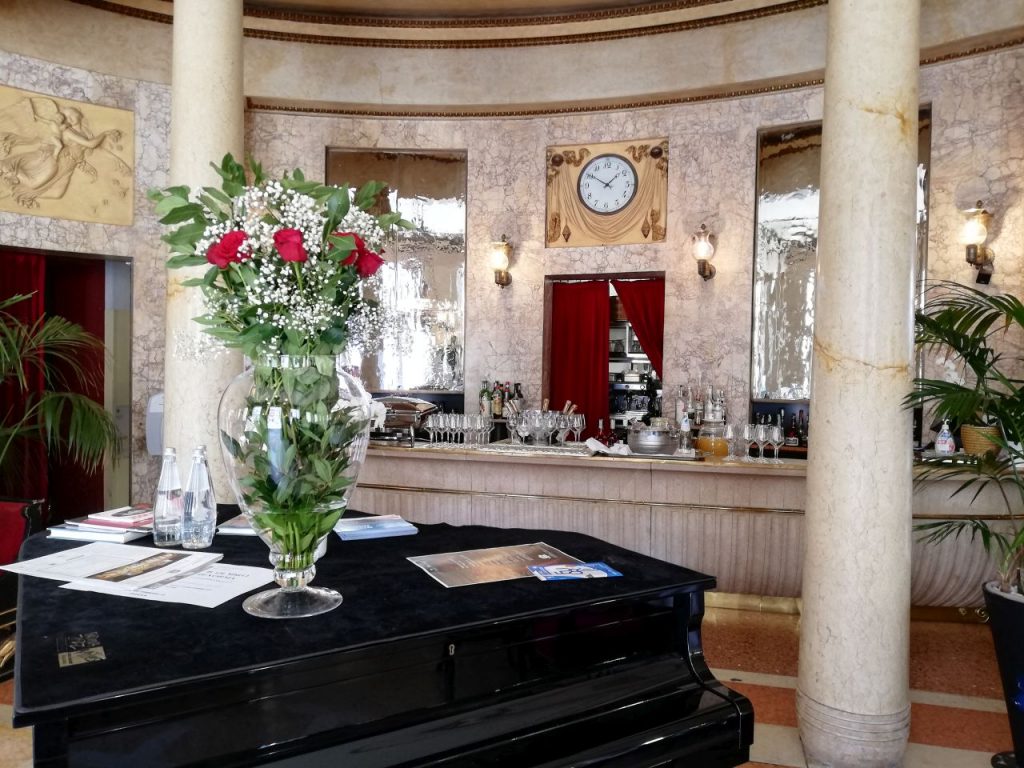
One of the most famous historic places in Italy, from 190 years on Coffee in Padua is a real institution, the perfect place for a lunch on the terrace overlooking the street of the old town or a coffee in the sumptuous interior rooms.
From the opening in 1831 to 1916 the local was always open, day and night, and for this reason it was called "The coffee without doors". The elegant halls of the ground floor – Green, White and Red as the colors of the Italian flag – are a triumph of marbles and stuccos, but do not be intimidated: you can freely enter the first (the Green Hall), sit on the fluffy sofas, meet with friends, even without consuming, no one will send you away. Moreover, so they have made generations of less learned students and poorer Paduans, a tradition from which the expression "to be green".
On the other hand, we enjoyed the excellent cuisine of Caffè Pedrocchi, starting with an assortment of typical cicchetti, then switching to a plate of bigoli with court ragù, zabaglione and, of course, coffee Pedrocchi, the specialty of the house: a long espresso with mint cream and a cocoa spray. A real delight!
7. Cathedral and Baptistery
West of Piazza dei Signori rises the Cathedral, high Renaissance building (1552-77) from the unfinished facade, to say the truth not just a memorable monument.
On the other hand, the Baptistery that stands at its side is exceptional. Built on the remains of a church of the 4th century, its interior is beautifully adorned by a cycle of fourteenth century frescoes who are considered the masterpiece of the court painter Giusto de’ Menabuoi. You will be enchanted by the scenes of the Old and New Testament, with stories of the life of Jesus, Mary and John the Baptist, which culminate in the dome in which the Christ blessing surrounded by the Saints of Paradise.
8. Prato della Valle
The Paduans are very close to this pavement that is a middle street between a square and a garden, where you come to walk or spend some relaxing moments between the meadows and the water of the fountain. With its 90 thousand square meters of surface, the Prato della Valle is the largest square in Italy and one of the largest in Europe.
In the Middle Ages it was used for rides, fairs and tournaments; the current accommodation dates back to the 18th century by the noble Andrea Memmo, whose palace still faces the square, which designed the great elliptical square with the center an island surrounded by a canal crossed by four bridges and in which 78 statues of illustrious characters are mirrored.
All around, the square is bounded by beautiful palaces of various eras and the imposing complex of theBenedictine abbey of Santa Giustina.
9. Botanical Garden of Padua
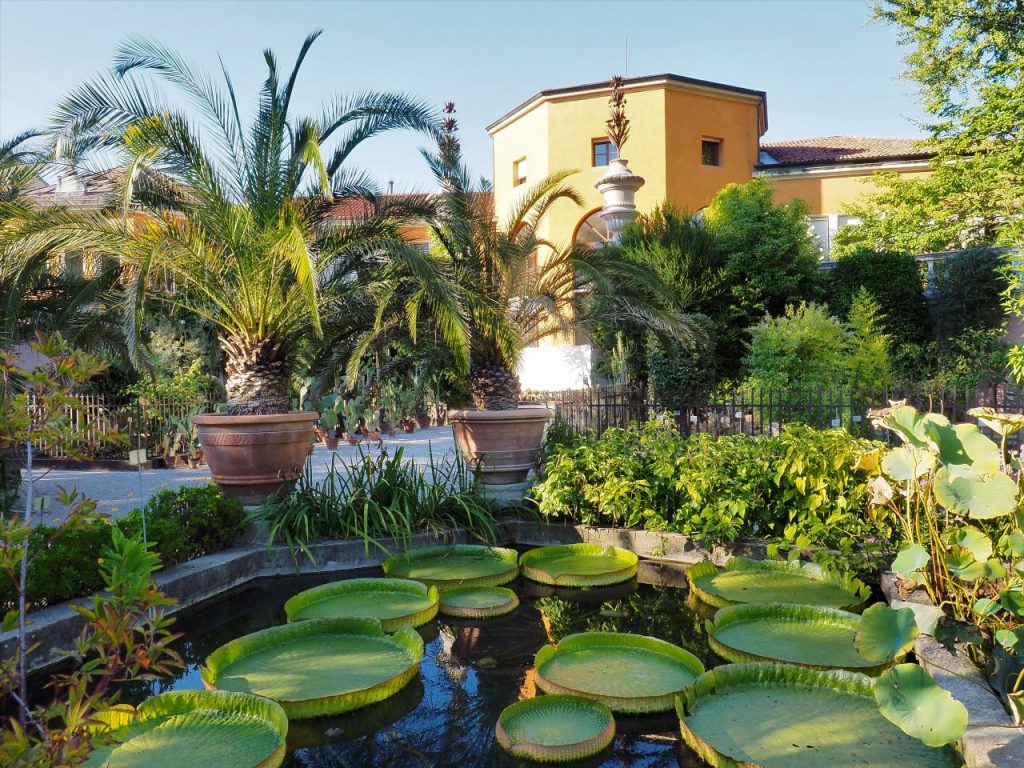
Founded in 1545 as Horto Medicinale annexed to the University, theBotanical Garden of Padua is the origin of all the botanical gardens of the world and for this reason, but not only, since 1997 it has been recognized as a World Heritage Site by UNESCO.
Initially he was dedicated to the cultivation for scientific and educational purposes of indigenous and exotic medicinal plants, but then over time he adapted his collections and teaching and research activities according to the progress of botanical sciences.
If you are passionate about botany or just like flowers and plants, you will love to walk through the streets among the scents of rare and precious essences.
The most famous plant of the Botanical Garden is an exemplary of dwarf palm that despite the name reaches about 11 meters high and having been planted in 1585 represents the "living village" of the Patavian Garden. It is located inside the large desert tower near the nymphs, you can't miss. His fame, however, is not so much due to his seniority as to the fact that he was "eternal" by Johann Wolfang Goethe, who after visiting the place during his trip to Italy in 1786, mentioned the plant in his writing and since then is known as the Palma de Goethe.
And after visiting the historical part of the Hortus Cinctus, you reach the new greenhouses of Garden of Biodiversity to take a tour of the world of natural ecosystems.
10. University – Bo Palace
Turning around Padua you will certainly have noticed that this is a university city, lively and full of young people. A Palazzo Bo in fact is home to one of the oldest universities in the world, founded nothing but in 1222. The more than 3,000 coats of arms that decorate the lodges of the central court bear witness to the glorious history of an institution that is ready to celebrate 800 years at the highest levels.
Here he taught Galileo Galilei, he studied Copernicus and in 1678 he graduated the first woman in the world. In the Renaissance his Faculty of Medicine was considered the most prestigious in Europe and right at that time dates back to the oldest Anatomical theatre of the world, still perfectly preserved, where "the dead are happy to help life".
Where to eat: In the nearby Ghetto, theOsteria dei Fabbri is the right place to enjoy traditional Paduan cuisine based on the products of the markets of the squares, in a welcoming environment, between old beliefs and exposed beams.
Alternatively, there is Bacaro Padovano, at the same time restaurant and cicchetteria with an informal and creative atmosphere. In the menu typical dishes of the Venetian and Paduan cuisine in particular, such as the chicken in saor, baccalà mantecato and cussy padovana.

