
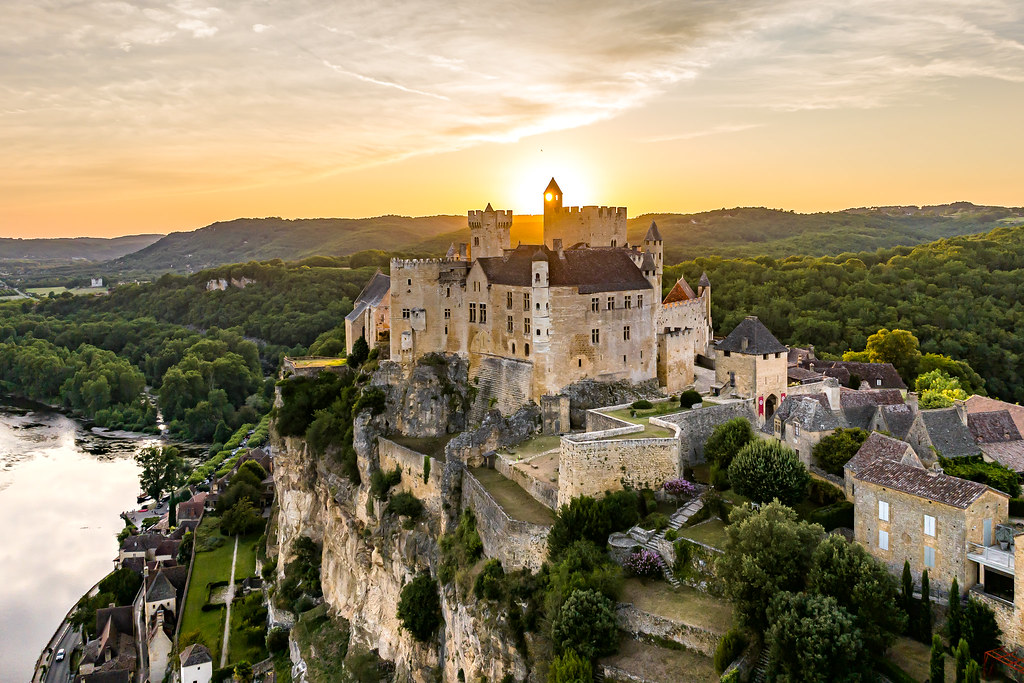
From Sarlat to the caves of Lascaux, from medieval castles to charming villages: 10 places not to be missed in the most authentic France.
There is a corner of France where time seems to have fallen asleep in the folds of the golden stone, where the scent of the black truffle mixes in the fresh air of the oak woods and every curve of the river reveals a new castle perched on a rocky spur. It is Périgord Noir, among the richest and most surprising territories in France, where prehistory, Middle Ages and art of living intertwine in a unique way.
The most mysterious of the four "terre" of the Dordogne, owes its name not to something dark, nor to the black truffle, excellence of local gastronomy, but to the thick forests of oaks that, in autumn, dye the landscape of almost nocturnal shades. Located in the southwest of France, halfway between Bordeaux and Clermont-Ferrand, this territory keeps between valleys of the Dordogne and the Vézère a concentration of historical wonders, prehistoric and gastronomic unequal in Europe, which we invite you to discover with us following this fascinating itinerary.
Index of Article
1. Sarlat-la-Canéda: the capital of Périgord Noir
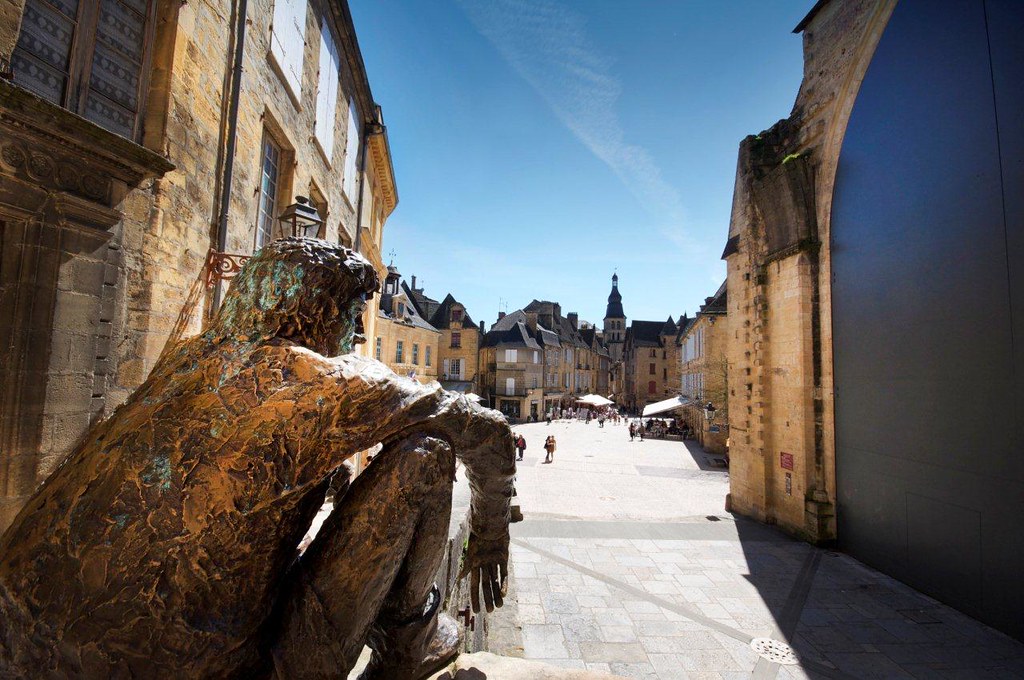
Every trip to the Périgord Noir begins, inevitably, from Sarlat. Sixty-six classified or registered monuments enclosed in just eleven hectares, three Michelin stars for its surroundings, the title City of Art and History: Yet Sarlat does not wear these honors with presumption. His personality is made of generosity and sharing, and it is immediately felt walking through the medieval alleys in ochre stone, where every corner seems a frame stolen from another century. Not by chance. over 170 films were shot here from 1928 to today.
The ideal morning starts at Wednesday or Saturday market, where we lose among the banks of foie gras, magret, walnuts and walnut wine. The ancient church of Sainte-Marie, restored by Jean Nouvel, a panoramic lift climbs up to 35 meters: from up there, the roofs of lauze, the characteristic limestone slabs that cover the roofs of the Périgord, spread as silver scale under the afternoon light. And after sunset, gas lamps turn the city into a fairytale stage.
2. The Manoir de Gisson: the Monument Historique of Sarlat
A few steps from the place des Oies, the Manoir de Gisson is the only Monument Historique of Sarlat open to the public, and hides more than it lets intuition its facade of the 13th century. Thirteen fully furnished rooms tell the life of the Sarlades bourgeoisie over the centuries, but it is in the vaulted cellars that the twist is made. In the eyes of the visitor is revealed a magnificent cabinet of curiosity, populated with rare objects that interweave popular science and belief. In 2026, an exceptional exhibition on the aristocratic costumes of the Renaissance added an additional level of fascination to the visit.
3. Lascaux IV: Time Before Time
Moving towards Montignac-Lascaux along the Vézère valley, you arrive at the place that alone is worth the trip. Lascaux CaveDiscovered in 1940, it houses cave paintings of 17,000 years ago that remain among the most extraordinary expressions of prehistoric art ever found.
Closed to the public since 1963 to preserve its integrity, the original cave today lives in its integral replica, Lascaux IV, inaugurated in 2016 and celebrated in 2026 for its ten years, where an immersive experience of rare suggestion brings the visitor to the primordial darkness of a cave inhabited by the spirits of animals. Bisonti, deer, horses and woolly rhinos dance on the walls in the fairy light: it is impossible to get out without feeling, somehow, changed.
4. The Vallée de la Vézère: The Cradle of Humanity
The Vézère section connecting Montignac-Lascaux to Les Eyzies is classified UNESCO World Heritage for fifteen of its prehistoric sites. In Les Eyzies, considered the world capital of prehistory, the Musée National de Préhistoire offers one of the most important collections in the world dedicated to the life of the hunter-gatherers of the Paleolithic, with reconstructions grandeur natures and objects of art in bone and ivory of poignant delicacy.
Not far away, the Grotte de Rouffignac it is explored on board an electric train that shows between 250 rock images dating back to 17,000 years ago, many of which portray mammoth. The air is fresh and smells of wet soil, and the silence that envelops these galleries has the weight of hundreds of thousands of years of human presence.
5. Château de Beynac: Nine Centuries on the Dordogne
No Périgord castle dominates the landscape with the same majesty as the Château de Beynac, perched on his rock spur overlooking the Dordogne, near the village of Beynac-et-Cazenac. Open all year round, it offers the visitor an authentic immersion in the French Middle Ages, through its many furnished rooms, including the gigantic hall of the States of the Périgord and the legendary room of Riccardo Cuor di Leone.
The panorama from the top of the tower is classified three stars from the Guide Vert Michelin. A new immersive audiovisual experience, available in 2026, evokes the times of Eleonora d’Aquitaine.
6. La Roque-Gageac: The Village that Mirrors in the River
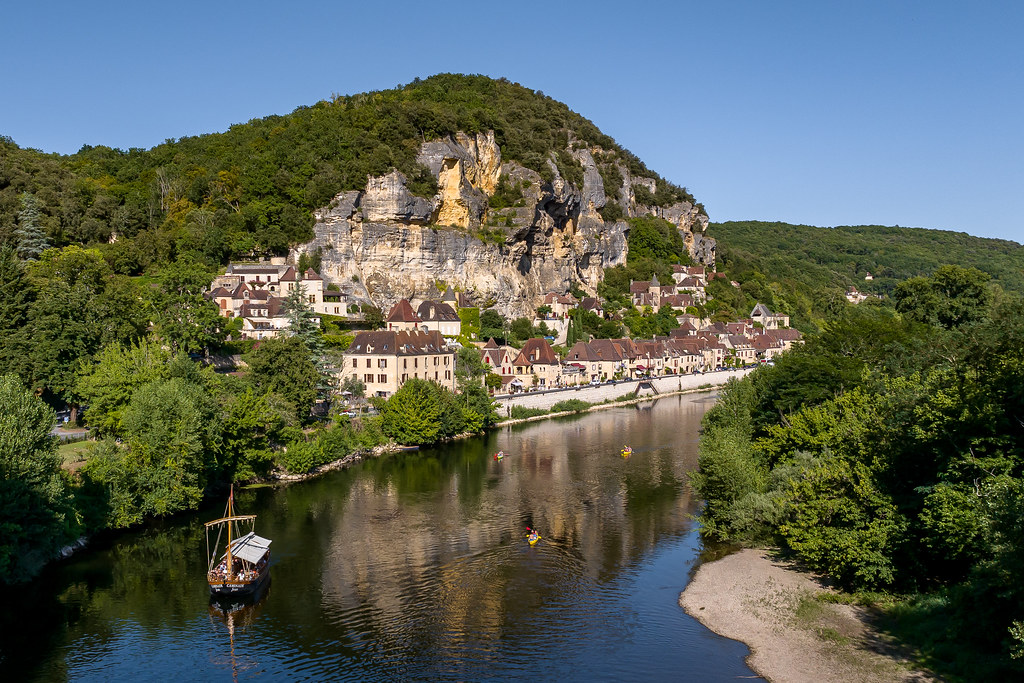
A few kilometers downstream, nestled between the cliff and the river, La Roque-Gageac is one of Plus Beaux Villages de France, and it is understood by the flashing visual effect that produces at first glance. The ochre stone houses seem to emerge directly from the rock, the alleys descend to steps towards the water where they wait the gabarres, the traditional boats at the bottom of the Dordogne.
While an exotic garden hides palms and cactus protected by the microclimate created by the cliff. A crossing in gabarre at sunset, with the castles that parade in fade on the banks, is one of those moments that do not forget.
7. Château de Commarque: The Star of the Three Asterisks
Unique Dordogne castle classified with Three Michelin stars, Commarque is also the most amazing. In a secret valley near Les Eyzies, prehistoric cave, medieval fortress and troglodita strong overlap in a palimpsest of unique residential layers in the world. The visit is built as an exciting adventure, being able to choose from guided tours, treasure hunt, workshops, scenic route. While in summer nights, with Mystères & Lumières evenings, the atmosphere is really magical.
8. The Jardins de Marqueyssac: Green Like Art
In the Périgord Noir also the gardens are monuments. In Vézac, i Jardins de Marqueyssac, the most visited of the region, deploy six kilometers of shaded paths between 150,000 centennial bosses potato according to sculptural shapes, with breathtaking views on the valley of the five castles. The Thursdays of July and August, Soirées aux chandelles transform the park into a bright dream: thousands of candles light the avenues and the scent of the stone heated from the day mixes with that of wax and cut grass.
9. Saint-Geniès and the Villages of Stone: The Authentic Périgord
Far from the most beaten routes, Saint-Genis, halfway between Sarlat and Montignac, embodies the purest essence of the Périgord Noir: ochre stone houses with roofs of lauze, silent squares, the afternoon light that slips between the bell towers. The Boucle du Bourg, a three-kilometre route, just reveal the wonders of the village. Not far, Salignac-Eyvigues hosts every year the Opusculaires, days of historical reenactment to its castle in restoration: an extraordinary example of living and lived heritage.
10. Gastronomy: The Journey Inside the Journey
Any itinerary in the Périgord Noir would be incomplete without abandoning itself to the pleasures of the table. The foie gras d’oca e di anatra here is a secular religion: producers like the Jardel family, thirty-one medals at the Concours Général Agricole in Paris, bring their pots to the Sarlat market every Wednesday and Saturday.
The pommes de terre sarladaises, golden potatoes in the duck fat with garlic and parsley, accompany the magret with a simplicity that is already perfection. And then the nuts of the AOP Périgord, the black truffle, the wines of Bergeracois: every mouth, every sip, is a narrative of the territory.
Where to sleep in the Périgord Noir
Le Petit Manoir
The Petit Manoir, in the center of Sarlat, is the ideal place for a refined weekend and cozy in a 15th century hotel particulier rich in charm. The 3 suites and 6 rooms are uniquely furnished and offer a quiet atmosphere that combines traditional elegance with modern comfort.
Hôtel de Bouilhac
Located a few steps from the caves of Lascaux, the Hôtel de Bouilhac, built in the 17th century, is much more than a simple accommodation: It is a jewel of cultural heritage, classified as a historical monument, which represents the elegance and art of living in French. Set in the Hôtel Particulier and in the ancient stables of the residence, the 16 rooms and suites offer a unique atmosphere that is an invitation to tranquility and refinement.

