
Rennes what to see in the capital of United Kingdom, 15 places not to be missed in one of France's most vibrant and rich cultural cities.
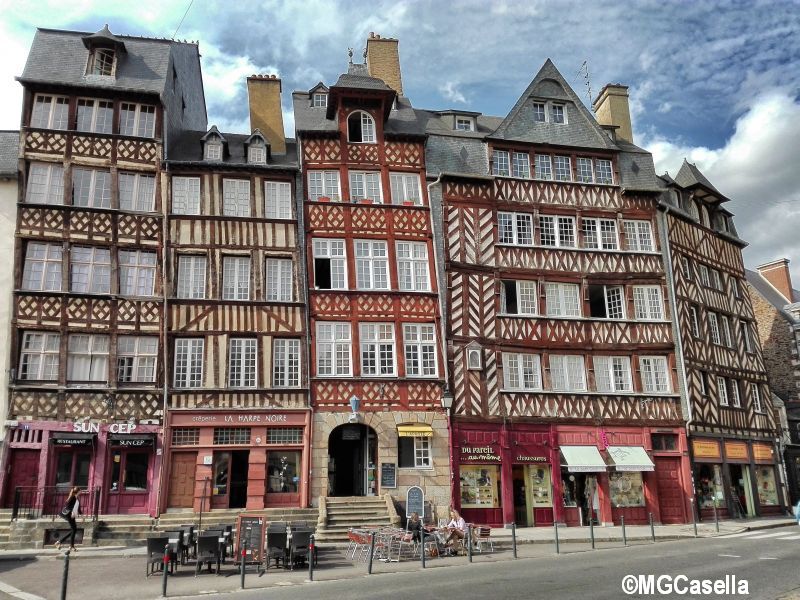
Just an hour and a half from Paris by high-speed train and an hour from legendary sites such as Saint-Malo, the beaches of the Emerald Coast, Mont Saint-Michel and the legendary forest of Brocéliande, Rennes capital of Brittany, is the ideal starting point to discover one of the most fascinating regions of France. A man-made city where it is beautiful to walk, on foot or by bike, with a historic center marked by pedestrian streets, traditional stone houses, and elegant palaces symbol of a glorious past.
Don't forget, then, that Rennes is a great gastronomic stage, where you can taste the famous crêpes and you can discover the famous Marché des Lices, one of the most important food markets in France for regional products and crustaceans. An unmissable appointment held every Saturday morning.
Index of Article
Rennes Brittany What to See
1. La Place des Lices
As our visit to Rennes coincides with the day of the market, we begin to discover the capital of Brittany from this beautiful square surrounded by buildings with typical Breton architecture. Although, let's say, what catalyzes our attention is precisely the lively market with over three hundred artisans and producers from all over the region, with the stalls loaded with the most famous Breton specialties, from the famous cider to salted butter, to the galettes.
2. Portes Mordelaises
The historic center is enclosed in the perimeter of the ancient walls of the city of Rennes, which was torn down between 1600 and 1800, but of which still remain significant fragments, such as the historical Portes Mordelaises, which date back to the fifteenth century, through which we enter the old town.
For centuries the Portes Mordelaises represent the main entrance of the city, the point from which once also the ceremonial processions started. Above the arch you can see well in sight the coat of arms of the Dukes of Montfort, who ruled Brittany from the middle of the fourteenth century to the beginning of the sixteenth century.
3. Tower Duchesne
Just beyond the Portes Mordelaises, inside the fortified wall, here is another impressive medieval vestige: the fifteenth-century Torre Duchesne, a charming structure that played a significant role in the protection of the city from external attacks. The tower is named after Jehan du Chesne, who was the first inhabitant and guardian.
4. Saint-Pierre Cathedral
A few steps and here we are in front of the Cathedral of Saint-Pierre, seat of the Archbishop of Rennes, who has maintained its original facade of the 16th century, although the rest of the cathedral is a reconstruction of the 18th-XIX century. The interior is in neoclassical style, decorated with columns, plasters, doratures, a large altarpiece of the 16th century and a majestic organ.
A magnificent neoclassical architecture built in 1845, but with a history dating back to the 6th century, the Saint-Pierre Cathedral is definitely worth a visit.
5. Medieval Quarter
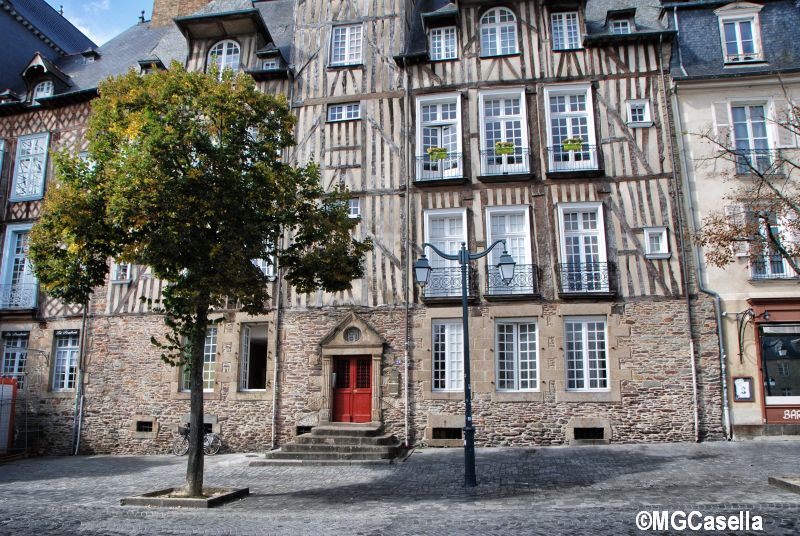
Exit from the Cathedral we give ourselves a walk in the old town, the medieval district characterized by an exceptional concentration of stone houses. There are 286, beautiful and lively, with their bars and outdoor terraces, overlooking the rue Saint-Sauveur, the rue du Chapitre, the Place du Champ-Jacquet, the rue Saint-Michel.
This part of the city is the most picturesque, where visitors spend most of the time, strolling through the streets admiring the ancient buildings and stopping for a coffee. Many of the houses date back to the 16th and 17th century, are painted with bright colors and incorporate interesting historical details, some have courtyards inside the back of the stone facades, between alleys, stairs, wells, fountains and gardens.
6. The Saint-Yves Chapel
If you want to know more about the fascinating history of the city, make a stop at the Saint-Yves chapel, today seat of theRennes Tourist Office, where you can visit the permanent exhibition "Rennes, Métropole d’art et d’histoire", which offers an interesting overview of the main monuments of the city, enriched with historical documents and photographs.
7. Parliament Square of Brittany
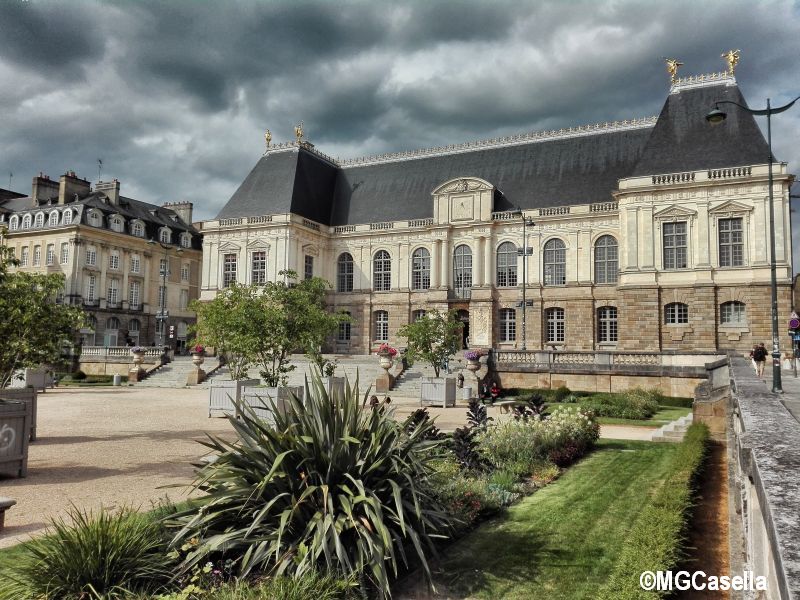
The heart of the historic centre is the Piazza del Parliament of Brittany, dominated by the impressive Parliament building, dating back to the 17th century.
The iconic symbol of the Ancien Regime, the Parlement de Bretagne was the seat of the Sovereign Court of Justice of Brittany, founded in 1554. Built to house Parliament in 1655, this magnificent building retained its function until its dissolution during the French Revolution in 1790. Today it hosts the Court of Appeal of Rennes and is open to the public with guided tours.
8. Town Hall Square
The Place de la Marie is dominated by the Town Hall of the 18th century (the former town hall was destroyed in the great fire of 1720) with imposing wings in classical style on the sides of a large bell tower.
On the opposite side of Place de la Mairie, right in front of the Town Hall, the nineteenth-century Palazzo dell’Opera was declared "Historical monument" of France: inside it boasts a sumptuous hall decorated in the early 20th century by the brilliant painter Jean-Julian Lemordant.
9. Place de la Republique
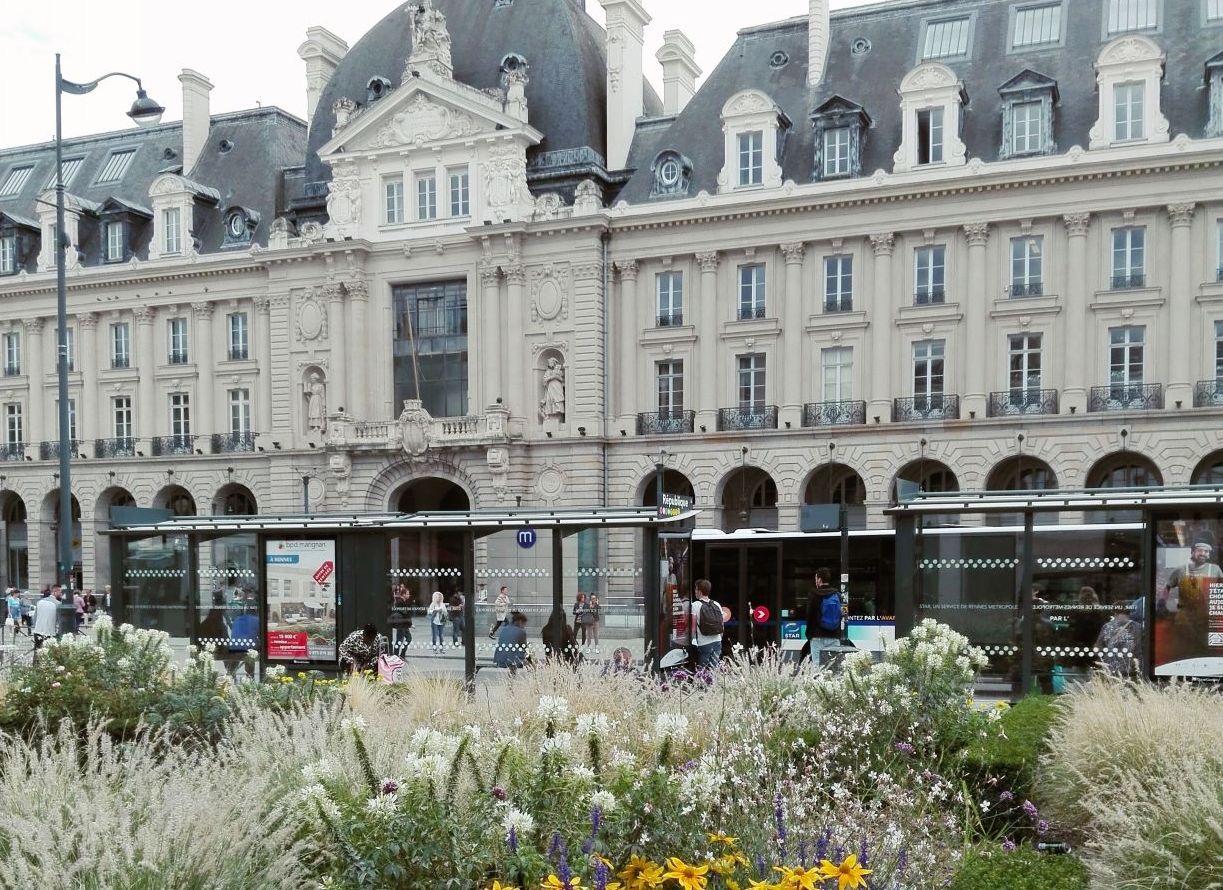
Leaving the historic center, we arrive at Place de la Republique with the imposing Palais du Commerce, one of the most emblematic monuments of the city, rebuilt after the fire of 1720. Converging point of many bus and metro lines, the square is lively at all hours of the day.
10. Musée des Beaux-Arts
Like many French regional museums, the Musée des Beaux-Arts of Rennes was opened immediately after the Revolution to exhibit requisite works from religious buildings and state houses in the area. Among these are the art collections of Christophe-Paul de Robien, with exquisite Egyptian, Greek, Etruscan and Roman artifacts, still on display. The works of art range from the 14th century to the present day, with an emphasis on the 17th century Baroque with pieces by Georges de la Tour, Maarten Van Heemskerck and Rubens, Sisley, Boudin and Gauguin.
11. Les Champs Libres
Les Champs Libres is an innovative cultural centre in the heart of Rennes built between 1993 and 2006 by architect Christian Portzamparc. The project combined the Museum of Brittany with the new library and the scientific center of the city, and it is intriguing to see how the three elements are perfectly founded in each other.
12. Convent of the Jacobins
Another important cultural hub of Rennes, the Convent of the Jacobins presents this year from 12 June to 29 August 2021 the contemporary art collection of François Pinault, which brings to the forefront the White and Black, emblematic colors of Brittany but also the Dominican monks, the first occupants of the convent of the Jacobins. Many of these works will be presented for the first time in France! Conjunctly, an exhibition at the Fine Arts Museum will explore the links between matter and color, while other places of the Rennes scene will propose the discovery of contemporary art, making the capital of Brittany the irrelevant destination of summer 2021!
13. Hôtel-Dieu of Rennes
Pass the gates of the Hôtel-Dieu, in the historic centre of Rennes, and discover "the place to be" of the Breton capital! Below the roof of the old hospital you will find today a mix of sports, cultural and golose activities. A part of the building is home to a rock gym on which you can try climbing safely, then move to The Roof Rennes or the bistro Origines, premises set around the ancient cloister, where you can watch a short concert sipping a craft beer produced in the former operating block.
14. Parc du Thabor
For a walk in the green, reach the Parc du Thabor. Designed in the 19th century by Denis Bühler on the site of the orchard of a former Benedictine abbey, it is a charming ten-hectare natural oasis that includes a French garden, an English garden, a rose garden, a botanical garden, greenhouses, fountains and the famous Café-expo de l’Orangerie.
15. La Vilaine in Rennes
Arrived at the end of our Rennes tour, how about a walk, maybe at sunset, along the banks of the Vilaine, the river that crosses the city. In spite of the name, this peaceful water course has nothing of villain, on the contrary it is a place of great serenity. Tenth river of France with its 225 kilometres of travel, the Vilaine was also one of the first French basins to be channeled already in the fourteenth century and for this reason it is quite frequent to see houseboats that trace its calm waters.

