

In 2025, Frankfurt celebrates a century since the birth of the visionary urban project of "New Frankfurt". This revolutionary movement, led by architect Ernst May, profoundly transformed the German city in the 1920s, laying the foundations for a modern, functional and sustainable urbanism. With exhibitions, events and immersive visits, Frankfurt will offer visitors a unique opportunity to rediscover the impact of this extraordinary project.
But the celebrations do not stop here: in 2026, Frankfurt and the entire Rhine-Meno region will carry out this creative tradition with the prestigious title of "World Capital of Design". Over 800 events will show how the city continues to represent a beacon of innovation and design. Here is a route that will guide you through the places symbol of the "New Frankfurt" and the unmissable events of this celebration.
Index of Article
Ernst May and the urban revolution of the 20s
In 1925, in a Germany shocked by inflation and a severe shortage of housing, the "New Frankfurt" program was born. Ernst May, architect and visionary urbanist, took the reins of an ambitious development plan: building 12,000 apartments in a few years, collaborating with architects, designers and talented urbanists. This project was a concrete response to the needs of the population, at the time afflicted by precarious housing conditions and overcrowding.
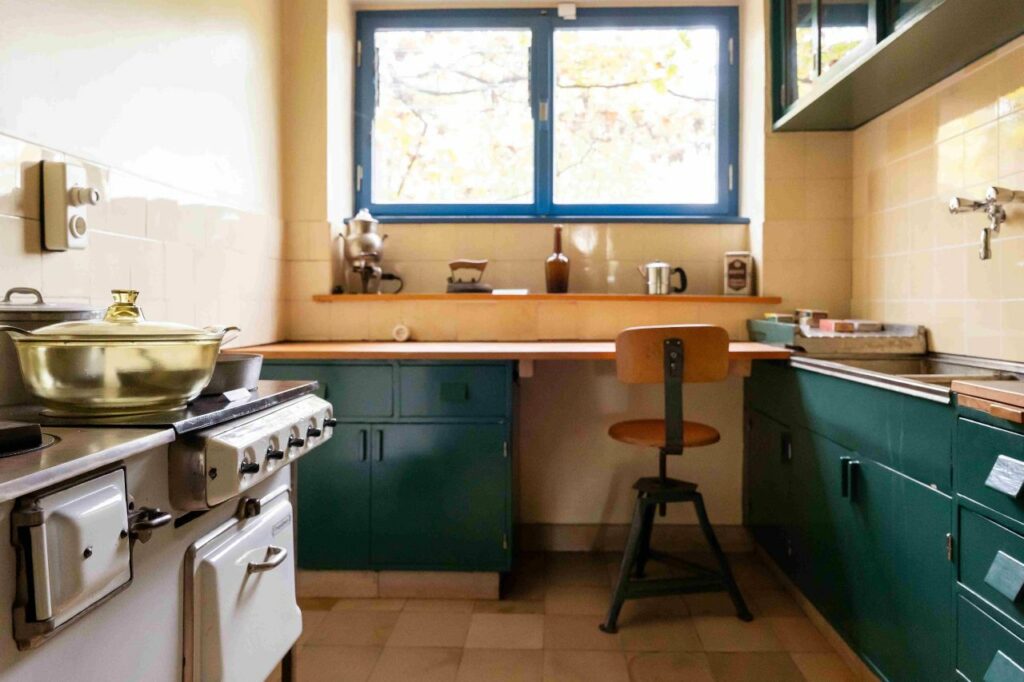
The goal was simple but radical: to create functional, accessible and efficient homes, able to improve the quality of life of citizens. The "Kitchen in Frankfurt", designed by Margarete Schütte-Lihotzky, is one of the most emblematic examples. This modular kitchen, the first in the world, represented a revolution in the organization of domestic spaces. Based on ergonomic and functional studies, the kitchen optimized space and movements, making everyday activities more efficient for women of the time.
In addition to housing, the New Frankfurt programme included the creation of social infrastructure such as schools, parks and community centres. This integrated approach aimed at building self-sufficient neighborhoods, where the inhabitants could find everything they needed a short distance from home.
Walks through the neighbourhoods of "New Frankfurt"
Sachsenhausen, Bornheim and Bockenheim: a dip in modernity
To discover the essence of the "New Frankfurt", a walk or a bike ride among its most emblematic neighborhoods is obligatory. Sachsenhausen, Bornheim and Bockenheim offer a journey between colourful buildings and simple but innovative architectural lines, which embody the principles of functionality and beauty. Each neighborhood is an example of how architecture can harmoniously integrate with nature, thanks to the presence of green areas, shared gardens and recreational spaces.
In particular, the Römerstadt district is one of the most iconic achievements of the movement. Here, Ernst May has applied its urban principles systematically, building a series of terraced houses with large windows, flat roofs and private gardens. Each detail is designed to maximize functionality and ensure a high level of comfort.
Ernst May House in Heddernheim
Located in the district of Römerstadt, Casa Ernst May is a real living museum. This terraced house, restored to its original state, tells the story of the modernist movement. The interior, including the famous Kitchen Frankfurt, I am a tribute to the practicality and innovation of the 1920s. The house also offers an interactive experience, allowing visitors to understand how they lived in those spaces designed with millimeter care.
Frauenfriedenskirche: art and spirituality
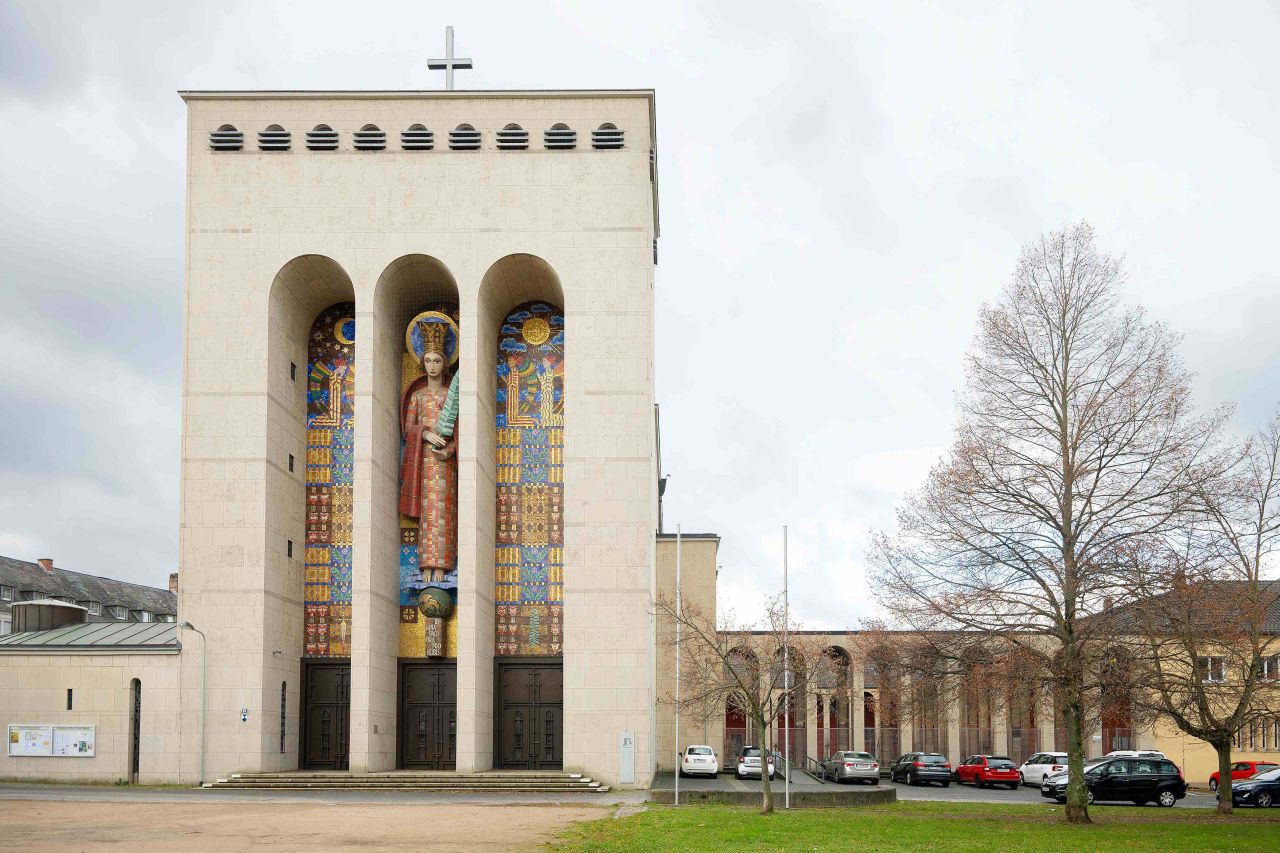
Behind the Palmengarten stands the Frauenfriedenskirche, an architectural masterpiece by Hans Herkommer. The clean lines, bright mosaics and extraordinary colored windows capture the essence of the "New Frankfurt". The imposing figure of the "Regina Pacis", 12 meters high, dominates the main portal, representing a symbol of hope and peace.
The interior of the church is equally fascinating, with details reflecting the combination of modernist simplicity and religious symbolism. The Frauenfriedenskirche is also a place of reflection on peace, a particularly significant theme in an era marked by conflicts and tensions.
Icons of modernism and memories of the past
Großmarkthalle: from the "vegettories" to the ECB
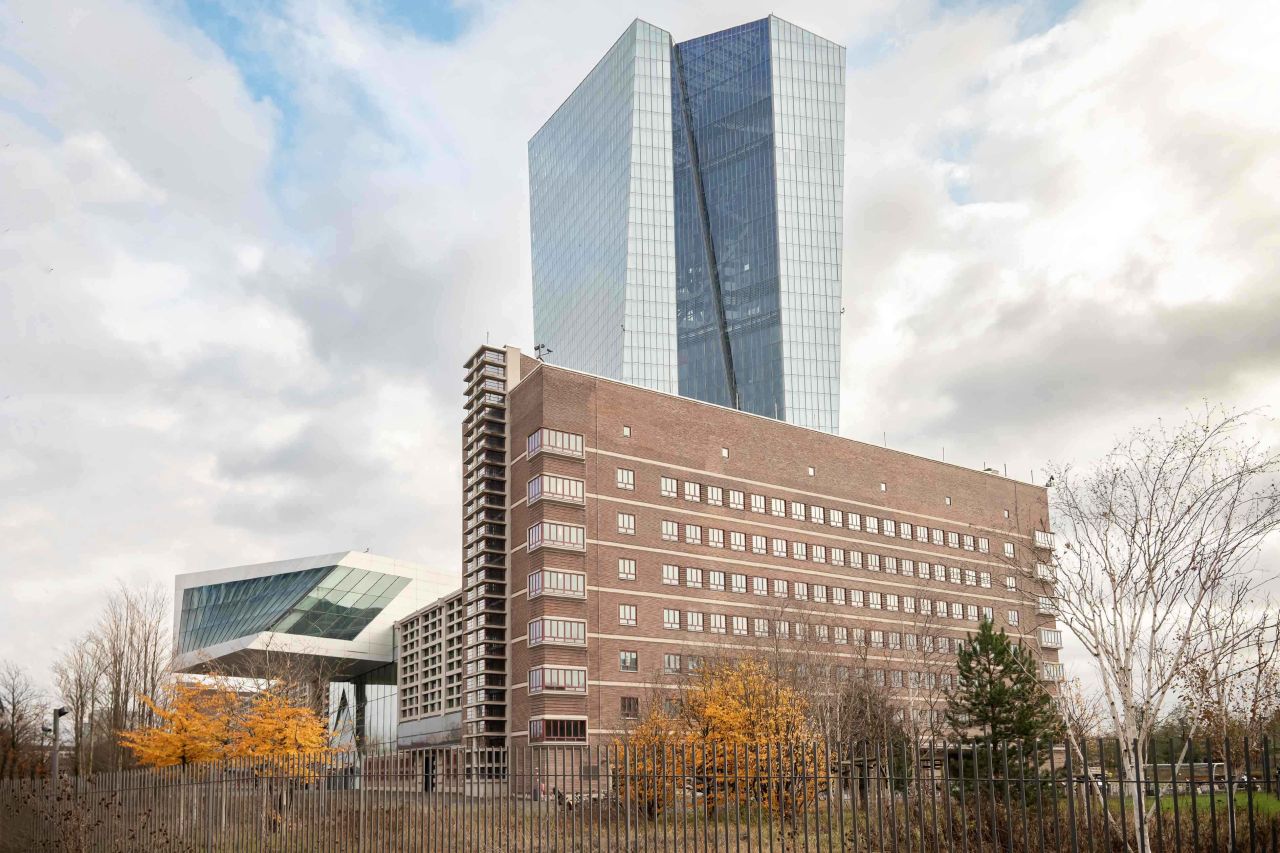
The Großmarkthalle was designed by Martin Elsässer as an integral part of the "New Frankfurt" program. This majestic reinforced concrete building, 200 metres long, is an extraordinary example of functional architecture. Today it houses the lobby of the European Central Bank, but it preserves its historical and architectural importance.
There is no dark chapter in history: a memorial within the structure recalls the period between 1941 and 1945, when Jewish citizens were deported from the underground of Großmarkthalle to the extermination camps. This memorial is a place of great emotional impact, which invites reflection on the past and the importance of memory.
IG Farben Haus: symbol of the design of the Weimar era
Another point of reference is the IG Farben Haus, the largest office complex in the Republic of Weimar, built in 1928. Designed by architect Hans Poelzig, the building is now home to the Westend campus of the Goethe University. The natural stone façade and restored interiors testify to the functional elegance of the modernist movement.
The building is famous not only for its architecture, but also for its role in the history of the twentieth century. During World War II, the IG Farben Haus was used as a military headquarters, and after the war it became the seat of allied forces. Today, it represents a bridge between past and present, with an academic function that looks to the future.
Unmissable events for the centenary
The celebrations of the centenary in 2025 will be enriched by a series of exhibitions and cultural initiatives that will highlight the legacy of the "New Frankfurt".
• Museum Angewandte Kunst: From 9 May 2025, the museum will present the exhibition "100 years of New Frankfurt", a tribute to the protagonists and innovations of the movement. Through interactive installations, original documents and architectural models, visitors can immerse themselves in the historical and cultural context of the time.
• Deutsches Architekturmuseum: Between May and September 2025, the exhibition "Aufbruch und Wandel – Das Neue Frankfurt und die Gegenwart" will explore the parallels between Ernst May's visions and current urban planning projects. Contemporary projects will be exhibited that are inspired by the principles of the modernist movement, showing how these continue to influence today’s architecture.
• Historisches Museum Frankfurt: From 18 June 2025 to 1 February 2026, the museum will host the "City Lab", an exhibition dedicated to the evolution of housing and social issues related to urbanism. The workshop will also offer workshops and discussions open to the public, involving architects, urbanists and citizens.
Towards 2026: Frankfurt World Capital of Design
After the celebrations of 2025, Frankfurt is preparing for another extraordinary event: in 2026, the city will be designated "World Capital of Design". With over 800 events planned, Frankfurt and the Rhine-Meno region will demonstrate how the legacy of the "New Frankfurt" continues to inspire innovation and creativity. The events will include industrial design exhibitions, conferences on the future of architecture and educational initiatives to bring young people closer to the world of design.
Frankfurt not only celebrates the past, but looks to the future, consolidating its role as capital of architecture and design. A trip to the "New Frankfurt" is an experience that combines history, art and innovation, offering each visitor the opportunity to discover a city that continues to reinvent itself.

